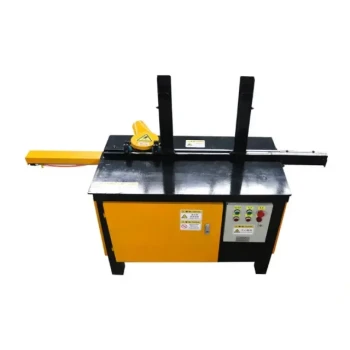
The dimensional accuracy of Top Bars is critical because it dictates the structural organization of the entire colony, forcing bees to build within their natural "bee space." When these dimensions are precise, bees construct straight, independent combs that can be removed individually, eliminating the need for destructive harvesting methods associated with traditional log hives.
Precision in Top Bar manufacturing is not merely an aesthetic choice; it is the functional prerequisite for non-destructive hive management, transforming harvesting from a demolition process into a sustainable maintenance routine.
The Mechanics of Efficient Hive Management
Leveraging Natural Instincts
The width of a Top Bar must be calculated to match the specific nesting instincts of honeybees.
When the wood is cut to these precise specifications, it guides the colony to build combs in a linear, organized fashion. This alignment is the foundation of a manageable hive.
Enabling Independent Comb Manipulation
The primary operational advantage of accurate dimensions is the ability to remove a single comb without disturbing its neighbors.
In traditional setups, like log hives, internal spaces are disorganized, often requiring the destruction of the nest to harvest honey. Precision Top Bars resolve this by ensuring smooth, independent removal of equipment.
Facilitating Rapid Inspection
Operational efficiency relies on how quickly a beekeeper can assess the hive's health.
When combs are straight and accessible, manual interventions become significantly easier. This structural order allows for faster checks, reducing the time the hive is open and vulnerable.
Operational Trade-offs and Risks
The Cost of Imprecision
If Top Bar dimensions deviate even slightly from the required bee space, the colony will build "burr comb" or cross-combs.
This fuses frames together, effectively reverting a modern hive back to the unmanageable state of a log hive. It renders high-specification tools useless, as no amount of ergonomic leverage can separate fused combs without significant damage.
Balancing Tooling and Structure
While high-quality hive tools and honey knives can enhance control and shorten inspection times, they rely entirely on the hive's internal geometry.
Investments in ergonomic tools are wasted if the Top Bars are not dimensionally accurate. The mechanical advantage of a tool provides no benefit if the internal structure requires destructive force to separate.
Making the Right Choice for Your Apiary
To ensure your operations remain efficient and scalable, consider how your equipment choices impact daily workflow:
- If your primary focus is Harvesting Speed: Prioritize Top Bars with strict dimensional tolerances to ensure combs never fuse, allowing for rapid removal and processing.
- If your primary focus is Colony Health: Ensure your equipment respects natural bee space to minimize physical disturbance during inspections, maintaining stability and production levels.
Precision in your equipment is the single most effective way to align human management goals with biological reality.
Summary Table:
| Key Feature | Impact on Operations | Operational Benefit |
|---|---|---|
| Natural Bee Space | Guides bees to build linear, organized combs | Eliminates destructive harvesting |
| Independent Combs | Allows removal of single frames without disturbance | Facilitates rapid hive inspections |
| Strict Tolerances | Prevents "burr comb" and cross-combing | Reduces equipment maintenance time |
| Geometric Alignment | Maximizes effectiveness of hive tools and knives | Enhances overall workflow scalability |
Scale Your Apiary with Precision-Engineered Equipment
At HONESTBEE, we understand that for commercial apiaries and distributors, every millimeter counts. Inaccurate equipment leads to lost time and damaged colonies. We provide the industry's most reliable wholesale solutions, from dimensionally accurate hive components to advanced honey-filling and hive-making machinery.
Whether you are stocking essential consumables or upgrading your facility with high-spec hardware, our portfolio is designed to align your management goals with biological reality.
Ready to enhance your operational efficiency? Contact us today to explore our comprehensive beekeeping tools and machinery.
References
- Charles Felix Chami, Catherine A. Masao. Is Beekeeping Commercially and Environmentally viable? an assessment of the adoption of hanging frame beehives in semi-Arid Area of central Tanzania. DOI: 10.1177/19400829221125393
This article is also based on technical information from HonestBee Knowledge Base .
Related Products
- Top Bar Beehive for Beekeeping Wholesales Kenya Top Bar Hive
- Long Langstroth Style Horizontal Top Bar Hive for Wholesale
- HONESTBEE Top Bar & Bottom Bar Forming Machine | Bee Frame Machine
- HONESTBEE Bee Frame Grooving Machine | Precision Slotting for Bee Frame Making
- Professional Grade Foldable Beehive Handles
People Also Ask
- How is burr comb and propolis removed from a top bar hive? A Practical Guide for Hive Maintenance
- How does comb construction differ between a top bar hive and a Langstroth hive? Choose the Best Method for Your Apiary
- Why do top bar hives require beekeepers to detach comb? Master the Detach-then-Lift Technique for Comb Safety
- How does the design of a top bar hive minimize disturbance to the bees during inspection? Achieve a Calmer, More Natural Approach
- What are the main differences between a top bar hive and a Langstroth hive? A Guide to Choosing Your Hive