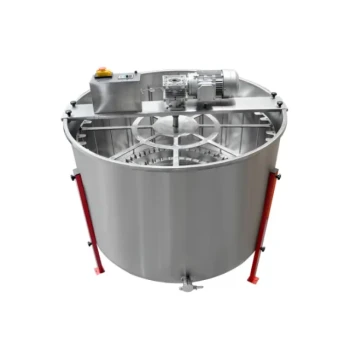
The implementation of centrifugal spinners or honey presses is a necessary evolution in refining to recover high-value product that would otherwise be lost in wax waste. These mechanical systems are designed to efficiently separate the significant volume of residual honey trapped in wax cappings, a task that is inconsistent and physically damaging when attempted manually.
Core Takeaway: The necessity of this equipment lies in its ability to automate solid-liquid separation, ensuring maximum honey recovery rates from waste wax. By replacing manual squeezing with mechanical force, you simultaneously increase yield and eliminate the risk of operator injury caused by repetitive physical strain.
Maximizing Resource Recovery
Superior Solid-Liquid Separation
When wax cappings are removed during uncapping, they remain heavily saturated with honey. Manual methods rely on simple gravity or weak hand pressure, which leaves a significant amount of honey behind.
Centrifugal spinners and presses apply mechanical pressure or high-speed centrifugal force to drive this liquid out. This results in a much drier wax residue and a significantly higher volume of recovered honey.
Enhancing Market Value
The efficiency of the separation process directly impacts the bottom line. By extracting the maximum amount of raw honey from the cappings, you increase your overall production volume.
Furthermore, proper separation prepares the crude honey for filtration. As noted in the supplementary data, the honey press helps filter out large impurities early, which influences the market grading and final price of the product.
Operational Efficiency and Safety
Preventing Biomechanical Overload
A critical, often overlooked necessity for this equipment is operator health. Manual extraction requires high-intensity gripping and squeezing to wring honey from wax.
Doing this repeatedly leads to biomechanical overload, putting workers at risk of repetitive strain injuries. Mechanization eliminates this physical burden completely, allowing for a sustainable, safe workflow.
Continuous Processing
In a refining line, the uncapping bench generates a constant stream of wax and overflow honey. Relying on manual processing creates a bottleneck that slows down the entire operation.
Spinners and presses integrate with the uncapping stage to process waste immediately. This keeps the uncapping bench clear and maintains a clean environment for the primary extraction phases.
Understanding the Considerations
Equipment Maintenance vs. Simplicity
While necessary for volume, adding mechanical separators introduces complexity compared to primitive gravity draining.
These machines require regular maintenance and cleaning to prevent mechanical debris or cross-contamination. You must weigh the increased yield and safety against the operational overhead of maintaining high-speed industrial equipment.
Initial Filtration Impact
While presses filter large impurities, the aggressive nature of mechanical separation can sometimes force smaller wax particles into the honey.
This means that downstream multistage filtration systems become even more critical. You must ensure your subsequent filtering capacity can handle the specific consistency of honey recovered from these presses.
Making the Right Choice for Your Goal
To determine how to prioritize this equipment in your refining setup, consider your specific operational targets:
- If your primary focus is Production Yield: Implement high-speed centrifugal spinners to extract the maximum possible volume of residual honey from cappings, directly boosting your total output.
- If your primary focus is Workforce Safety: Prioritize the installation of honey presses or spinners to eliminate the manual squeezing process, thereby preventing repetitive strain injuries and biomechanical overload.
Ultimately, the use of spinners and presses transforms wax cappings from a waste management problem into a profitable source of additional yield.
Summary Table:
| Feature | Manual Separation | Mechanical Spinners/Presses | Impact on Refining |
|---|---|---|---|
| Recovery Rate | Low (gravity-based) | High (centrifugal/mechanical force) | Significantly increases total honey output |
| Operator Safety | High risk of strain/injury | Automated and safe | Reduces biomechanical overload and labor costs |
| Processing Speed | Slow; creates bottlenecks | Continuous and efficient | Maintains workflow on the uncapping bench |
| Product Quality | Inconsistent purity | Pre-filters large impurities | Improves market grading and final price |
Elevate Your Honey Refining Efficiency with HONESTBEE
Maximize your production yield and protect your workforce by integrating professional-grade recovery systems into your apiary. At HONESTBEE, we specialize in supporting commercial apiaries and distributors with a comprehensive wholesale portfolio.
From high-performance honey presses and centrifugal spinners to advanced honey-filling machines and hive-making hardware, we provide the full spectrum of beekeeping machinery and essential industry consumables. Partner with us to transform your wax cappings from a waste challenge into a high-value asset.
Ready to scale your operation? Contact us today to explore our wholesale equipment solutions!
References
- Giovanni Maina, A Baracco. How to Assess the Biomechanical Risk Levels in Beekeeping. DOI: 10.1080/1059924x.2016.1141132
This article is also based on technical information from HonestBee Knowledge Base .
Related Products
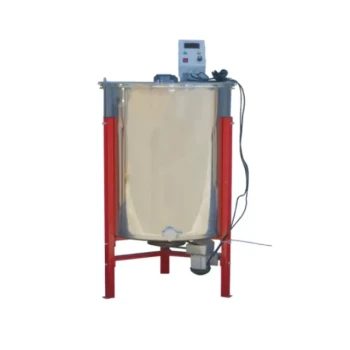
- electric honey extractor honey centrifuge 3 frame honey extractor stainless steel honey frame extractor
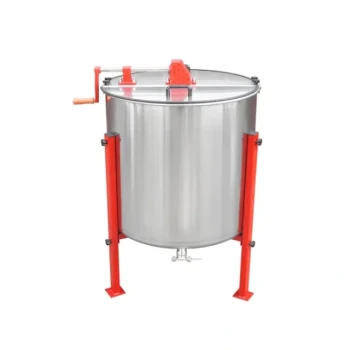
- Manual Hand Crank 4 Frame Honey Extractor Centrifuge for Beekeeping
- Professional 4 Frame Self Reversing Electric Honey Extractor for Beekeeping
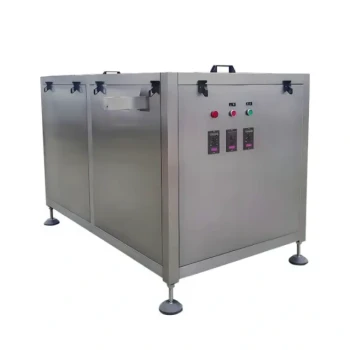
- Fully Automatic High Speed Centrifugal Bottle Unscrambler
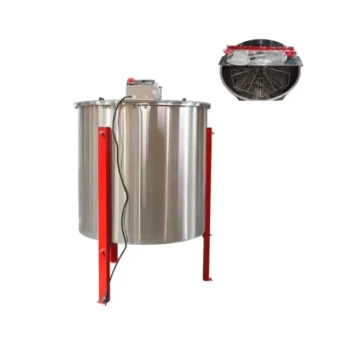
- 8-Frame Electric Self-Reversing Honey Extractor Spinner for Commercial Honey Extraction Equipment
People Also Ask
- What are the characteristics of electric honey extractors? Boost Your Apiary Efficiency with Automated Technology
- What are the disadvantages of using an electric honey extractor? Weighing Cost, Power, and Comb Safety
- What are the advantages of an electric honey extractor? Boost Efficiency and Scale Your Honey Production
- What are the technical advantages of electric honey extractors? Maximize Yield and Protect Your Bee Colony
- How does an electric honey extractor affect the quality of honey? Preserve Flavor & Purity with Precision Extraction