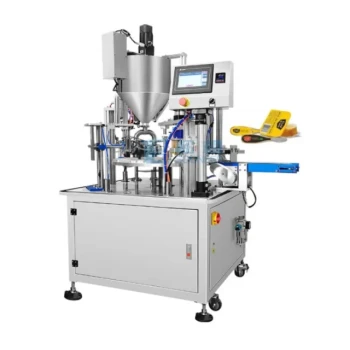
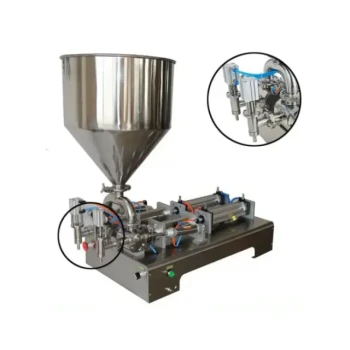
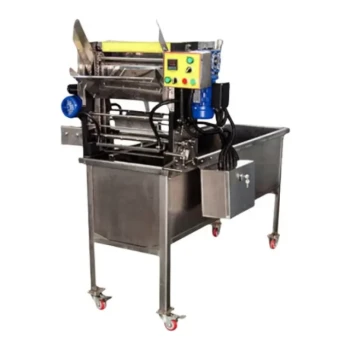
Automated filling systems represent the critical threshold between artisanal beekeeping and viable industrial production. For large-scale honey centers, the integration of these machines is necessary to guarantee precise volume control, significantly accelerate bottling speeds, and maintain a fully enclosed environment that meets the rigorous food safety standards required for commercial distribution.
The Core Insight While speed is an obvious benefit, the true necessity of automation lies in standardization and risk management. In an industrial context, the ability to replicate the exact same volume and hygiene standard across thousands of units is the only way to secure international export contracts and ensure regulatory compliance.
Ensuring Product Purity and Safety
The Necessity of Enclosed Environments
Industrial honey production demands a "closed-loop" system. Automated machines operate in a fully enclosed environment, which creates a physical barrier between the product and the facility.
This isolation is critical for preventing external contamination. By removing manual handling from the equation, you eliminate the primary vector for introducing pathogens or foreign debris into the final product.
Managing Moisture Absorption
Honey is hygroscopic, meaning it naturally absorbs moisture from the air. High moisture content can lead to fermentation and spoilage.
Automated systems minimize the honey's exposure time to the surrounding atmosphere. This preserves the product's stability and shelf life, a factor that is difficult to control in manual, open-air filling operations.
Achieving Commercial Consistency
Precision Metering Controls
In a commercial setting, "close enough" is not acceptable. Automated machines utilize high-precision metering pumps to deliver the exact same volume or weight of honey into every container.
This consistency is vital for consumer trust and regulatory compliance. It ensures that every customer receives exactly what is stated on the label, eliminating discrepancies that can lead to legal or reputational issues.
Reducing Waste and Overflow
Manual filling inevitably leads to human error, often resulting in overfilled jars. Over time, this "overflow loss" represents a significant financial hemorrhage for large-scale producers.
Automated sensors cut off the flow at the precise moment required. This maximizes the yield from every harvest and ensures that raw material is not wasted on the bottling line.
Economic and Operational Scalability
Transitioning to an Industrial Model
To move from a small-scale apiary to an export-oriented business, throughput must increase without a linear increase in costs. Automation allows for high-throughput output that manual labor cannot sustain.
This shift reduces dependency on large labor forces for repetitive tasks. It allows facility managers to reallocate human resources to quality control and logistics rather than manual bottling.
Meeting Export Standards
International markets impose strict requirements on packaging uniformity and hygiene. Manual processes rarely meet the statistical consistency required by these standards.
Industrial-grade equipment provides the standardized packaging necessary to enter pharmaceutical and consumer markets globally. It serves as proof of process control, which is often a prerequisite for obtaining export certifications.
Understanding the Trade-offs
While automation is essential for scale, it introduces new complexities that must be managed.
Upfront Capital vs. Long-term Gain
The initial investment for industrial-grade filling machinery is substantial. It requires a shift in financial planning from variable labor costs to fixed capital depreciation.
Maintenance and Technical Skill
Automated systems require specialized maintenance. Unlike manual operations, where a bottleneck is usually human, a machine failure can halt the entire production line. Operators must be trained to clean, calibrate, and troubleshoot high-precision metering pumps.
Flexibility Limitations
High-speed automation favors uniformity. If your product line requires frequent changes in bottle shapes or sizes, the changeover time on an automated line can impact efficiency compared to the adaptability of manual filling.
Making the Right Choice for Your Goal
To determine how to integrate this technology into your operation, assess your immediate business targets:
- If your primary focus is International Export: You must invest in automation to meet the rigorous consistency and hygiene certifications required by foreign regulators.
- If your primary focus is Cost Reduction: Focus on the machine’s ability to minimize overflow waste and reduce labor hours per unit produced.
- If your primary focus is Brand Reputation: Leverage the precision metering capabilities to guarantee a uniform customer experience and extended shelf life through moisture control.
Automation is not merely a method of speeding up production; it is the fundamental architecture required to turn a raw agricultural product into a standardized commercial good.
Summary Table:
| Key Benefit | Impact on Industrial Production | Core Advantage |
|---|---|---|
| Hygienic Control | Enclosed environment prevents contamination | Food Safety & Purity |
| Precision Metering | Exact volume control for every container | Regulatory Compliance |
| Waste Reduction | Prevents overfills and overflow loss | Cost Efficiency |
| Operational Scale | High-throughput output without manual labor | Business Scalability |
| Shelf-Life Stability | Minimizes moisture absorption (hygroscopic) | Quality Preservation |
Scale Your Apiary Operations with HONESTBEE
Transitioning from artisanal beekeeping to industrial-scale production requires more than just honey—it requires precision, efficiency, and the right technology. HONESTBEE is the dedicated partner for commercial apiaries and distributors worldwide, offering a comprehensive wholesale portfolio to elevate your business.
How We Empower Your Success:
- Advanced Machinery: From high-precision honey-filling machines to automated hive-making equipment.
- Total Solutions: We supply the full spectrum of beekeeping tools, specialized hardware, and essential industry consumables.
- Market Readiness: Our equipment ensures your products meet the rigorous standardization and hygiene levels required for international export.
Ready to transform your production line and secure your place in the global market? Contact us today to explore our industrial solutions!
References
- Özer Şahin, Ayşe Aydın. Kültürel, Gastronomik ve Turistik Değer: Muğla da Arıcılık ve Özel Muğla Arıcılık Müzesi Örneği. DOI: 10.26677/tr1010.2021.674
This article is also based on technical information from HonestBee Knowledge Base .
Related Products
- Fully Automatic Honey Filling Packaging Machine for Processing Line
- Automatic Honey Filling and Filtering Machine for Beekeeping Bottle Filling
- Precision Durable Efficient HONESTBEE Rotary Honey Filling Machine
- Semi Automatic Small Honey Bottle Filling Machine Honey Filler
- Precision Automated Packaging Turntable Honey Spoon Filling Sealing Packing Machine
People Also Ask
- Why are fully automatic honey filling and packaging lines essential? Boost Your Honey's Market Value and Quality
- What is a fully-automatic honey filler? Streamline Your Production with High-Precision Automation
- How do automated honey filling and packaging machines affect profitability? Boost Margins with HONESTBEE Technology
- How do automated honey filling and packaging machines contribute to the market value of honey products? Maximize Your ROI
- How do industrial-grade automated honey filling and packaging machines mitigate the risk of physical contamination?