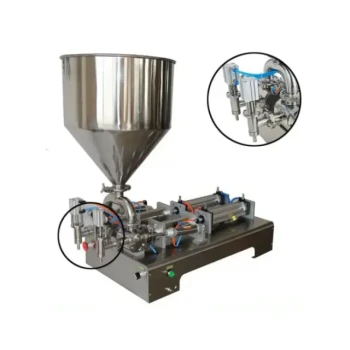
The integration of professional honey filling and processing machinery is the decisive factor in transforming a cooperative from a simple aggregator of raw materials into a competitive commercial entity. This equipment allows cooperatives to standardize quality across diverse harvest sources, scale production to meet industrial demands, and significantly increase revenue by selling finished, shelf-ready products rather than low-margin bulk honey.
The transition to automated machinery is not merely an operational upgrade; it is a strategic shift. By centralizing filtration, sterilization, and packaging, cooperatives gain the bargaining power necessary to negotiate with large distributors and the consistency required to enter high-value international markets.
Elevating Product Value and Consistency
Standardization of Quality
In a cooperative model, honey is sourced from numerous small-scale producers, often resulting in variable quality. Professional processing machinery unifies these inputs through centralized filtration and impurity removal.
This ensures every jar meets a specific standard, regardless of which member produced the raw honey. Consistency is the foundation of building a reliable brand.
Increasing Added Value
The primary reference highlights that machinery allows cooperatives to handle the filtering, sterilization, and packaging stages.
By owning these processes, cooperatives capture the value that was previously lost to third-party packers. Converting raw materials into finished, branded terminal products allows the cooperative to charge a premium price far above bulk commodity rates.
Ensuring Hygiene and Safety
Industrial-grade machinery minimizes direct human contact with the product.
This automation significantly drastically reduces the risk of secondary contamination. It ensures the final product complies with strict international food safety standards, which is a prerequisite for shelf placement in modern retail.
Strategic Market Positioning
Strengthening Bargaining Power
A key insight from the primary text is that machinery strengthens a cooperative's bargaining power.
When a cooperative can guarantee large-scale, standardized delivery, they become a preferred partner for major distributors. This leverage allows them to dictate better payment terms and avoid being price-takers in the wholesale market.
Accessing Export Markets
International export markets require rigorous adherence to volume and quality specifications.
Manual processing cannot reliably meet the throughput or the uniform filling accuracy required for export. Professional machinery provides the scalability needed to fulfill these large orders without compromising on the precise weight or seal quality required by customs and foreign retailers.
Operational Efficiency
Economies of Scale
For individual small-scale beekeepers, industrial equipment is often too expensive.
Cooperatives solve this by pooling resources to invest in shared infrastructure. This allows members to access high-efficiency, industrial-grade production capabilities with a lower individual investment, democratizing access to advanced technology.
Reducing Unit Costs
Automated filling and packaging lines transform labor-intensive tasks into high-speed industrial processes.
This drastically lowers the marketing cost per kilogram of honey. By reducing labor costs and increasing throughput, the cooperative can maintain price competitiveness even while offering a superior, professionally packaged product.
Understanding the Trade-offs
Capital vs. Labor Shift
While automation reduces ongoing labor costs, it requires a significant upfront capital investment. Cooperatives must ensure their membership base is large enough to utilize the machinery's capacity fully to justify this expense.
Technical Maintenance Requirements
Moving from manual to machine processing introduces a need for technical expertise.
The cooperative must account for the maintenance, calibration, and cleaning of complex filtration and sterilization units. Failure to maintain this equipment can lead to production bottlenecks that are more disruptive than manual slowdowns.
Making the Right Choice for Your Goal
To maximize the return on this machinery, align your equipment choice with your cooperative's strategic endgame:
- If your primary focus is Branding and Retail: Prioritize equipment that offers high-precision filling and versatile packaging options to enhance product presentation on the shelf.
- If your primary focus is Large-Scale Export: Focus on high-throughput processing lines with advanced sterilization and standard filtration to meet rigorous international safety volumes.
- If your primary focus is Member Equity: Invest in modular systems that allow for shared usage and processing of smaller, distinct batches to preserve the identity of premium, single-source yields.
Standardized processing machinery is the ultimate tool for converting collective beekeeping effort into commercial market dominance.
Summary Table:
| Key Benefit | Impact on Cooperative Success | ROI Drivers |
|---|---|---|
| Quality Standardization | Unifies diverse harvests into one consistent, high-value brand grade. | Brand Loyalty & Premium Pricing |
| Market Bargaining Power | Enables large-scale supply contracts with major distributors and retailers. | Higher Profit Margins |
| Operational Scalability | Automates filtration and packaging, meeting international export volumes. | Lower Unit Labor Costs |
| Safety Compliance | Ensures hygienic sterilization and airtight sealing for food safety. | Market Access & Certifications |
Transform Your Cooperative Into a Commercial Leader with HONESTBEE
At HONESTBEE, we specialize in empowering commercial apiaries and distributors with the industrial tools needed to scale. From precision honey-filling machines to complete processing lines and essential beekeeping consumables, our comprehensive wholesale offering is designed to turn your raw harvest into a globally competitive product.
Our value to you:
- Specialized Hardware: High-performance machinery for hive-making, honey-filling, and processing.
- Scalable Solutions: Equipment tailored for industrial throughput and international safety standards.
- Market Advantage: Enhance your branding and bargaining power with shelf-ready, professional packaging.
Ready to elevate your production and maximize your cooperative's revenue? Contact our expert team today to explore our machinery solutions!
References
- Kassa Tarekegn, Bosena Tegegne. Determinants of honey producer market outlet choice in Chena District, southern Ethiopia: a multivariate probit regression analysis. DOI: 10.1186/s40100-017-0090-0
This article is also based on technical information from HonestBee Knowledge Base .
Related Products
- Fully Automatic Honey Filling Packaging Machine for Processing Line
- Precision Durable Efficient HONESTBEE Rotary Honey Filling Machine
- Automatic Honey Filling and Filtering Machine for Beekeeping Bottle Filling
- Economy Small Honey Filling Machine Honey Bottle Filler Packaging Machine
- Small Honey Filling Machine Sachet Packing Equipment Single Nozzle
People Also Ask
- Why are fully automatic honey filling and packaging lines essential? Boost Your Honey's Market Value and Quality
- What is a fully-automatic honey filler? Streamline Your Production with High-Precision Automation
- How do automated honey filling and packaging machines affect profitability? Boost Margins with HONESTBEE Technology
- How do automated honey filling and packaging machines contribute to the market value of honey products? Maximize Your ROI
- How do industrial-grade automated honey filling and packaging machines mitigate the risk of physical contamination?