Measuring the number of bee-covered combs provides the most reliable quantitative data for assessing the severity of hornet predation on honeybee colonies. It transforms subjective observations into concrete metrics, allowing beekeepers to accurately compare the population density of healthy hives against those suffering from predatory attacks.
Core Takeaway The measurement of bee-covered combs acts as a vital diagnostic tool that quantifies the difference between a healthy colony and a damaged one. By tracking this metric, you can accurately gauge immediate population losses and predict the potential for long-term colony failure.
Quantifying Colony Health and Damage
The Indicator of Strength
The number of frames fully covered by bees is a direct reflection of a colony's functional population. This measurement serves as a vital quantitative indicator of the colony's overall health status.
Isolating Predatory Impact
To evaluate damage, this metric isolates the physical reduction of the workforce. It provides a standard unit of measurement to determine exactly how much a colony has degraded under pressure.
The Mechanics of Assessment
Comparative Analysis
Effective assessment relies on benchmarking. You must compare the number of frames covered in healthy, unthreatened colonies against those currently under predatory pressure from hornets.
Calculating Immediate Losses
This comparison allows for the accurate quantification of immediate losses. Instead of guessing that a hive looks "weaker," you can calculate specific percentage drops in population based on frame coverage.
Implications for Colony Survival
Understanding Instant Impact
The data derived from covered combs reveals the instant impact of predation. It shows how rapidly the hornets are depleting the colony's defense and foraging force.
Forecasting Long-Term Consequences
Beyond immediate damage, this metric is essential for understanding long-term negative consequences. A significant or rapid decline in covered combs helps predict whether the colony is on a trajectory for survival or collapse.
Understanding the Limitations
Context is Required
While frame counts are critical, they offer a snapshot of current status rather than a prediction of future hornet behavior. A stable frame count today does not guarantee immunity from an intensified attack tomorrow.
The Lag Effect
A reduction in bee-covered combs is often a lagging indicator. By the time a significant drop in covered frames is measurable, the colony may have already sustained substantial predation over several days.
Utilizing Frame Data for Decision Making
To effectively manage hornet threats, you must use this data to drive your intervention strategy.
- If your primary focus is damage assessment: Compare the frame counts of attacked hives against your healthiest, unbothered colonies to establish a baseline of loss.
- If your primary focus is colony survival: Monitor the rate of decline in covered combs to identify which colonies are reaching a critical tipping point and require immediate protection.
Accurate measurement is the first step toward effective mitigation and colony preservation.
Summary Table:
| Metric Category | Key Assessment Insight | Importance for Management |
|---|---|---|
| Population Density | Number of frames fully covered by bees | Defines the colony's current functional workforce strength. |
| Damage Quantification | Comparative loss against healthy baseline hives | Provides concrete data on the severity of the predatory attack. |
| Survival Forecasting | Rate of decline in bee-covered frames | Identifies the critical tipping point before total colony collapse. |
| Impact Timing | Instant vs. Long-term population drop | Distinguishes between immediate losses and future recovery potential. |
Protect Your Apiary with Professional-Grade Solutions
At HONESTBEE, we understand that accurate data is only half the battle—the right equipment is what ensures colony survival. We provide commercial apiaries and distributors with a comprehensive wholesale range of:
- Precision Machinery: From honey-filling to specialized hive-making machines.
- High-Performance Hardware: Durable beekeeping tools and advanced protective equipment.
- Essential Consumables: Everything required to maintain hive health and productivity.
Whether you are scaling a commercial operation or supplying the industry, our portfolio is designed to mitigate risks like predation and maximize yield.
Ready to fortify your operations? Contact our expert team today to discuss how our wholesale solutions can support your business.
References
- Mostafa A. Fouad, A. EL Roby. Behavioral Study of The Dangerous Insect Predator (Vespa orientalis) on The Honeybee Colonies in Minia Region, Egypt دراسة سلوک اخطر عدو حشري (الدبور الشرقي) على طوائف نحل العسل في منطقة المنيا ، مصر. DOI: 10.21608/jppp.2021.205739
This article is also based on technical information from HonestBee Knowledge Base .
Related Products
- Professional Frame Comb Fork and Lifter for Efficient Handling
- Plastic Honey Comb Frames Cassette Box for Honey
- Wooden Bee Brush with Double-Row Horsehair Bristles
- Heavy Duty Stainless Steel Honeycomb Cutter
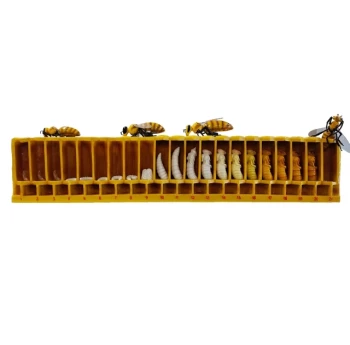
- Honey Bee Lifecycle Model: A Detailed Honeycomb Display of Bee Development
People Also Ask
- What is the specific design and purpose of a frame lifter hive tool? Master Gentle Hive Inspections
- How does the frame lifter hive tool function? Master Safe and Gentle Frame Removal
- What are the technical benefits of using a frame lifter? Maximize Hive Safety and Inspection Efficiency
- What are the roles of frames and combs in a beehive? Essential Infrastructure for Healthy Apiaries
- What is the function of specialized beekeeping tools and hive frames? Enhance Efficiency & Yield in Your Apiary