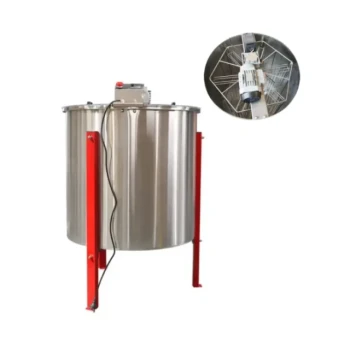
Minimizing the distance between apiaries and Honey Extraction Units (UEPA) is the primary safeguard against honey degradation. Proximity ensures that fresh honey enters the beneficiation process immediately, which preserves its natural physicochemical properties and biological activity. By reducing transit time, producers significantly lower the risks of secondary contamination and raw material loss, ensuring a high-purity product that meets the rigorous standards required for global distribution.
Core Takeaway: Strategic proximity between extraction units and hives is the foundation of honey quality control, preventing spoilage and contamination while enabling the rapid processing required for a high-performance B2B supply chain.
The Logistics of Purity: Why Proximity Matters
Minimizing Secondary Contamination
The longer raw honey is in transit before extraction, the higher the risk of exposure to external pollutants. Physical isolation from dust, pests, and environmental contaminants is only effective if the honey reaches a controlled UEPA environment quickly.
Preservation of Natural Characteristics
Freshness is a critical factor in the sensory profile of premium honey. Rapid processing preserves the original flavor profile and biological integrity of the nectar, which can otherwise be compromised by environmental exposure during long-haul transport.
Reducing Raw Material Loss
Transporting unextracted honey over long distances increases the likelihood of leakage or damage to the honeycomb. Processing honey near the source ensures that the maximum yield is recovered in its most stable and pure form.
Infrastructure as a Quality Safeguard
Advanced Filtration and Moisture Control
Professional UEPAs are equipped with specialized machinery for precise filtration and moisture regulation. These units ensure the final product meets international purity standards, which is essential for distributors targeting high-value export markets.
The Role of Hygienic Barriers
A UEPA serves as a vital hygienic barrier, separating the raw product from the outdoor elements of the apiary. This controlled environment allows for centrifugal extraction and bottling under sterile conditions, protecting the honey's market competitiveness.
Cold Storage and Long-Term Stability
Proximity to extraction often includes access to cold storage facilities that prevent fermentation and spoilage. This infrastructure is critical for maintaining nutritional value and ensuring the honey remains stable throughout the global shipping process.
Strategic Sourcing and Global Competitiveness
Enhancing Export Potential
For wholesalers, the technical integrity of the extraction process directly impacts the product's market value. Honey processed in standardized units near the source is more likely to pass the stringent quality audits required for international trade.
Accelerating the Supply Chain
Integrated extraction and packaging units allow for the efficient transformation of raw honey into retail-ready goods. This proximity enables ultra-fast delivery and order fulfillment, a key advantage for B2B partners who require a responsive supply chain.
Ensuring Biological Activity
High-quality beehives and nearby extraction units work together to maintain stable internal temperatures. This synergy ensures that the biological activity—such as enzymes and antioxidants—is preserved from the hive to the final package.
Understanding the Trade-offs
Infrastructure Overhead vs. Quality
Maintaining multiple UEPAs near various apiary sites requires significantly higher capital expenditure and operational management than a single centralized facility. However, centralization often leads to a measurable decrease in raw honey quality due to extended transit times.
Site Selection Constraints
The ideal UEPA location must be close to hives but distant from industrial zones or roads to avoid lead (Pb) and other toxic elements. Finding locations that balance logistical accessibility with environmental purity remains a complex challenge for large-scale operations.
Standardized Management vs. Localized Production
While proximity improves quality, it demands standardized management processes across all units to ensure consistency. Inconsistent protocols at different extraction sites can lead to variations in the final product's moisture content or clarity.
Making the Right Choice for Your Goal
How to Apply This to Your Project
When evaluating honey suppliers or establishing a distribution network, consider how their infrastructure layout impacts your specific business objectives.
- If your primary focus is Premium Quality and Export: Prioritize suppliers who utilize standardized UEPAs located within a short radius of their apiaries to ensure maximum purity.
- If your primary focus is Supply Chain Speed: Seek partners with integrated extraction and industrial-filling capabilities that can rapidly move product from the hive to a retail-ready state.
- If your primary focus is Risk Mitigation: Verify that processing sites are located away from industrial zones to guarantee the absence of heavy metal contaminants in the honey.
Proximity is not merely a logistical convenience; it is a critical technical requirement for delivering a stable, high-value honey product to the global market.
Summary Table:
| Quality Driver | Impact on Honey Integrity | Strategic B2B Advantage |
|---|---|---|
| Contamination Control | Minimizes exposure to pests and dust | Ensures compliance with export purity standards |
| Biological Preservation | Protects natural enzymes and flavor | Supports premium market positioning and pricing |
| Loss Mitigation | Prevents honeycomb damage during transit | Maximizes yield and improves profit margins |
| Rapid Processing | Faster filtration and moisture regulation | Enables ultra-fast delivery and order fulfillment |
Scale Your Honey Business with HONESTBEE Specialized Solutions
At HONESTBEE, we understand that maintaining honey quality from the hive to the bottle requires the right infrastructure. We empower commercial apiaries and B2B distributors by providing a comprehensive wholesale portfolio of high-performance beekeeping tools and industrial machinery.
Why partner with HONESTBEE?
- Full-Spectrum Sourcing: From durable beehives to advanced honey-filling and extraction machines.
- OEM/ODM & Premium Trading: Tailored equipment solutions designed to maximize your operational efficiency and margins.
- Industry Expertise: Deep professional insights to help you navigate global quality standards and audit requirements.
- Rapid Fulfillment: Ultra-fast delivery and dedicated customer service to keep your supply chain moving.
Ready to optimize your production and secure your market lead? Contact our expert team today to explore our one-stop sourcing capabilities!
References
- Francisco Carlos Eduardo Sá de Abreu, João Soares da Silva Filho. Estrutura da Economia Apícola no Piauí a Partir da Análise Espacial da Produção de Mel / Structure of the Apicultural Economy in Piauí Based on Spatial Analysis of Honey Production. DOI: 10.12819/2024.21.11.6
This article is also based on technical information from HonestBee Knowledge Base .
Related Products
- Electric 4 Frame Tangential Honey Extractor
- Manual Hand Crank 4 Frame Honey Extractor Centrifuge for Beekeeping
- 10L Stainless Steel Electric Honey Press Machine
- HONESTBEE 72 Frame Industrial Electric Honey Extractor for Beekeeping
- HONESTBEE 3-Frame Manual Acrylic Honey Extractor
People Also Ask
- What are the characteristics of electric honey extractors? Boost Your Apiary Efficiency with Automated Technology
- What are the disadvantages of using an electric honey extractor? Weighing Cost, Power, and Comb Safety
- What are the advantages of an electric honey extractor? Boost Efficiency and Scale Your Honey Production
- What are the advantages of electric honey extractors? Boost Harvest Speed & Efficiency
- What are the technical advantages of electric honey extractors? Maximize Yield and Protect Your Bee Colony