Recovering cappings wax and burr comb is essential because measuring only the primary honeycomb fails to capture the full physiological output of the colony. These secondary wax sources represent a significant portion of the bees' total secretion effort and are critical indicators of fat gland development.
Relying solely on honeycomb measurements creates data bias in genetic assessments. A complete profile of a honey bee lineage's wax secretion intensity requires quantifying every gram of wax produced, including the cappings used for sealing and the burr comb built in hive gaps.
The Physiology of Wax Secretion
Beyond the Honeycomb Structure
Most standard assessments focus exclusively on the primary wax used to construct the main honeycomb. However, this is an incomplete metric.
Honey bees also produce cappings wax (zabrus) during the honey sealing process and burr comb to bridge gaps within the hive. Ignoring these elements ignores a substantial volume of the colony's total material output.
Indicators of Glandular Development
The production of wax is directly tied to the biological capability of the bees. Specifically, it reflects the fat gland development of the workers.
By recovering secondary wax sources, you gain insight into the overall wax secretion intensity of the colony. This provides a direct window into the metabolic and physiological strengths of that specific genetic lineage.
The Risk of Data Bias
The Problem with Partial Measurement
If you only measure the weight of the drawn comb, you are operating with incomplete data.
A colony might produce average honeycombs but distinctively heavy cappings or extensive burr comb. Excluding these sources leads to significant data bias, skewing results and potentially undervaluing a high-performing lineage.
Ensuring Genetic Accuracy
For breeders and researchers, the goal is to evaluate the true potential of a bee strain.
To accurately compare genetic lineages, you must capture the total biological expenditure of wax. This "integrated assessment" prevents false equivalencies between colonies that allocate their wax resources differently.
Operational Considerations and Trade-offs
The Requirement for Specialized Equipment
Achieving this level of accuracy is not without cost. It requires the use of professional wax melting equipment to separate and refine these distinct wax types.
You cannot simply scrape and estimate; the wax must be rendered to ensure accurate weighing.
Precision vs. Effort
The primary trade-off is the increase in labor and processing time.
Recovering and refining burr comb and cappings adds steps to the extraction workflow. You must weigh the value of high-fidelity data against the operational overhead of collecting and processing "scrap" wax.
Optimizing Your Wax Assessment Strategy
To get the most value from your data, align your measurement strategy with your ultimate objectives.
- If your primary focus is genetic selection: You must recover and weigh cappings and burr comb to accurately gauge fat gland development and secretion intensity.
- If your primary focus is basic hive management: You may forgo the intensive processing of secondary wax, provided you accept that your data on colony productivity will be biased and incomplete.
True precision in apiculture requires looking beyond the frame and measuring the total biological output of the hive.
Summary Table:
| Wax Category | Source Type | Biological Indicator | Importance in Assessment |
|---|---|---|---|
| Primary Wax | Main Honeycomb | Structural development | Standard production metric |
| Cappings Wax | Honey Sealing | Secretion intensity | Reflects fat gland health |
| Burr Comb | Gap Bridging | Material output | Essential for total weight accuracy |
| Rendered Wax | Refined Scrap | Physiological potential | Eliminates genetic data bias |
Maximize Your Apiary's Efficiency with HONESTBEE
Precise data is the foundation of a successful commercial operation. At HONESTBEE, we empower commercial apiaries and distributors with the professional-grade tools needed to capture every drop of value from their hives.
From high-capacity wax melting and honey-filling machines to specialized hive-making equipment, our comprehensive wholesale portfolio covers everything from heavy machinery to essential consumables and honey-themed cultural merchandise.
Ready to upgrade your extraction workflow? Contact us today to discover how our end-to-end beekeeping solutions can optimize your production and increase your profitability.
References
- M. S. Stetsyshyn, V. V. Fedorovych. FLIGHT ACTIVITY AND POLLEN AND WAX PRODUCTIVITY OF BEES OF DIFFERENT GENEALOGICAL FORMATIONS OF THE CARPATHIAN SUBSPECIES. DOI: 10.31073/abg.66.12
This article is also based on technical information from HonestBee Knowledge Base .
Related Products
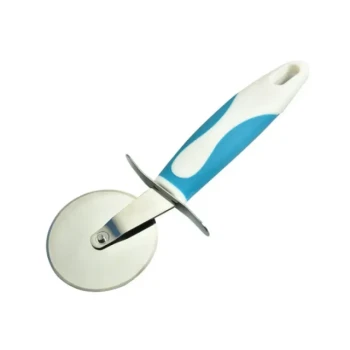
- Professional Rolling Wax Cutter with Ergonomic Handle
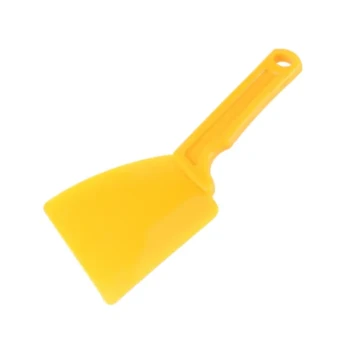
- Professional Honey Scraper for Efficient Apiary Maintenance
- Professional Honey Uncapping Roller for Efficient Harvesting
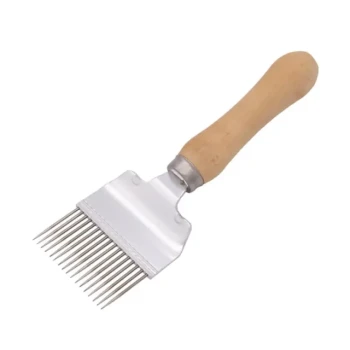
- Professional Classic Wood Handle Honey Uncapping Fork
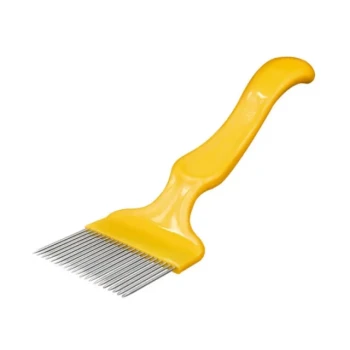
- Professional Honey Uncapping Fork Tool with Customizable Tine Options
People Also Ask
- What tools are used to cut wax foundations? The Essential Guide for a Perfect Fit
- How should cut foundation be stored? Protect Your Investment from Pests and Damage
- What is the function of a beekeeping knife? Master the Art of Honey Uncapping and Extraction
- What is the process for cutting milled wax foundation to a specific size? Master Precision Beekeeping Techniques
- How is a comb cutter used to produce cut comb honey? Master the Art of Precision Harvesting