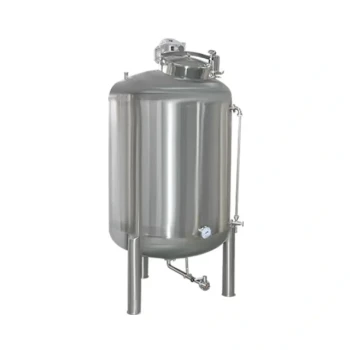
The single-tank volume of honey harvesting and filling equipment is a critical metric because the average Heterotrigona itama honey pot holds only 4.1 ml of fluid. Unlike standard honeybees that produce large volumes in uniform combs, this stingless bee species creates tiny, irregular storage pots, necessitating equipment with high-precision micro-control to avoid massive product loss during the extraction and packaging process.
Core Takeaway Because Heterotrigona itama honey pots are microscopic compared to standard beehives, using generic, large-volume equipment results in significant wastage and structural damage. Specialized equipment designed for micro-volumes ensures maximum yield, preserves fragile hive structures, and protects the unique biological activity of the honey.
The Biological Constraint: Micro-Volume Production
The 4.1 ml Limit
The fundamental challenge in harvesting Heterotrigona itama honey is the scale. A single honey pot contains an average of just 4.1 ml.
This is significantly smaller than the storage capacity of standard commercial honeybees (Apis mellifera). Consequently, equipment calibrated for standard large-volume flows lacks the sensitivity required for these stingless bees.
The Necessity of Micro-Control
To handle such small increments effectively, the machinery must feature refined automated micro-control functions.
If the equipment cannot precisely stop and start filling at low volumes, the variance in filling will lead to inconsistent packaging and measurable loss of product over time.
Precision Extraction and Hive Health
Negative Pressure Suction
Because the volume per pot is so low, traditional centrifugal extraction (spinning) is ineffective and destructive.
Instead, specialized Honey Suction Pumps utilize negative pressure. This allows for the precise extraction of honey from irregular, fragile pots without crushing them.
Preserving Hive Architecture
The small volume of the pots corresponds to their fragile structural integrity.
High-volume, aggressive extraction methods crush the propolis pots, releasing impurities into the honey. Micro-volume suction equipment extracts the liquid while leaving the internal structure intact, allowing the colony to resume production immediately.
Quality Preservation and Hygiene
Mitigating Fermentation Risks
Heterotrigona itama honey is distinct due to its high moisture levels and natural yeast content.
This composition makes it highly susceptible to fermentation. Equipment designed for small-volume handling often includes stricter sterilization protocols to prevent secondary contamination, which could trigger spoilage.
Standardized Sterile Filling
Professional filling machinery does more than just measure volume; it creates a sterile environment.
Precise dosage control prevents overflow and exposure to air, protecting natural active substances like enzymes and amino acids. This standardization is essential for maintaining the "brand premium" of this high-end product.
Understanding the Trade-offs
Equipment Complexity vs. Volume
While high-precision micro-equipment preserves quality, it often operates at a lower total throughput speed compared to industrial bulk honey lines.
Beekeepers trade raw speed for accuracy and yield preservation. Attempting to speed up the process with high-volume gear usually results in damaged hives and contaminated honey.
The Maintenance Burden
The distinct characteristics of this honey—specifically its propensity to ferment—require rigorous maintenance of the equipment.
Suction pumps and tubes must be pre-sterilized and dried completely. Any residual moisture or bacteria in the micro-tubing can spoil an entire batch, a risk that is lower in low-moisture standard honey processing.
Making the Right Choice for Your Goal
To select the correct equipment for Heterotrigona itama, assess your primary operational objectives:
- If your primary focus is Colony Health: Prioritize Honey Suction Pumps with adjustable negative pressure to ensure pots are emptied without structural damage.
- If your primary focus is Product Shelf-Life: Invest in filling machinery with sterile dosage control to eliminate bacterial contamination and prevent fermentation.
- If your primary focus is Efficiency: Implement a Topping Box structure, which physically separates honey storage from the brood, allowing for faster harvesting cycles without disturbing the colony.
Success with Heterotrigona itama requires aligning your hardware specifications directly with the microscopic biological reality of the bee.
Summary Table:
| Feature | Heterotrigona itama Requirement | Standard Honeybee Equipment |
|---|---|---|
| Avg. Pot Volume | ~4.1 ml (Micro-scale) | Large (Uniform honeycomb) |
| Extraction Method | Negative Pressure Suction | Centrifugal Force |
| Filling Precision | High-precision micro-control | Bulk-flow calibration |
| Structural Impact | Preserves fragile propolis pots | Often destructive to comb |
| Moisture Handling | High (Requires sterile protocols) | Low (Less prone to spoilage) |
Scale Your Honey Production with HONESTBEE Precision
At HONESTBEE, we specialize in the unique requirements of high-value honey production. Whether you are managing commercial stingless bee apiaries or distributing specialized hardware, our professional-grade equipment ensures you maximize every drop of Heterotrigona itama honey.
Our value to your business:
- Specialized Machinery: From hive-making to honey-filling machines designed for high-precision micro-control.
- Complete Wholesale Solutions: A full spectrum of beekeeping tools, machinery, and essential consumables.
- Cultural Merchandise: Expand your brand with our honey-themed merchandise and equipment.
Don't let inefficient equipment lead to product loss and hive damage. Contact HONESTBEE today to discuss how our wholesale solutions can optimize your commercial apiary operations.
References
- Seprido Seprido, Nariman Hadi. Adaptation and Production of Heterotrigona itama from Natural Colonies in Kuantan Singingi. DOI: 10.36378/juatika.v6i1.3382
This article is also based on technical information from HonestBee Knowledge Base .
Related Products
- Automatic Honey Filling and Filtering Machine for Beekeeping Bottle Filling
- Double Nozzle Small Honey Filling Machine Honey Sachet Packing Packaging Equipment
- Small Honey Filling Machine Sachet Packing Equipment Single Nozzle
- Manual Honey Filling Machine Bottling Machine for Honey
- Fully Automatic Honey Filling Packaging Machine for Processing Line
People Also Ask
- What process advantages do professional honey filtering and filling machines provide? Optimize Your Organic Honey Output
- How do honey filling and filtering machines increase product value? Turn Raw Honey into Premium Export-Grade Goods
- How do honey filtration and filling machinery contribute to industrialization? Scale Your Commercial Honey Production
- What specific issues do industrial filtration and automated filling machinery address? Ensure Honey Quality & Compliance
- How does the use of professional honey filtration and filling machinery facilitate international honey exports?