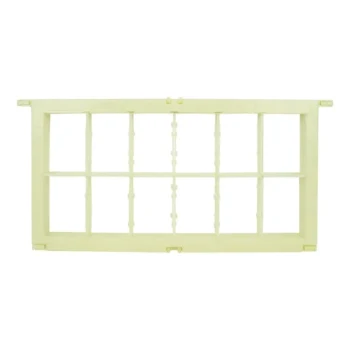
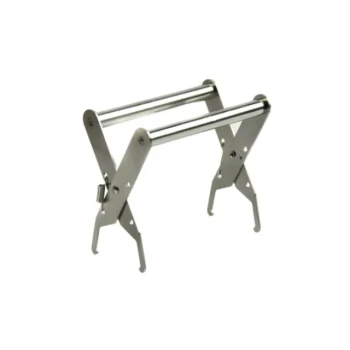
The standardization of beehive frame dimensions, such as the 420 x 275 mm specification, is the fundamental prerequisite for transforming beekeeping from a manual craft into a mechanized industry. By strictly adhering to a uniform size, apiaries can ensure that every frame fits every hive and every machine. This interchangeability eliminates the bottlenecks of traditional methods, allowing for the mass deployment of automated honey extraction technology and streamlined colony management.
Core Takeaway Industrial-scale beekeeping relies on the principle that all hardware components must be universally compatible. Standardizing frame dimensions is the key mechanism that enables the mechanization of honey extraction, the efficient exchange of resources between bee colonies, and the rapid scalability of apiary infrastructure.
The Operational Logic of Standardization
Establishing Resource Interchangeability
The primary driver for standardized dimensions is the ability to move resources between different biological units. In an industrial apiary, a frame containing honey or brood from a strong colony must physically fit into a weaker colony's hive box.
Uniform sizing allows for "scientific colony splitting." Beekeepers can instantly bolster weak hives or create new colonies by transferring frames without modification. This capability is essential for maintaining high survival rates and productivity across thousands of hives.
Enabling Mechanization
Industrial beekeeping moves beyond manual scraping and crushing. It relies on centrifugal honey extractors and automated uncapping machines.
These machines require precise input parameters. If frames deviate even slightly from the standard 420 x 275 mm, they cannot be processed by automated lines. Standardization simplifies the technical requirements for this machinery, reducing jams and ensuring consistent processing speeds.
Streamlining Logistics and Consumables
Managing a large-scale operation requires a consistent supply chain. When dimensions are standard, consumables such as wax foundation sheets and replacement frame parts can be purchased in bulk.
Replenishment becomes a "plug-and-play" operation. Field workers do not need to measure or customize equipment for specific hives. This significantly improves the efficiency of daily apiary management and reduces labor costs associated with maintenance.
The Impact on Scalability and Mobility
Facilitating Rapid Expansion
To scale an operation, the infrastructure must be repeatable. Industrial-grade manufacturing equipment produces artificial hive components with uniform specifications and precise interfaces.
Repeatability allows for mass deployment. Beekeepers can rapidly expand their apiaries knowing that new batch orders will integrate perfectly with existing equipment. This consistency addresses productivity issues caused by the obsolete, fragmented infrastructure often found in traditional beekeeping.
Supporting Migratory Beekeeping
Industrial operations often involve moving colonies to follow flowering periods or provide pollination services. Standardized, movable frame hives are designed for transport and stacking.
Precise physical connections secure the colony. Uniform interfaces minimize gaps that could lead to bee absconding (the colony leaving the hive) during transport. This ensures that the colony remains stable and productive even when moved between different altitudes and regions.
Understanding the Trade-offs
The Requirement for Precision
While standardization offers immense efficiency, it demands strict adherence to manufacturing tolerances. Industrial-grade manufacturing is necessary to produce components that are weather-resistant and precise.
"Close enough" fails at an industrial scale. If a frame is slightly warped or off-spec, it disrupts the "bee space"—the precise gap bees leave between combs. If this space is violated, bees will bridge the gap with propolis or burr comb, gluing the frame to the box and defeating the purpose of a movable frame system.
Initial Infrastructure Costs
Transitioning to a fully standardized industrial model requires an upfront investment in specific hardware. Traditional wall or log hives cannot simply be retrofitted.
The shift requires a total system overhaul. To achieve the economies of scale mentioned, the operator must commit to a single standard and replace any legacy equipment that does not conform, which can be a significant initial barrier.
Making the Right Choice for Your Goal
Standardization is not just about measurements; it is about choosing an operating model.
- If your primary focus is Rapid Scalability: Adopt the 420 x 275 mm standard immediately to utilize mass-produced consumables and ensure compatibility with industrial extraction machinery.
- If your primary focus is Efficiency in Management: Prioritize standardized frames to enable the seamless transfer of brood and food resources between colonies, balancing strong and weak hives.
- If your primary focus is Professional Pollination: Ensure your equipment utilizes precise, industrial-grade interfaces to withstand the rigors of transport without risking colony loss or absconding.
In the context of modern agriculture, the frame is no longer just a wooden rectangle; it is a standardized data point that allows the entire biological system to function at an industrial scale.
Summary Table:
| Aspect of Standardization | Benefit for Industrial Beekeeping | Impact on Operations |
|---|---|---|
| Resource Interchangeability | Move brood/honey frames between colonies | Balances colony strength & boosts survival |
| Mechanization Compatibility | Seamless fit with automated honey extractors | Increases processing speed & reduces labor |
| Supply Chain Efficiency | Bulk procurement of wax sheets and parts | Lowers costs and simplifies maintenance |
| Structural Precision | Maintains precise "bee space" | Prevents burr comb and eases hive inspection |
| Logistics Support | Uniform stacking and transport interfaces | Ensures colony stability during migration |
Scale Your Beekeeping Operation with HONESTBEE
Transitioning to an industrial-scale apiary requires more than just bees—it requires precision-engineered hardware. HONESTBEE specializes in supporting commercial apiaries and distributors with high-quality, standardized beekeeping equipment.
From durable 420x275mm frames to advanced honey-filling machines and hive-making hardware, our comprehensive wholesale portfolio is designed to eliminate manual bottlenecks and drive your productivity.
Ready to modernize your infrastructure? Contact us today to discuss how our professional-grade tools and machines can help you achieve true economies of scale.
References
- Róbert Chlebo. Changes in Slovakian Beekeeping. DOI: 10.1080/0005772x.2010.11417370
This article is also based on technical information from HonestBee Knowledge Base .
Related Products
- Wooden Bee Hive Frames for Beekeeping and Wholesale
- Assembled Wooden Bee Frames with Plastic Foundation for Durability and Convenience by HONESTBEE
- Heavy-Duty Stainless Steel Clip-On Frame Perch
- Plastic Bee Frame Beekeeping Hive Frames for Wholesale
- Professional Galvanized Steel Frame Rest for Beehives
People Also Ask
- How do wooden and plastic hive frames compare in terms of durability? Wood vs. Plastic Longevity & Repairability
- How does balancing the number of frames impact hive productivity? Optimize Your Apiary's Biological Output
- What are the main considerations when choosing between wooden and plastic bee hive frames? Optimize Your Apiary's Efficiency
- How should beehive frames be maintained to prolong their lifespan? 5 Pro Tips for Durable Beekeeping Equipment
- What are frames and combs used for in beekeeping? The Foundation of Modern Hive Management