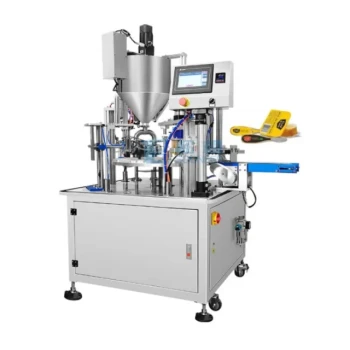
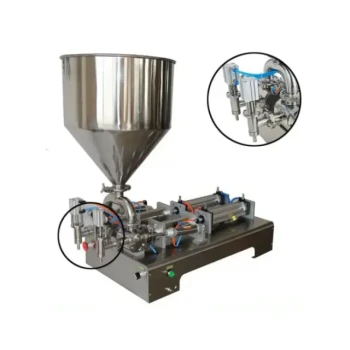
High-precision honey filling machines are the technological linchpin for scaling stingless bee honey operations. These industrial-grade systems are necessary because they address the product's unique physicochemical volatility and high economic value. They allow producers to achieve accurate quantitative filling while maintaining the strict hygiene standards required to prevent fermentation and preserve the honey’s health benefits.
The Core Insight Stingless bee honey is a rare, high-moisture product that is chemically unstable and prone to fermentation. High-precision filling machinery is not just about speed; it is the only reliable method to maximize yield through waste reduction, ensure sterile containment to stop spoilage, and standardize the product for high-value pharmaceutical and retail markets.
The Economic Imperative of Precision
Minimizing Loss of High-Value Assets
Stingless bee honey is typically produced in much smaller quantities than standard honey, giving it a significantly higher market value.
In this context, raw material waste is a direct hit to profitability. High-precision quantitative filling ensures that every unit contains the exact specified volume, eliminating the "giveaway" that occurs with manual filling.
By minimizing raw material loss during packaging, these machines preserve the economic viability of working with a low-yield resource.
Transitioning from Bulk to Retail
To capture maximum value, producers must move away from low-margin bulk sales.
Automated equipment allows for the creation of standardized, professional packaging. This consistency is the prerequisite for entering high-end retail markets and distributed trade networks.
It transforms a raw agricultural commodity into a shelf-ready consumer good that can compete on global shelves.
Managing Physicochemical Instability
Combating Fermentation Risks
Unlike standard honey, stingless bee honey is characterized by a high moisture content.
This unique physicochemical property makes it highly susceptible to fermentation and spoilage if exposed to air or contaminants. Manual packaging often introduces bacteria or fails to seal the product quickly enough.
Industrial-grade filling machines operate in sterile environments, ensuring hygienic sealing that prevents secondary contamination and blocks oxidation.
Preserving Bioactive Compounds
Stingless bee honey is marketed largely for its health benefits and medicinal properties.
If the filling process lacks hygiene control, the biological activity of the honey can degrade. Automated systems maintain a controlled environment that preserves the honey's original flavor and active biological components.
This preservation is essential for meeting food safety standards and justifying the premium price point in health product markets.
Understanding the Trade-offs
The Cost of Entry vs. Operational Risk
While essential for commercialization, implementing high-precision machinery represents a significant capital expenditure.
Small-scale producers often face a difficult trade-off: the high upfront cost of automation versus the operational risk of spoilage and inconsistency found in manual processing.
However, for commercial development, the cost of equipment is generally lower than the long-term cost of spoiled product, recall risks, or the inability to meet export hygiene certifications.
Complexity of Maintenance
These machines handle products with unique viscosities, which can vary between honey batches.
Operators must adhere to strict cleaning protocols to maintain the sterile environment. Failure to maintain the machine negates its benefits, potentially leading to the very contamination issues it was purchased to solve.
Strategic Market Positioning
Enabling Pharmaceutical and Cosmetic Formats
Commercialization often involves diversifying beyond standard food jars.
Professional machinery enables packaging into specialized containers, such as eye-dropper bottles, cream jars, or soap boxes.
This capability allows producers to target high-yield sectors like the pharmaceutical and beauty industries, where stingless bee honey is valued for its cosmetic and medicinal applications.
Ensuring Traceability
Commercial success relies on brand trust and provenance.
Complementary labeling equipment works alongside filling machines to document specific geographical indications and bee species origins.
This data improves professional packaging standards and validates the product's authenticity, increasing market recognition for regional honey varieties.
Making the Right Choice for Your Goal
- If your primary focus is Food Safety: Prioritize machines with advanced sterile sealing capabilities to counteract the high moisture content and prevent fermentation.
- If your primary focus is Profit Margins: Select equipment with the highest available filling accuracy to eliminate waste of this rare, low-yield raw material.
- If your primary focus is Market Expansion: Choose versatile machinery capable of handling diverse packaging formats (droppers, jars) to enter the pharmaceutical and cosmetic sectors.
Standardization through precision technology is the only path to turning a rare, volatile substance into a scalable commercial asset.
Summary Table:
| Key Challenge | How Precision Machinery Solves It | Commercial Benefit |
|---|---|---|
| High Moisture Content | Sterile, airtight sealing environments | Prevents fermentation & extends shelf life |
| High Market Value | Quantitative filling with ±1% accuracy | Eliminates product giveaway & maximizes yield |
| Low Batch Volume | Specialized handling for rare honeys | Reduces raw material waste during packaging |
| Market Readiness | Professional, standardized packaging | Enables entry into high-end retail & pharma |
| Hygienic Control | Food-grade automated pathways | Preserves bioactive medicinal properties |
Scale Your Honey Production with HONESTBEE
Transitioning from manual bottling to industrial precision is the key to global market success. HONESTBEE empowers commercial apiaries and distributors with high-performance beekeeping tools, specialized honey-filling machines, and comprehensive hive hardware. Whether you are packaging rare stingless bee honey for medicinal use or scaling a retail line of hive-themed products, we provide the technical edge you need to eliminate waste and ensure safety.
Ready to professionalize your honey brand? Contact our specialists today to explore our wholesale solutions
References
- Nor Akaliah Shaharudin, Mustafa Man. On the Use of Multi-criteria Decision Making Model for Selecting the Important Criteria in Meliponiculture. DOI: 10.13189/ujar.2023.110211
This article is also based on technical information from HonestBee Knowledge Base .
Related Products
- Precision Durable Efficient HONESTBEE Rotary Honey Filling Machine
- Commercial Rotary Honey Filling Machine for Production
- Precision Automated Packaging Turntable Honey Spoon Filling Sealing Packing Machine
- Fully Automatic Honey Filling Packaging Machine for Processing Line
- Automatic Honey Filling and Filtering Machine for Beekeeping Bottle Filling
People Also Ask
- How do honey filling and processing machines aid native bee product conservation? Boost Value with HONESTBEE Technology
- What are the common types of bottling machines used for honey? Choosing the Right Solution for Your Apiary
- What quality control role does professional honey filling equipment perform? Ensure Consistency and Product Stability
- How do honey filling machines work? Achieve Precision & Speed for Your Apiary
- What is a key feature of the new generation of the honey filling machine? The Advanced Electronic Control Unit