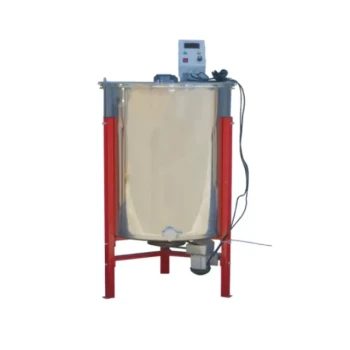
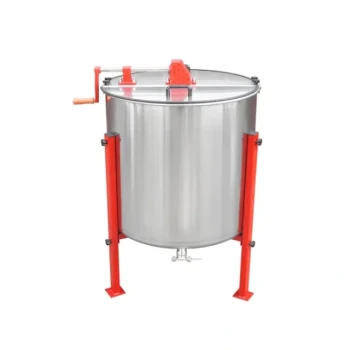
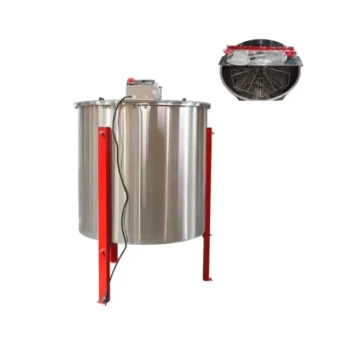
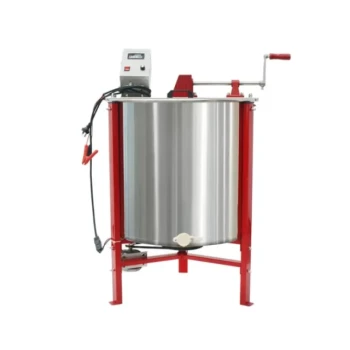
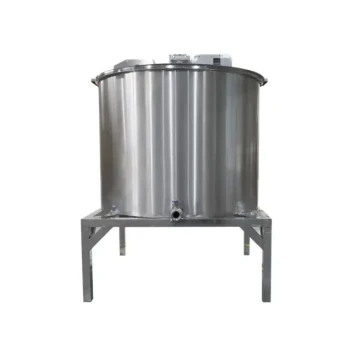
Mechanical honey extraction is the cornerstone of modern apiculture efficiency. It utilizes centrifugal force to spin liquid honey out of the frames, effectively separating the harvest from the wax structure without destroying the honeycomb itself.
The pivotal advantage is biological conservation: by preserving the drawn comb, bees are spared the intense energy cost of rebuilding wax, allowing them to redirect that energy toward foraging and significantly increasing total honey production.
The Energy Equation: Wax vs. Honey
Preserving the "Drawn Comb"
The primary function of a centrifuge is to extract honey while leaving the beeswax frames intact. Unlike traditional methods that require crushing the comb to release the honey, a centrifuge keeps the structural integrity of the frame complete.
Reducing the Biological Tax
Bees consume a significant amount of honey and energy to secrete the wax needed to build honeycombs. When you destroy the comb during harvest, you force the colony to restart this energy-intensive construction process.
Accelerating the Production Cycle
By returning empty, intact combs to the hive, you allow bees to immediately begin storing new nectar. This bypasses the rebuilding phase entirely, shortening the production cycle and resulting in a higher volume of honey harvested per season.
Elevating Hygiene and Product Quality
Superior Sanitation Standards
Mechanical extraction occurs in a closed or semi-closed system, significantly reducing the risk of environmental contamination. This contrasts sharply with manual squeezing methods, which often introduce pollutants, debris, or excessive handling into the final product.
Moisture Control and Grading
Mechanical extractors are effective at separating mature honey from the comb. Crushing methods often mix high-moisture, immature honey with the final batch, which can lead to fermentation; centrifuges help maintain a consistent, high-grade product.
Preserving Natural Properties
The use of centrifugal force is a physical process that does not require heat. This preserves the original physicochemical properties and natural flavor of the honey, ensuring the product remains raw and suitable for high-standard purity testing.
Understanding the Trade-offs
The Risk of Comb Blowouts
While the goal is to save the wax, improper operation can destroy it. If the rotational speed is too high for the weight of the frames, the centrifugal force can rip the wax foundation apart, negating the primary benefit of the machine.
The Necessity of Balance
Centrifuges require careful loading to ensure the weight is distributed evenly across the rotor. An unbalanced load can cause severe vibration, damaging both the machine and the honeycombs inside.
Pre-Extraction Requirements
Mechanical extraction is not a "dump and run" process; frames must still be uncapped (the wax seal removed) before spinning. Furthermore, the honey must be warm enough to flow, or the force required to move it may damage the frames.
Making the Right Choice for Your Goal
To maximize the benefits of mechanical extraction, align your equipment use with your specific production targets.
- If your primary focus is Maximum Yield: Prioritize returning intact wet combs to the hive immediately after spinning to stimulate rapid refilling by the bees.
- If your primary focus is Product Purity: Ensure your process includes multi-stage filtration after the centrifuge to remove micro-particles of wax and bee debris.
Ultimately, the mechanical extractor is less about harvesting honey and more about managing bee energy—converting their labor from construction back into production.
Summary Table:
| Feature | Mechanical Extraction (Centrifuge) | Traditional Crushing Method |
|---|---|---|
| Comb Integrity | Preserved (Reusable) | Destroyed (Requires Rebuild) |
| Bee Energy Cost | Low (Focus on Foraging) | High (Focus on Wax Production) |
| Honey Yield | Maximized per Season | Reduced due to Reconstruction |
| Hygiene Level | High (Closed System) | Moderate (Manual Handling) |
| Flavor Profile | Cold-processed/Raw | Potential Heat/Moisture Issues |
| Production Cycle | Fast Turnaround | Slowed by Comb Construction |
Scale Your Apiary Operations with HONESTBEE
As a commercial apiary or distributor, your success depends on efficiency and equipment reliability. HONESTBEE provides the full spectrum of professional beekeeping tools, from high-capacity centrifugal extractors and honey-filling machines to specialized hive-making hardware and essential consumables.
We help you minimize biological tax on your colonies and maximize your annual harvest. Whether you are outfitting a large-scale production facility or stocking premium tools for your distribution network, our wholesale solutions are designed to enhance your profitability and product purity.
Ready to upgrade your harvesting efficiency? Contact us today to discuss your wholesale requirements!
References
- Salimata Ouattara, Kouami Kokou. State of Knowledge on Beekeeping Practices in Côte d'Ivoire in the Face of Challenges and Opportunities in the Context of Climate Change. DOI: 10.19044/esj.2023.v19n30p46
This article is also based on technical information from HonestBee Knowledge Base .
Related Products
- electric honey extractor honey centrifuge 3 frame honey extractor stainless steel honey frame extractor
- Manual Hand Crank 4 Frame Honey Extractor Centrifuge for Beekeeping
- Professional 4 Frame Self Reversing Electric Honey Extractor for Beekeeping
- Electric 8 Frame Honey Spinner Extractor Equipment for Beekeeping
- 6 Frame Manual Stainless Steel Honey Extractor Beekeeping Equipment
People Also Ask
- What are the characteristics of electric honey extractors? Boost Your Apiary Efficiency with Automated Technology
- What are the disadvantages of using an electric honey extractor? Weighing Cost, Power, and Comb Safety
- What are the advantages of an electric honey extractor? Boost Efficiency and Scale Your Honey Production
- What are the technical advantages of electric honey extractors? Maximize Yield and Protect Your Bee Colony
- How does an electric honey extractor affect the quality of honey? Preserve Flavor & Purity with Precision Extraction