Medical-grade honey extractors or syringes are the recommended standard because they allow for precise, non-destructive harvesting through negative pressure. By puncturing individual honey pots rather than crushing them, these tools extract honey without destroying the internal hive structure, significantly reducing the energy bees must expend on rebuilding.
Core Takeaway Unlike traditional honey harvesting which often involves crushing combs, using medical-grade syringes respects the unique "pot" architecture of stingless bees. This method preserves the colony’s energy reserves by leaving the wax structures intact while ensuring the extracted honey remains free from physical impurities and microbial contamination.
Adapting to the Unique Hive Architecture
The "Pot" vs. "Comb" Distinction
Standard honeybees (Apis mellifera) build hexagonal combs that can be centrifuged. Stingless bees, however, store honey in irregular, individual cerumen pots (made of wax and propolis).
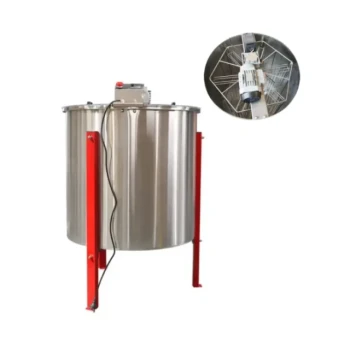
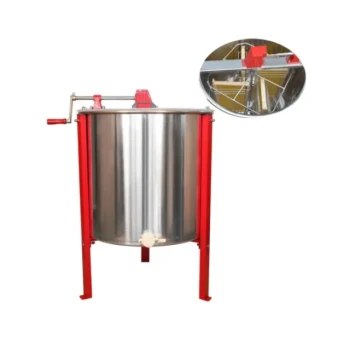
Because these pots are distinct units, they cannot be spun in a machine. Syringes allow you to access these small, sealed containers individually without collapsing the entire cluster.
Non-Destructive Harvesting
The primary advantage of a syringe or suction extractor is that it is a point-to-point tool. You can puncture the seal of a specific pot, extract the contents, and leave the walls of the pot standing.
This approach is vastly superior to "crush and strain" methods. It maintains the physical integrity of the nest, ensuring the surrounding brood and pollen stores are not accidentally damaged during collection.
Energy Conservation for the Colony
Building wax and propolis requires immense energy and resources from the colony. When a harvester crushes the honey pots, the bees are forced to divert their labor to reconstruction.
By draining the pots rather than destroying them, you allow the bees to simply reseal the empty pots or perform minor repairs. This significantly shortens the recovery time for the hive, allowing them to return to honey production almost immediately.
Ensuring Purity and Chemical Integrity
Eliminating Environmental Contamination
Stingless bee honey usually has a higher moisture content than standard honey, making it more susceptible to fermentation and spoilage. Using a sterile, closed-system syringe prevents external air, dust, and environmental microorganisms from contacting the honey.
This is critical for maintaining hygienic standards. It prevents the introduction of foreign bacteria that could spoil the harvest or alter the honey's specific chemical profile.
Preserving Bioactive Components
The medicinal value of stingless bee honey lies in its unique enzymes and volatile compounds. Open-air harvesting exposes these delicate components to oxidation.
Medical-grade extraction minimizes air contact. This preserves the original physical and chemical properties of the honey, including its flavor profile, moisture content, and antibacterial activity, which is essential if the honey is intended for laboratory analysis or medicinal use.
Minimizing Colony Disturbance
Preventing Bee Mortality
Harvesting stingless bee honey can be messy. When pots are crushed, honey spills over the hive floor. This sticky flood can trap and drown small worker bees and even the queen.
Syringe extraction is "surgical." It keeps the honey contained inside the tube. This prevents spills, drastically reducing worker bee mortality and keeping the hive interior dry and safe for the bees.
Protecting the Brood
Stingless bee hives often have honey pots located near or around the brood (egg and larvae) area. Mechanical crushing risks damaging these future generations.
The precision of a needle or narrow tube allows the harvester to navigate around the brood chambers. This ensures the colony's continuous production capacity is not hindered by accidental damage to the nursery.
Understanding the Trade-offs
Operational Speed
While syringe extraction is the gold standard for quality and health, it is time-consuming. Puncturing pots one by one is significantly slower than bulk crushing methods. This labor intensity is the cost of high-quality preservation.
Equipment Maintenance
Medical-grade equipment requires strict maintenance. To maintain the benefits of sterility, the syringes or suction devices must be thoroughly cleaned or replaced between hives to prevent the spread of disease between colonies.
Making the Right Choice for Your Goal
To select the correct extraction method, consider your primary objective:
- If your primary focus is Colony Health: Use manual sterile syringes to ensure zero structural damage and prevent bee mortality from spills.
- If your primary focus is Laboratory Analysis: Use disposable medical syringes to guarantee the sample is free from cross-contamination and retains its exact chemical profile.
- If your primary focus is Commercial Efficiency: Use a medical-grade electric vacuum suction device to replicate the benefits of the syringe on a larger, faster scale.
The use of medical-grade extraction tools transforms harvesting from a destructive raid into a sustainable procedure that protects both the product and the producer.
Summary Table:
| Feature | Traditional Crushing | Medical-Grade Extraction |
|---|---|---|
| Hive Impact | Destructive; pots are crushed | Non-destructive; pots left intact |
| Bee Recovery | Slow (requires full reconstruction) | Fast (simple resealing/minor repair) |
| Honey Purity | High risk of debris & fermentation | Sterile; closed-system protection |
| Bee Mortality | Risk of drowning in spilled honey | Surgical precision; minimal risk |
| Value Retention | Oxidation of bioactive compounds | Preserves medicinal & chemical profile |
Maximize Your Stingless Bee Honey Quality with HONESTBEE
Elevate your apiary's standards with professional-grade equipment designed for precision. HONESTBEE caters to commercial apiaries and distributors by offering a comprehensive wholesale range of specialized beekeeping tools.
Whether you need precision suction devices to protect your colony's energy reserves or honey-filling machines to scale your production, we provide the hardware and consumables necessary for success. Contact us today to discover how our machinery and industry expertise can streamline your harvesting process and preserve the medicinal value of your honey.
References
- Lucio Alberto Pat Fernández, Rodimiro Ramos Reyes. Condición y perspectivas de la meliponicultura en comunidades mayas de la reserva de la biósfera Los Petenes, Campeche, México. DOI: 10.19130/iifl.ecm.2018.52.939
This article is also based on technical information from HonestBee Knowledge Base .
Related Products
- HONESTBEE 3-Frame Manual Acrylic Honey Extractor
- 32 Frame Commercial Electric Honey Extractor for Beekeeping and Honey Production
- HONESTBEE 72 Frame Industrial Electric Honey Extractor for Beekeeping
- Electric 4 Frame Tangential Honey Extractor
- Commercial 48-Frame Stainless Steel Honey Extractor
People Also Ask
- What are the disadvantages of a manual honey extractor? Overcome Efficiency Bottlenecks in Your Apiary
- Which type of honey extractor is generally more durable? Focus on Material & Build Quality for Longevity
- Why are manual extractors popular among beginner beekeepers? A Guide to Starting Simple & Saving Money
- What is a manual honey extractor? The Essential Guide to Cost-Effective Beekeeping for Beginners
- What is the primary disadvantage of a manual honey extractor? Understanding Labor vs. Efficiency in Beekeeping