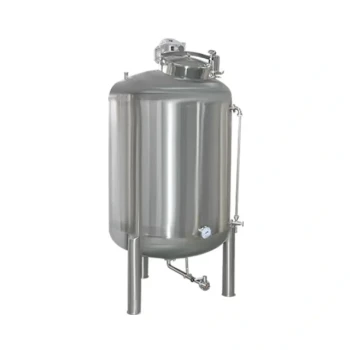
Commercial active honey storage relies on high-precision temperature control to function as a critical physical barrier against chemical degradation. These systems are mandatory to maintain strict, low-fluctuation environments that prevent the breakdown of hydrogen peroxide ($H_2O_2$), the primary driver of the honey's antibacterial activity.
Heat is the enemy of bioactivity in functional honey. Precise temperature regulation is not merely about preventing spoilage; it is the essential mechanism for stabilizing heat-sensitive enzymes and non-peroxide components, ensuring medical-grade honey retains its therapeutic efficacy throughout its shelf life.
The Critical Barrier Against Bioactive Loss
Protecting Hydrogen Peroxide Activity
The primary value of active honey lies in its chemical composition, specifically the activity of hydrogen peroxide ($H_2O_2$). This component is highly sensitive to thermal fluctuations.
Elevated temperatures do not just warm the honey; they significantly accelerate the degradation of $H_2O_2$. A high-precision system maintains the environment within a strict range to inhibit this loss effectively.
Preserving Medical-Grade Efficacy
For honey intended for medical or functional use, consistency is paramount. The temperature control system ensures the stability of non-peroxide active components alongside $H_2O_2$.
Without this precise management, the honey loses its specific antibacterial properties, effectively downgrading it from a high-value medicinal product to a standard sweetener.
Managing Long-Term Chemical Stability
Inhibiting HMF Formation
Beyond enzymes, temperature control manages chemical byproducts. It significantly reduces the rate of Hydroxymethylfurfural (HMF) formation.
HMF is a compound that naturally increases over time, but heat acts as a catalyst. Keeping HMF levels low is a primary indicator of freshness and quality in the international honey market.
Controlling Acidity and Moisture
Industrial systems often integrate humidity control (typically keeping relative humidity around 60%) alongside temperature regulation (often 10-12°C).
This dual management slows the rate of moisture absorption from the air and inhibits the natural increase in acidity that occurs as honey ages, further extending shelf life.
Understanding the Trade-offs
The High Cost of Ambient Storage
It is a common pitfall to assume ambient warehouse temperatures are sufficient. Research indicates that storing honey at typical ambient temperatures (25°C to 30°C) for just six months leads to a significant decline in quality markers.
While high-precision cooling systems represent a higher initial capital investment, the "savings" of ambient storage are negated by the rapid destruction of the product's enzyme activity and economic value.
Precision vs. General Cooling
Not all cooling is equal. Standard air conditioning often allows for wide temperature swings as compressors cycle on and off.
Active honey requires "constant" control. High-precision systems are designed to eliminate these fluctuations, as even short periods of instability can affect the viscosity and volatile aromatic substances inside the container.
Making the Right Choice for Your Facility
To maximize the value of your active honey inventory, align your storage strategy with your end-product goals:
- If your primary focus is Medical-Grade Certification: You must prioritize systems that minimize thermal fluctuation to strictly preserve $H_2O_2$ levels and antibacterial ratings.
- If your primary focus is Extended Shelf Life: You should target a consistent environment (ideally 10-12°C) to suppress HMF formation and acidity increases.
- If your primary focus is Sensory Consistency: You should ensure temperature uniformity to standardize viscosity and mouthfeel, preventing deviations in texture during consumer use.
Ultimate consistency in temperature is the only way to guarantee that the bioactive honey you sell possesses the same therapeutic power as the day it was harvested.
Summary Table:
| Key Storage Factor | Impact of High-Precision Control | Risk of Ambient/Unstable Storage |
|---|---|---|
| H2O2 Activity | Stabilizes hydrogen peroxide for antibacterial power | Rapid degradation and loss of therapeutic grade |
| HMF Levels | Minimizes HMF formation to ensure freshness | High HMF levels indicating chemical aging |
| Enzyme Stability | Protects heat-sensitive bioactive enzymes | Complete denaturation of functional components |
| Moisture & Acidity | Slows moisture absorption and acidity increase | Increased fermentation risk and sensory changes |
| Shelf Life | Maximizes long-term economic value | Significant quality decline within 6 months |
Maximize Your Honey Quality with HONESTBEE Solutions
As a commercial apiary or distributor, the integrity of your honey is your most valuable asset. HONESTBEE specializes in empowering beekeeping professionals with high-performance machinery and equipment designed to maintain medical-grade standards. From specialized honey-filling machines that ensure precision to comprehensive beekeeping tools, we provide the hardware you need to protect your bioactive products.
Ready to elevate your commercial facility? Contact us today to discover how our wholesale machinery and industry consumables can optimize your production and storage efficiency.
References
- Nesrine Feknous, Mahieddine Boumendjel. Natural bioactive compounds of honey and their antimicrobial activity. DOI: 10.17221/247/2021-cjfs
This article is also based on technical information from HonestBee Knowledge Base .
Related Products
- Professional Honey Storage Tank with Agitation System
- Digital Honey Refractometer for Precision Measurement of Optimal Honey Quality
- Precision Honey Refractometer Instrument for Quality Assessment
- Precision Durable Efficient HONESTBEE Rotary Honey Filling Machine
- Commercial Rotary Honey Filling Machine for Production
People Also Ask
- What economic role do honey storage tanks play? Boost Your Revenue Through Strategic Inventory Management
- What roles do industrial honey storage tanks and filtration meshes play in processing? Ensure Purity & Consistency
- What is the purpose of a honey storage tank? Streamline Your Honey Processing for Quality & Efficiency
- What are honey storage tanks used for? Essential Features for Quality Preservation and Profit
- How do large honey storage tanks and gravity fall filling systems improve honey packaging efficiency and safety?