High-precision filtration is the critical stabilization step required to transform raw stingless bee honey into a viable commercial product. It serves a dual purpose: physically removing organic contaminants like beeswax, propolis, and larval debris that trigger spoilage, and refining the visual quality of the liquid. Because stingless bee honey has a naturally high moisture content, omitting this step almost invariably leads to rapid fermentation and the loss of the product's value.
Stingless bee honey is biologically potent but chemically unstable due to its high water content. High-precision filtration is not merely cosmetic; it is a preservation mechanism that eliminates the organic catalysts of fermentation while maintaining the honey's medicinal bioactivity.
The Biological Necessity of Filtration
Combating Fermentation Triggers
Stingless bee honey acts differently than standard honey due to its significantly higher water content. This aquatic environment makes it highly susceptible to yeast activity and bacterial growth.
Solid impurities found in the raw harvest—specifically pollen grains, beeswax fragments, and larval debris—act as nucleation sites and nutrient sources for microorganisms. High-precision filtration removes these solids, thereby removing the fuel that accelerates fermentation and spoilage.
Preserving Medicinal Bioactivity
One of the primary value propositions of stingless bee honey is its pharmacological profile, used in treatments ranging from wound repair to ocular care.
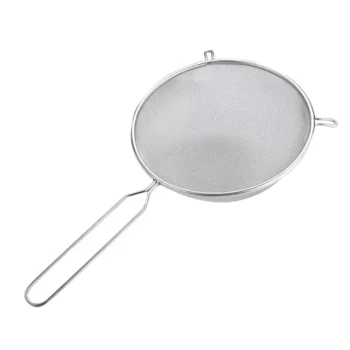
Unlike pasteurization, which uses heat that can destroy beneficial enzymes, filtration is a mechanical process. Using multi-layered stainless steel or food-grade synthetic mesh allows producers to purify the honey without denaturing the antibacterial and anti-inflammatory compounds essential for its medicinal use.
Commercial and Sensory Standards
Achieving Visual Clarity
Raw honey directly from the pot is often turbid, containing suspended propolis residues and insect parts.
Modern consumer markets demand a product that is visually clean and transparent. Professional filtration systems effectively separate these physical impurities, resulting in a clear, attractive liquid that meets commercial quality standards.
Enhancing Texture and Consistency
Beyond appearance, the presence of wax and debris creates a gritty or inconsistent mouthfeel.
High-density filter cloths refine the honey to improve its texture. This ensures the smoothness expected by consumers while retaining the inherent nutritional components that define the honey's flavor profile.
Understanding the Trade-offs
The Risk of Over-Filtration
While removing "excess" pollen is necessary to stabilize the honey against fermentation, pollen is also a source of nutrition and floral identity.
There is a delicate balance to strike; using a mesh that is too fine (ultra-filtration) risks stripping the honey of too many natural markers, potentially reducing its nutritional complexity. The goal is to remove the sediment and excess residues, not to sterilize the product of its natural character.
Material Selection Constraints
The acidity and enzymatic activity of stingless bee honey require specific equipment materials.
Standard filtration cloths may degrade or trap bacteria. It is essential to use food-grade synthetic mesh or stainless steel to prevent contamination and ensure the hygiene standards necessary for a high-value health product.
Optimizing Your Filtration Strategy
Selecting the right filtration precision depends heavily on the intended end-use of your product.
- If your primary focus is Medical Applications: Prioritize the finest possible filtration to remove all particulate matter and potential contaminants to ensure safety for ocular or wound treatments.
- If your primary focus is Commercial Retail: Focus on a filtration grade that maximizes visual clarity and shelf-stability to prevent fermentation in the bottle while maintaining color appeal.
By implementing high-precision filtration, you convert a volatile raw ingredient into a stable, high-value asset ready for the global market.
Summary Table:
| Feature | Importance in Filtration | Benefit to Product |
|---|---|---|
| Microbial Control | Removes pollen & organic debris | Prevents fermentation & spoilage |
| Bioactivity | Mechanical (non-thermal) process | Preserves heat-sensitive enzymes |
| Visual Quality | Eliminates wax & propolis residue | Produces clear, professional-grade honey |
| Texture | Removes gritty particulates | Ensures smooth, consistent mouthfeel |
| Material Safety | Uses food-grade/stainless steel | Prevents chemical contamination |
Elevate Your Honey Production with HONESTBEE
At HONESTBEE, we understand that stingless bee honey requires specialized care to maintain its premium value. As a leading provider for commercial apiaries and distributors, we offer a comprehensive wholesale range of high-precision filtration tools, honey-filling machinery, and specialized beekeeping equipment designed to stabilize your harvest and meet global standards.
Whether you are scaling up a commercial brand or supplying the medical honey market, our expertise in specialized hardware and essential industry consumables ensures your operation remains efficient and your product remains pure.
Ready to optimize your processing line? Contact us today to explore our full spectrum of wholesale solutions!
References
- Lucio Alberto Pat Fernández, Rodimiro Ramos Reyes. Condición y perspectivas de la meliponicultura en comunidades mayas de la reserva de la biósfera Los Petenes, Campeche, México. DOI: 10.19130/iifl.ecm.2018.52.939
This article is also based on technical information from HonestBee Knowledge Base .
Related Products
- Professional Stainless Steel Honey Filtering Machine with Water Bath Heating for Beekeeping
- Stainless Steel Double Layer Honey Strainer Sieve Filters
- Professional Stainless Steel Honey Filter with Support Handle
- Conical Nylon Honey Strainer Filter Bag for Beekeeping and Honey Filtration
- Electric Double Wall Honey Filtering Machine Purifier Equipment for Honey Processing Plant
People Also Ask
- Is it necessary to filter honey after extraction? A Guide to Straining vs. Raw Honey
- What is the best way to filter honey? A Guide to Quality, Clarity, and Raw Preservation
- Why is filtering honey an important step in honey processing? Ensure Purity, Clarity & Marketability
- Why do people filter honey? For Clarity, Stability, and Consumer Appeal
- What are the benefits of using honey filters? Achieve Purity, Efficiency, and Market Appeal