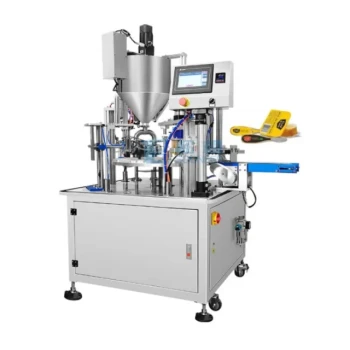
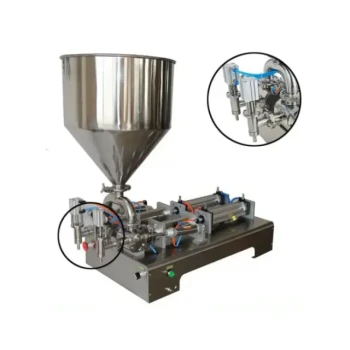
Honey is a biophysically complex fluid, distinct from standard liquids due to its intense molecular density. Its high sugar content generates significant osmotic pressure—the very mechanism responsible for its antibacterial properties. Because this pressure and viscosity fluctuate heavily based on the botanical source (such as nectar versus honeydew), industrial filling equipment must be specifically engineered to manage these resistant forces to ensure accurate dosing without degrading the product's natural structure.
The design of honey-filling machinery is not just about moving fluid; it is about overcoming specific hydrodynamic resistance to preserve the biophysical integrity that grants honey its antimicrobial shelf stability.
Preserving Biophysical Properties
The primary challenge in honey processing is maintaining the delicate balance of its natural composition while moving it at industrial speeds.
The Role of Osmotic Pressure
The high sugar concentration in honey creates immense osmotic pressure. This physical characteristic is the foundation of honey's antibacterial effects, preventing microbial growth by drawing water out of bacteria.
Standard filling equipment often fails to accommodate this density. Dedicated honey machines are engineered to apply the necessary force to move this dense fluid without altering the sugar concentration or introducing aeration that could disrupt this osmotic balance.
Managing Variable Viscosity
Viscosity in honey is not constant; it changes based on the botanical origin. For example, honeydew honey flows differently than nectar honey.
Equipment must be versatile enough to handle these high-viscosity fluids without stalling or losing precision. This ensures that the machine does not overheat the product via friction, which could compromise the honey's biological quality.
Engineering for Precision and Hygiene
To convert raw agricultural output into a compliant commercial product, the machinery must bridge the gap between heavy resistance and delicate handling.
Accurate Quantitative Filling
Handling high-viscosity fluids often leads to inconsistent flow rates. Professional filling machines utilize volumetric or gravity-based principles designed specifically to counteract this drag.
This allows for precise metering control, ensuring that every bottle meets industry net weight standards. By stabilizing the fill volume despite the honey's thickness, manufacturers reduce material loss and waste.
Material Compatibility and Hygiene
The chemical and physical demands of honey require robust construction materials. Machines are typically constructed from food-grade stainless steel.
This material withstands the physical stress of processing dense fluids and meets strict hygiene standards. It allows for fully enclosed operating environments, minimizing human contact and preventing secondary contamination during the transition from bulk to retail packaging.
Understanding the Trade-offs
While specialized machinery is essential, understanding the limitations of the equipment is vital for operational success.
Specificity vs. Flexibility
Machines designed for high-viscosity honey are often purpose-built. While they excel at handling pastes and thick fluids, they may not be suitable for lower-viscosity liquids without modification.
The Maintenance Requirement
The same properties that make honey difficult to fill—stickiness and viscosity—make machinery difficult to clean.
To prevent cross-contamination or "gumming up," these machines require rigorous maintenance schedules. However, modern designs often incorporate features to facilitate cleaning, which is a necessary trade-off for the high-precision capability they offer.
Making the Right Choice for Your Goal
Selecting the correct filling technology depends on your production volume and specific product goals.
- If your primary focus is Small-Scale Production: Look for compact automatic filling machines capable of 360 bottles per hour (500g), handling various pastes and bottle sizes from 50 to 5,000 grams.
- If your primary focus is High-Volume Industrial Processing: Implement inline filling machines with 2 to 4 nozzles, which can achieve production capacities of 3 to 6 tons per day.
- If your primary focus is Retail Differentiation: Prioritize machines with automated labeling and sealing capabilities to meet organic certification standards and enter higher-value consumer markets.
Successful honey production relies on matching your equipment's hydraulic capabilities to the unique biophysical reality of your specific honey type.
Summary Table:
| Feature | Impact of Osmotic Pressure & Viscosity | Engineering Requirement |
|---|---|---|
| Flow Consistency | High resistance leads to uneven dosing and waste | Specialized volumetric or gravity-based dosing systems |
| Product Integrity | Friction from standard pumps can overheat honey | Low-friction, food-grade components to prevent degradation |
| Hygiene & Safety | Dense sugar content attracts moisture and stickiness | 304/316 Stainless steel construction with easy-clean designs |
| Biological Stability | Aeration during filling can disrupt antimicrobial balance | Enclosed, precision-fill nozzles to minimize air inclusion |
Elevate Your Honey Production with HONESTBEE
At HONESTBEE, we understand that honey isn't just a liquid—it's a complex biological product. As a dedicated partner to commercial apiaries and distributors, we provide a comprehensive wholesale range of specialized beekeeping tools and machinery. From advanced honey-filling machines designed to handle high osmotic pressure to custom hive-making equipment and honey-themed cultural merchandise, we offer the full spectrum of industrial solutions.
Why choose HONESTBEE?
- Precision Engineering: Machines tailored for high-viscosity nectar and honeydew honey.
- Wholesale Efficiency: Complete supply chains for beekeeping machinery and consumables.
- Industry Expertise: Solutions that protect your honey’s natural antimicrobial properties.
Ready to scale your operation with professional-grade equipment? Contact us today to discuss your honey-filling needs!
References
- Aikaterini Frantzana. Therapeutic Properties of Honey. DOI: 10.34297/ajbsr.2019.04.000858
This article is also based on technical information from HonestBee Knowledge Base .
Related Products
- Precision Durable Efficient HONESTBEE Rotary Honey Filling Machine
- Economy Small Honey Filling Machine Honey Bottle Filler Packaging Machine
- Fully Automatic Honey Filling Packaging Machine for Processing Line
- Commercial Rotary Honey Filling Machine for Production
- Semi Automatic Small Honey Bottle Filling Machine Honey Filler
People Also Ask
- What are the common types of bottling machines used for honey? Choosing the Right Solution for Your Apiary
- What quality control role does professional honey filling equipment perform? Ensure Consistency and Product Stability
- How do honey filling and processing machines aid native bee product conservation? Boost Value with HONESTBEE Technology
- How do honey filling machines work? Achieve Precision & Speed for Your Apiary
- How do high-precision honey filling machines ensure quality? Optimize Your Commercial Production with HONESTBEE