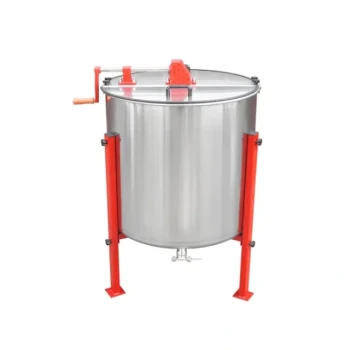
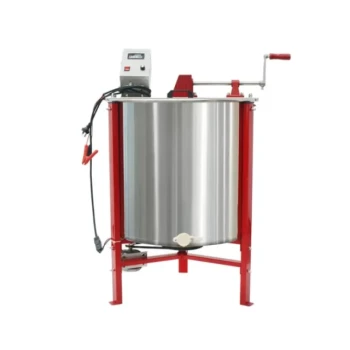
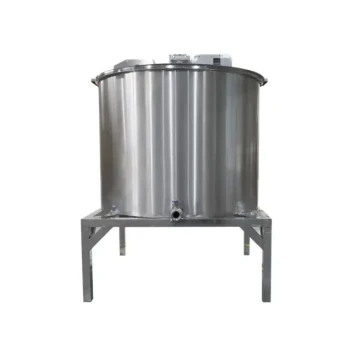
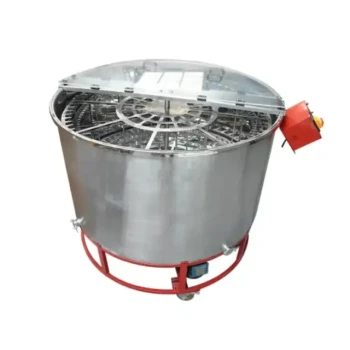
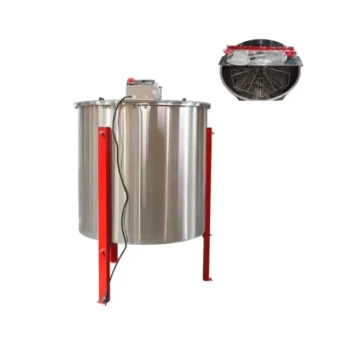
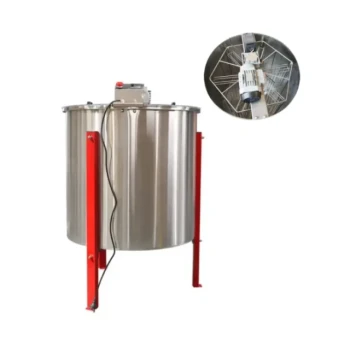
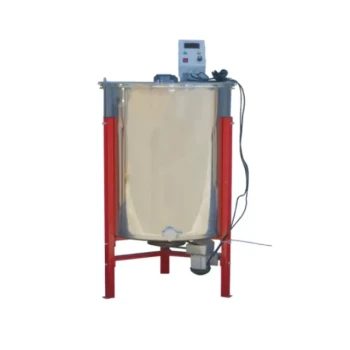
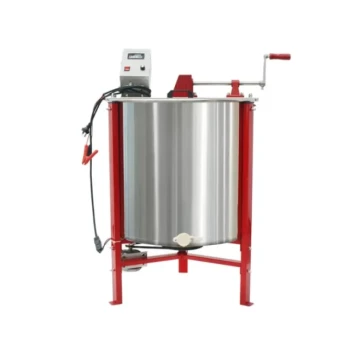
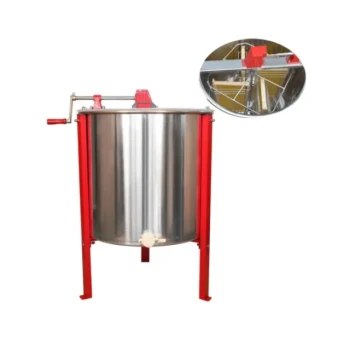
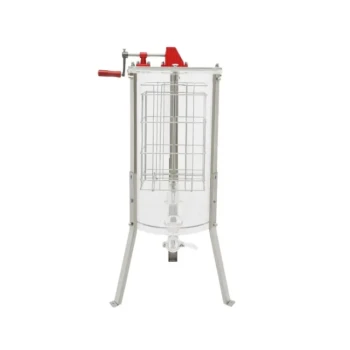
Placing the head of the honeycomb near the center axis is a critical operational requirement designed to prevent mechanical failure during extraction. This specific orientation manages the intense pressure gradient that develops between the comb and the frame during high-speed rotation. By aligning the frame this way, you prevent the uneven centrifugal force from shearing the fragile comb off its mounting, ensuring it remains intact.
The primary objective of this alignment is structural preservation. It mitigates physical stress at the connection point, ensuring the comb does not snap under the load of rotation.
The Physics of Radial Extraction
Managing Centrifugal Force
Radial extractors operate by spinning frames at high speeds to generate centrifugal force. This force is necessary to pull viscous honey out of uncapped cells. However, this force applies significant physical stress to the wax structure itself.
The Pressure Gradient
A pressure gradient forms across the frame during rotation. The force is not uniform; it increases as you move further from the center axis. This variance creates tension across the surface of the comb.
Protecting the Anchor Point
The "head" of the comb serves as the primary connection point to the frame. The primary reference indicates that placing this head near the center axis mitigates the pressure at this specific junction. If oriented incorrectly, the force distribution becomes uneven, leading to structural failure.
The Operational Goal: Reuse
Preventing Structural Snapping
The most immediate risk of incorrect placement is the comb snapping off the frame. The wax structure is fragile relative to the forces involved. Correct alignment ensures the force is directed in a way that the comb's structure can withstand.
Efficiency and Bee Energy
Preserving the comb is not just about a clean extraction; it is about production cycles. As noted in the supplementary references, maintaining an intact comb allows it to be returned to the beehive for immediate reuse. This conserves the significant energy bees would otherwise spend rebuilding wax, allowing them to focus on honey production.
Common Pitfalls to Avoid
The Risk of Incorrect Loading
If the head of the comb is placed away from the center axis, the centrifugal force works against the structural grain of the comb's attachment. This creates a leverage point that can easily rip the wax foundation away from the frame wire or top bar.
Balancing Speed and Integrity
While higher speeds extract honey more thoroughly, they increase the risk of breakage if the orientation is wrong. A properly oriented frame allows the operator to reach the high speeds necessary for maximum recovery without destroying the equipment.
Making the Right Choice for Your Goal
Correct orientation is the key to balancing high yield with sustainable beekeeping practices.
- If your primary focus is Equipment Longevity: Always place the comb head toward the center to minimize stress on the wax-to-frame connection points.
- If your primary focus is Production Efficiency: Ensure proper orientation to prevent comb breakage, which allows for immediate return to the hive and shorter production cycles.
Mastering this simple orientation detail ensures you extract maximum honey while preserving your colony's most valuable resource: their drawn comb.
Summary Table:
| Factor | Radial Placement (Near Axis) | Impact on Extraction |
|---|---|---|
| Centrifugal Force | Minimized at the anchor point | Prevents wax shearing and snapping |
| Pressure Gradient | Optimized distribution | Protects the fragile comb-to-frame connection |
| Structural Integrity | High preservation | Allows for immediate comb reuse in the hive |
| Production Speed | Higher RPM capacity | Maximum honey recovery without equipment failure |
Scale Your Honey Production with HONESTBEE
Maintaining intact combs is vital for commercial efficiency. At HONESTBEE, we understand the technical demands of large-scale beekeeping. We empower commercial apiaries and distributors by providing the industry's most reliable honey-filling machines, hive-making equipment, and high-performance radial extractors.
Whether you are looking to upgrade your extraction facility or source essential industry consumables, our comprehensive wholesale offering is designed to maximize your yield and protect your colony's resources. Partner with the experts to streamline your operations.
Contact HONESTBEE Today to Explore Our Wholesale Solutions
References
- A. Zohairy. Simple and Inexpensive Method to Modify Bee Honey Extractor with Moving Baskets to Radial Extractor is Easy to Jaw and Installion, or with Out Baskets. DOI: 10.21608/jppp.2019.43183
This article is also based on technical information from HonestBee Knowledge Base .
Related Products
- 24 Frame Honey Extractor Commercial Radial Honey Frame Extraction Machine
- Stainless Steel Manual 8 Frame Radial Honey Extractor Machine for Beehives
- 6 Frame Manual Stainless Steel Honey Extractor Beekeeping Equipment
- HONESTBEE 8 Frame Electric and Manual Three Use Honey Extractor
- Electric 4 Frame Tangential Honey Extractor
People Also Ask
- How does a radial honey extractor leverage the natural structure of a honeycomb? Optimize Your Apiary's Efficiency
- How do modern honey extraction machines improve harvest efficiency? Boost Your Yield with Radial Technology
- Why is the width of iron rings varied for radial honey extractor tilt? Optimize Your Harvest with Precise Engineering
- What are the operational differences between radial and tangential honey extractors? Maximize Your Harvest Efficiency
- What are the characteristics of radial honey extractors? Boost Efficiency in Commercial Honey Production