Measurement distance acts as the physical regulator of pixel density. It directly determines the level of detail available for the camera to capture relative to the target object. If this distance is not optimized for the camera's resolution, the system will fail to extract enough unique feature points, rendering the recognition model ineffective for accurate matching.
The relationship is inverse and critical: As the distance between the camera and the subject increases, the number of extractable feature points drops significantly. To ensure reliable detection, the measurement distance must be fixed at a range—such as 300 mm—that guarantees sufficient pixel detail.
The Physics of Feature Extraction
The Correlation Between Distance and Detail
Measurement distance is not merely a mounting choice; it dictates the quality of the raw data fed into your algorithms.
Distance directly determines the level of pixel detail. When the camera is too far from the honeybee, the target occupies fewer pixels, resulting in a low-resolution representation of the insect.
Quantifying the Data Loss
The degradation of data quality over distance is steep, not linear.
Increasing distance causes a substantial reduction in feature frequency. For instance, moving a camera from 300 mm to 1100 mm results in a significant drop in the number of extracted feature points, making model matching nearly impossible.
The Necessity of Optimization
To maintain high detection performance, the system hardware must be tuned to capture sufficient feature information.
A fixed, optimized distance is required. Data suggests that a distance of approximately 300 mm allows the system to capture the necessary density of features for robust identification.
Standardizing for Algorithmic Success
Achieving Consistent Scale
Beyond raw resolution, the geometry of the setup plays a massive role in software performance.
Standardizing camera height ensures consistent object size. By fixing the camera at 30 cm (300 mm) above the landing board, honeybees appear at a predictable scale in every frame, simplifying the recognition task.
Reducing Environmental Variability
Automated systems often struggle when deployed across different physical locations.
Standardization combats environmental noise. A consistent setup helps recognition algorithms maintain scale across different beehives, reducing the negative impact of environmental variations on keypoint localization accuracy.
Common Pitfalls to Avoid
The Trap of Variable Distances
One of the most common errors in system design is failing to fix the measurement distance rigidly.
Inconsistent distances lead to inconsistent feature extraction. If the camera position varies, the keypoint localization accuracy fluctuates, making the system unreliable and decreasing its overall versatility.
Overestimating Sensor Capability
Designers often assume high-resolution cameras can compensate for poor placement.
Resolution cannot fix physics. Even with a high-resolution sensor, placing the camera too far away (e.g., 1100 mm) dilutes the pixel density on the target so severely that the algorithm lacks the data points necessary for matching.
Making the Right Choice for Your System
To ensure your automated inspection system delivers reliable data, you must align your hardware configuration with your algorithmic requirements.
- If your primary focus is Detection Accuracy: Lock your measurement distance at approximately 300 mm to maximize the frequency of extracted feature points for model matching.
- If your primary focus is System Versatility: Enforce a strict standard for camera installation height across all hives to ensure consistent object scale and reduce environmental processing errors.
Optimizing measurement distance is the single most effective hardware adjustment for guaranteeing high-fidelity feature extraction.
Summary Table:
| Parameter | Recommended Setting | Impact on Inspection Accuracy |
|---|---|---|
| Optimal Distance | 300 mm (30 cm) | Maximizes pixel density and feature point extraction. |
| High Distance | 1100 mm+ | Causes significant data loss and model matching failure. |
| Camera Height | Standardized (Fixed) | Ensures consistent object scale across different beehives. |
| Focus Area | Landing Board | Reduces environmental noise and improves localization. |
Scaling Your Commercial Apiary? Let HONESTBEE Power Your Automation
At HONESTBEE, we specialize in empowering commercial apiaries and distributors with the precision tools needed for modern beekeeping. Whether you are building custom automated inspection systems or upgrading your facility, we provide the full spectrum of high-performance beekeeping machinery—from advanced hive-making equipment and honey-filling machines to a comprehensive range of wholesale consumables and hardware.
Why partner with HONESTBEE?
- Expert Solutions: We understand the technical nuances of bee health monitoring and honey production.
- End-to-End Supply: Access a global-standard portfolio of tools, machinery, and honey-themed cultural merchandise.
- Scalable Wholesale: Tailored supply chains for large-scale operations and distribution networks.
Ready to optimize your production and monitoring efficiency? Contact us today to discuss your wholesale equipment needs and see how HONESTBEE can grow your business.
References
- Hong‐Gu Lee, Changyeun Mo. Identifying an Image-Processing Method for Detection of Bee Mite in Honey Bee Based on Keypoint Analysis. DOI: 10.3390/agriculture13081511
This article is also based on technical information from HonestBee Knowledge Base .
Related Products
- Classic Wooden Bee Brush with Double-Row Boar Bristles
- HONESTBEE Entrance Bee Feeder Professional Hive Nutrition Solution for Beekeeping
- Professional Bee Frame Wiring Tool with Integrated Tensioning System by HONESTBEE
- HONESTBEE Professional Mini J-Hook Hive Tool for Beekeeping
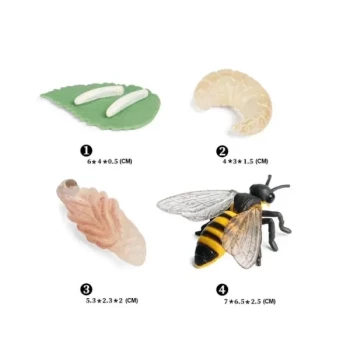
- Honey Bee Life Cycle Model 4 Stage Educational Set for Kids Learning
People Also Ask
- What are the key features of a popular bee brush? Essential Design for Bee Safety and Hive Hygiene
- What are the key characteristics of the bristles on a bee brush? Master Gentle and Efficient Bee Removal
- What is a bee brush and what is its primary use? A Gentle Tool for Hive Management
- What is the purpose of using a bee brush during the inspection of hive components? Safe & Precise Hive Management
- What is the specific function of a bee brush? Ensure Pure Harvests and Colony Welfare During Honey Extraction