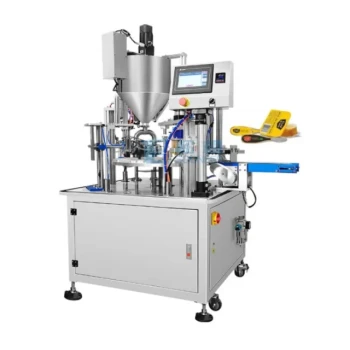
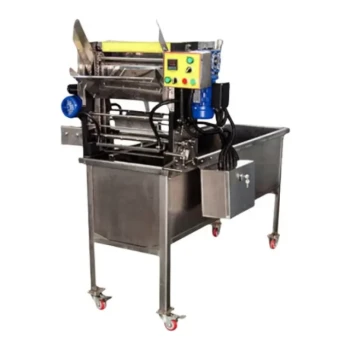
Honey’s unique physical properties dictate that ease of cleaning and maintenance must be a primary factor in your machine selection process. Because honey is inherently sticky and viscous, residue accumulation is rapid, leading to potential clogging, cross-contamination between batches, and significant mechanical wear. Prioritizing a machine designed for easy disassembly and cleaning ensures your operation avoids costly downtime and maintains strict hygiene standards.
The Core Insight Honey is a distinctively difficult substance to handle; without a machine optimized for hygiene and maintenance, you risk compromising product purity and halting production. Prioritizing maintenance features protects your capital investment and ensures consistent, sanitary output.
The Physical Challenge of Honey
Managing High Viscosity and Stickiness
Honey’s natural thickness (viscosity) presents a constant mechanical challenge. Unlike free-flowing liquids, honey clings to surfaces, seals, and nozzles.
If a machine is difficult to clean, this sticky residue hardens over time. This leads to clogging, which strains the machine's motor and internal components, potentially causing mechanical failure.
Preventing Batch Contamination
Hygiene is paramount in food packaging. A machine that traps residue in hard-to-reach crevices creates a risk of contamination.
Residues from previous batches must be completely removed to ensure the purity of the current run. Easy access to fluid paths ensures that no old product compromises the flavor or safety of new batches.
Operational Efficiency and Longevity
The Value of Detachable Parts
Machines designed with easy-to-remove parts significantly reduce the labor hours required for sanitation.
When operators can quickly disassemble contact parts without specialized tools, the cleaning process becomes quicker and more efficient. This swift turnaround translates directly to higher overall productivity.
Minimizing Production Downtime
Complex or difficult maintenance routines inevitably lead to longer periods of inactivity.
Regular, efficient maintenance is essential for optimal performance. By selecting a machine that simplifies this process, you minimize the "downtime" window, keeping your production line moving and your revenue stream consistent.
Extending Equipment Lifespan
A well-maintained machine simply lasts longer.
Ease of cleaning encourages regular upkeep rather than deferral. This consistent care prevents the degradation of parts caused by dried sugar/honey buildup, protecting your investment for the long term.
Understanding the Trade-offs
Initial Investment vs. Long-Term Labor
Machines engineered for rapid sanitation (often featuring quick-release clamps or sanitary welds) may carry a higher initial price tag than basic models.
However, choosing a cheaper, difficult-to-clean machine is a false economy. The initial savings will quickly be eroded by increased labor costs during cleaning shifts and more frequent repair bills due to inadequate maintenance.
Making the Right Choice for Your Goal
To select the machine that best fits your operational reality, evaluate your specific volume and hygiene needs.
- If your primary focus is High-Volume Production: Prioritize machines with tool-less disassembly and automated cleaning cycles (CIP) to minimize downtime between shifts.
- If your primary focus is Product Purity/Artisanal Quality: Look for machines with fully accessible fluid paths to ensure 100% removal of residue between different honey varietals.
Your packaging machine is the heart of your production line; ensure it is designed to handle the reality of the product it processes.
Summary Table:
| Feature | Importance for Honey Packaging | Operational Benefit |
|---|---|---|
| Detachable Parts | Quick access to sticky residue zones | Reduced labor hours & faster turnover |
| Hygienic Design | Eliminates crevices that trap old honey | Prevents cross-contamination & ensures purity |
| Easy Maintenance | Encourages regular upkeep and lubrication | Minimizes mechanical wear & prevents failure |
| Tool-less Access | Simplifies disassembly for operators | Drastically reduces production downtime |
| Sanitary Welds | Prevents sugar buildup in fluid paths | Long-term equipment durability & food safety |
Scale Your Honey Production with HONESTBEE
Maintaining hygiene and efficiency shouldn't be a bottleneck for your business. At HONESTBEE, we specialize in supporting commercial apiaries and distributors with high-performance beekeeping tools and machinery designed for the real-world challenges of honey processing.
Whether you need honey-filling machines engineered for rapid cleaning or specialized hive-making hardware, our comprehensive wholesale offering provides the durability and precision your operation demands.
Ready to optimize your production line and protect your product purity?
Contact our experts today to find the perfect equipment solution and see how HONESTBEE can drive your success in the honey industry.
Related Products
- Automatic Single-Dose Snap & Squeeze Honey Sachets Packing Machine
- Fully Automatic Honey Filling Packaging Machine for Processing Line
- Precision Automated Packaging Turntable Honey Spoon Filling Sealing Packing Machine
- Economy Small Honey Filling Machine Honey Bottle Filler Packaging Machine
- Honey Stick Filler Vertical Paste Sachet Packing Machine for Honey Sachets
People Also Ask
- What are the advantages of honey sachet packing machines? Boost Efficiency & Unlock New Markets
- What are the main functions of a honey sachet packing machine? Boost Efficiency with Automated Precision
- How does an industrial-grade honey sachet packaging machine assist beekeepers in accessing public institution markets?
- Why is automated packaging machinery essential for scaling industrial honey production? Drive Commercial Scalability
- How does the viscosity of honey influence packaging choices? Selecting the Best Containers & Machinery