The Harvest Paradox
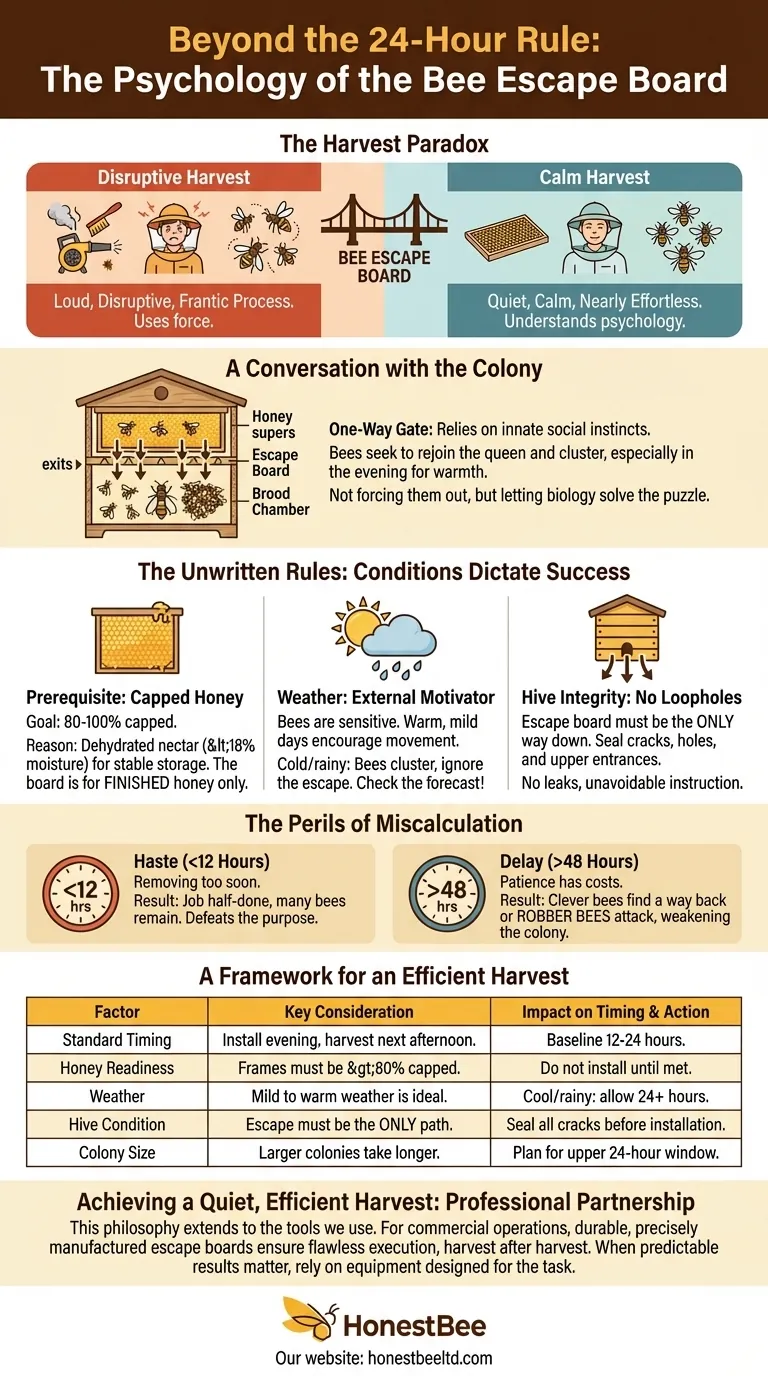
Every beekeeper, especially at a commercial scale, faces a fundamental challenge: how to separate the honey from the bees. One path involves smoke, blowers, and brushes—a loud, disruptive, and often frantic process. The other is quiet, calm, and nearly effortless.
The difference isn't just about the beekeeper's mood; it's about colony stress and operational efficiency. The tool that bridges this gap is the bee escape board, an instrument of elegant simplicity. But its success hinges not on force, but on a deep understanding of bee psychology.
A Conversation with the Colony
A bee escape board is not a brute-force filter. It's a one-way gate that relies on the bees' innate social instincts.
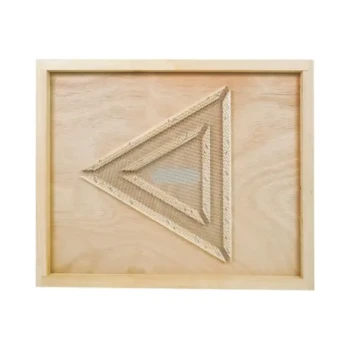
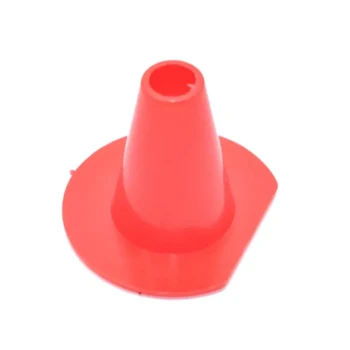
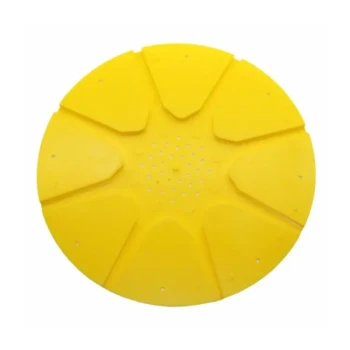
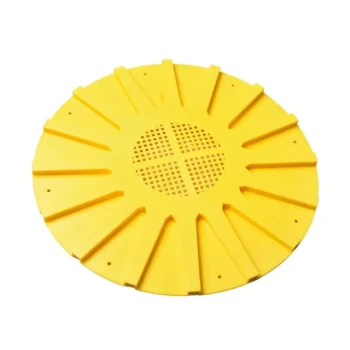
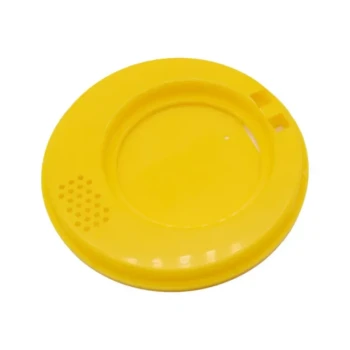
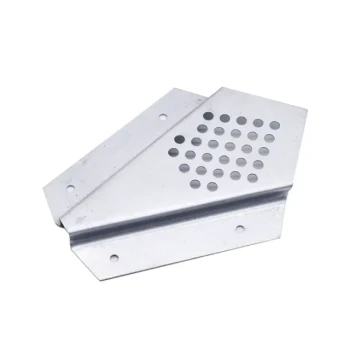
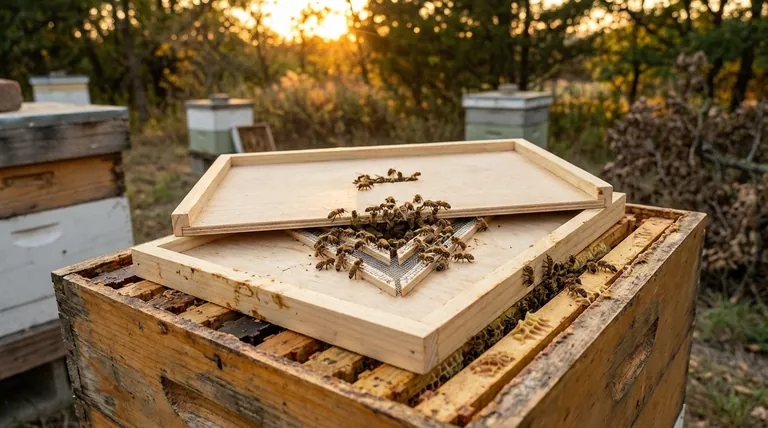
When placed between the honey supers and the brood chamber, it creates a gentle separation. The worker bees in the supers can navigate down through the triangle-shaped exits, but the design makes it nearly impossible for them to find their way back up.
What truly drives this exodus is their powerful instinct to rejoin the queen and the main cluster. Placing the board in the evening leverages another natural behavior: the colony’s tendency to coalesce for warmth and security overnight. You aren’t forcing them out; you are simply presenting a puzzle and letting their own biology solve it for you. The 12-to-24-hour rule is a measure of their collective decision-making, not a simple mechanical timer.
The Unwritten Rules: Conditions Dictate Success
Merely setting the board and a timer is a recipe for inconsistency. The real art lies in assessing the conditions, as the hive itself will tell you when it's ready.
Prerequisite: The Bees' Seal of Approval
Before you even consider clearing the supers, inspect the frames. Honey is ready only when the bees say it is.
- The Goal: 80-100% capped honey.
- The Reason: Capping signifies that the bees have dehydrated the nectar to the correct moisture content (<18%) for stable, long-term storage.
- The Takeaway: The escape board is for clearing bees from finished honey, not a tool to rush the process.
Weather: The External Motivator
Bees are exquisitely sensitive to their environment. Their willingness to move through the escape is directly tied to the weather.
In cold or rainy conditions, their priority shifts from exploration to preservation. They will cluster for warmth, even in the honey super, and show little interest in moving. A warm, mild day encourages the movement necessary for the board to work effectively. Ignoring the forecast is like trying to have a conversation with someone who isn't listening.
Hive Integrity: A System Without Loopholes
The escape board must be the only way down. If your honey supers have cracks, holes, or a forgotten upper entrance, the bees will use them.
The system fails if it has leaks. Before installing the board, ensure the boxes are sound and all alternate routes are sealed. This simple check transforms the board from a suggestion into a clear, unavoidable instruction.
The Perils of Miscalculation
While the bee escape is a low-stress tool, incorrect timing can create new problems, undermining the very efficiency you seek to create.
The Consequence of Haste (<12 Hours)
Removing the board too soon is a common mistake. You’ll arrive to find the job half-done, with a frustrating number of bees remaining. This defeats the purpose of the tool, forcing you to resort to the disruptive methods you were trying to avoid.
The Risk of Delay (>48 Hours)
Patience is a virtue, but procrastination has its costs. Leaving a board on for too long can have two negative outcomes:
- Clever Bees: A few resourceful bees may eventually figure out how to navigate back into the now-undefended honey supers.
- Robber Bees: More dangerously, a poorly sealed hive with a board on for days can attract robber bees from other colonies, creating a frenzy that can weaken or destroy your hive.
A Framework for an Efficient Harvest
For commercial operations, success is about repeatable, predictable processes. The bee escape board is a cornerstone of this, but it requires a strategic approach, not a rigid one. Use the standard recommendation as a baseline, but adapt to the reality on the ground.
| Factor | Key Consideration | Impact on Timing & Action |
|---|---|---|
| Standard Timing | Install in the evening, harvest the next afternoon. | Baseline of 12-24 hours. |
| Honey Readiness | Frames must be at least 80% capped. | Do not install the board until this condition is met. |
| Weather | Mild to warm weather is ideal. | In cool or rainy weather, allow for the full 24 hours or more. |
| Hive Condition | The escape must be the only path down. | Seal all cracks and alternate entrances before installation. |
| Colony Size | Larger, more populous colonies may take longer to clear. | Plan for the upper end of the 24-hour window. |
Achieving a quiet, efficient harvest is the mark of a professional. It reflects an understanding that beekeeping is a partnership. This philosophy extends to the tools we use. For commercial apiaries and distributors, equipment isn't just a cost—it's an investment in reliability and colony health. Durable, precisely manufactured escape boards, like those supplied by HONESTBEE, ensure that your well-laid plans execute flawlessly, harvest after harvest.
When your operation depends on predictable results, rely on equipment designed for the task. Contact Our Experts
Visual Guide
Related Products
- HONESTBEE Wooden Bee Escape Board with Triangle Mesh Design for Beekeeping
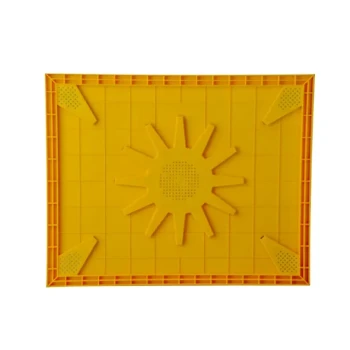
- HONESTBEE Multi Exit Plastic Bee Escape Board for Efficient Honey Harvesting
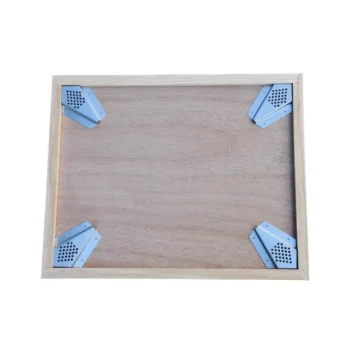
- HONESTBEE 4-Way Metal Corner Wooden Bee Escape Board
- Slatted Porter Style Bee Escape for Rapid Hive Clearing
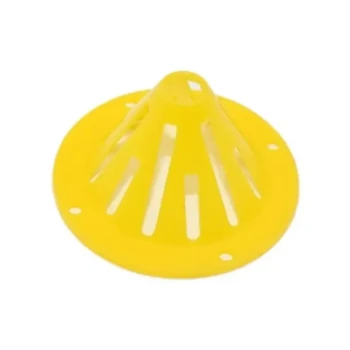
- Professional Cone Style Bee Escape for Efficient Honey Harvesting
Related Articles
- The Quiet Choreography: Mastering the Bee Escape Board for a Systemic Harvest
- How Bee Escape Boards Enable Ethical Honey Harvests Without Colony Stress
- Engineering Empathy: The Quiet Genius of the Bee Escape Board
- The Engineer's Gambit: Why Your Bee Escape Board Fails
- An Elegant Deception: The Behavioral Science of the Bee Escape Board