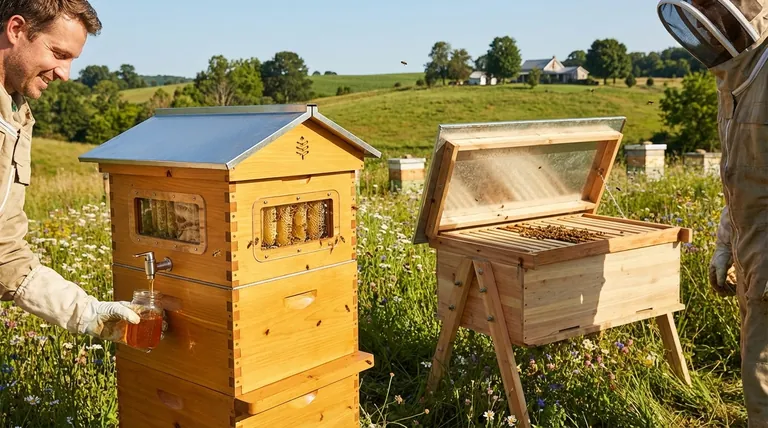
Sustainable beekeeping demands balancing efficiency with bee welfare. The Flow Hive’s innovative design promises easier honey extraction and reduced bee stress—but does it truly outperform traditional hives in the long run? This guide compares mechanics, ecological impact, and cost-effectiveness to help beekeepers make informed choices.
The Mechanics of Honey Extraction: Spinning vs. Flowing
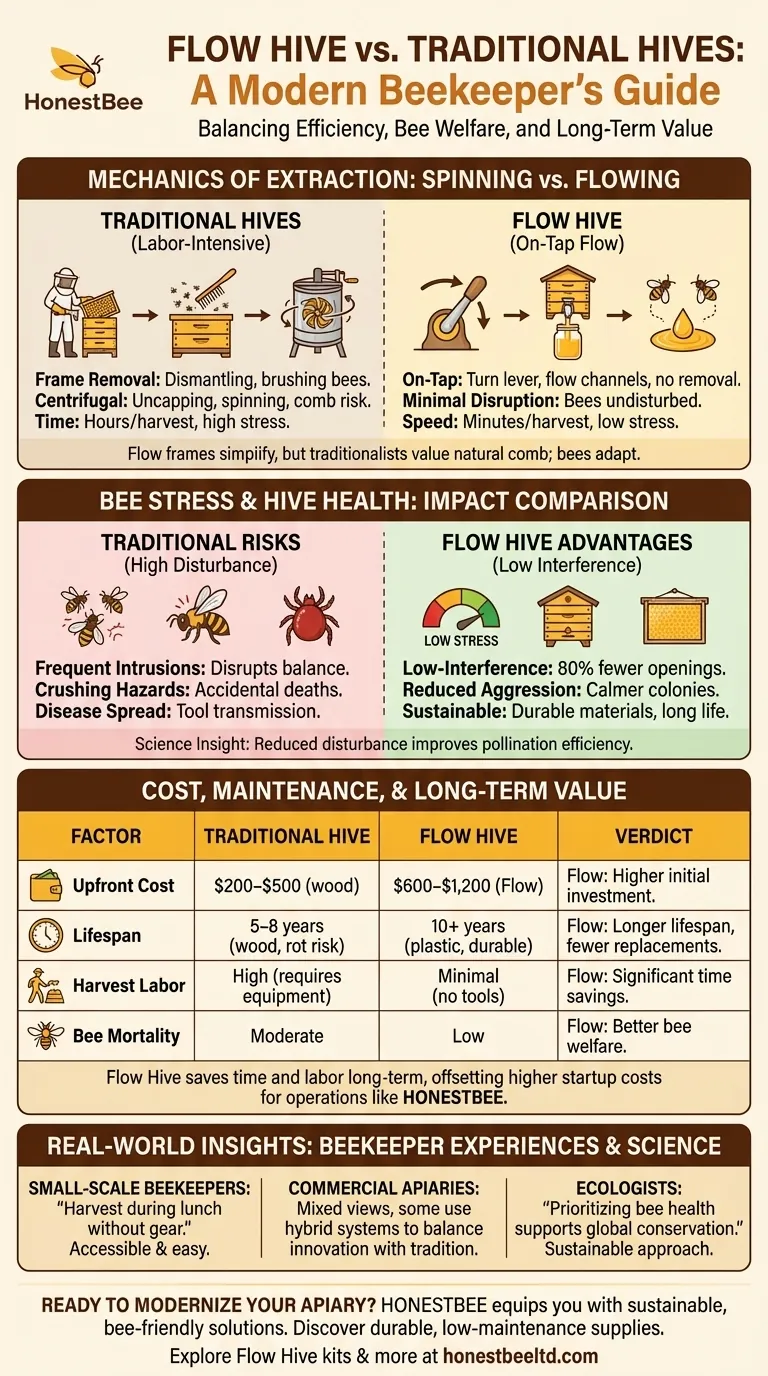
Traditional hives rely on labor-intensive methods:
- Frame removal: Requires dismantling hive boxes and brushing bees off each frame.
- Centrifugal extraction: Frames are uncapped and spun in a manual or electric extractor, risking comb damage.
- Time investment: A single harvest can take hours, increasing stress for both bees and beekeepers.
Flow Hive’s breakthrough:
- On-tap honey: Turn a lever, and honey flows through pre-formed channels into a collection jar—no frame removal needed.
- Minimal disruption: Bees remain undisturbed in the brood chamber, reducing colony stress.
- Speed: Harvesting takes minutes, ideal for hobbyists or those managing multiple hives.
Key consideration: While plastic Flow Frames simplify extraction, traditionalists argue they limit bees’ natural comb-building instincts. However, research notes that bees adapt well to pre-formed structures, especially when the brood chamber allows natural wax construction.
Bee Stress and Hive Health: Comparing Impact
Traditional Hive Risks
- Frequent intrusions: Regular inspections and harvests disrupt the colony’s temperature/humidity balance.
- Crushing hazards: Accidental bee deaths during frame handling are common.
- Disease spread: Tools moving between hives can transmit pests like varroa mites.
Flow Hive Advantages
- Low-interference design: 80% fewer hive openings (per beekeeper reports) correlate with stronger winter survival rates.
- Reduced aggression: Less smoke and manipulation mean calmer colonies.
- Sustainable materials: High-density polyethylene frames resist moisture and last over a decade, unlike wooden frames prone to rot.
Science-backed insight: A 2020 study by the University of Sussex found that reduced hive disturbances significantly improved pollination efficiency—a critical factor for commercial apiaries.
Cost, Maintenance, and Long-Term Value Breakdown
| Factor | Traditional Hive | Flow Hive |
|---|---|---|
| Upfront cost | $200–$500 (wooden) | $600–$1,200 (includes Flow Frames) |
| Lifespan | 5–8 years (wood) | 10+ years (plastic) |
| Harvest labor | High (requires extractor equipment) | Minimal (no additional tools) |
| Bee mortality | Moderate | Low |
Verdict: Flow Hives cost more initially but save time and reduce replacement expenses. For commercial operations like those supplied by HONESTBEE, durability and efficiency can offset higher startup costs.
Real-World Insights: Beekeeper Experiences and Scientific Findings
- Small-scale beekeepers praise Flow Hives for making beekeeping accessible: “I harvest honey during lunch breaks without protective gear.”
- Commercial apiaries report mixed views: Some adopt hybrid systems (Flow Frames for honey, wood for brood), balancing innovation with tradition.
- Ecologists highlight that any system prioritizing bee health—like the Flow Hive’s low-disturbance approach—supports global pollinator conservation efforts.
Ready to Modernize Your Apiary?
HONESTBEE equips beekeepers with sustainable, bee-friendly solutions—from Flow Hive components to wholesale bulk orders. Discover how our durable, low-maintenance supplies can streamline your operation while putting bee welfare first. [Explore HONESTBEE’s catalog today.]
Products You Might Be Looking For:
Explore beginner-friendly Flow Hive kits
Visual Guide
Related Products
- Stainless Steel Round Beehive Air Vents for Ventilation
- Professional Grade Foldable Beehive Handles
- Wholesales Dadant Size Wooden Bee Hives for Beekeeping
- Solid Bottom Board Australian Pine Wood Langstroth Bottom Board for Wholesale
- Professional Large-Format Hive Number Set for Beekeeping
Related Articles
- How to Optimize Beehive Ventilation: Prevent Disease and Boost Colony Health
- The Silent Killer in the Hive: Why Moisture, Not Cold, Is Winter's Greatest Threat
- Beyond the Bee Box: Why Your First Apiary Investment Determines Your Success
- The Precision of Chaos: Navigating the Biological Risks of Commercial Beehive Transportation
- Beyond the Box: Why Hive Architecture Is Your Apiary's Core Operating System












