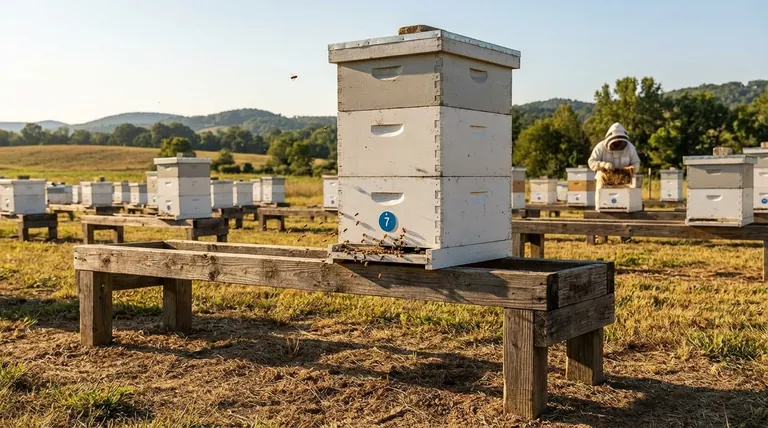
The Silent Failure
Imagine walking through your bee yard after the winter thaw. You check hive after hive—the familiar hum of life greets you at each entrance. Then you reach a hive at the end of the row. It’s silent.
Inside, the colony is gone. But it wasn't starvation; there's still honey. It wasn't an obvious disease. The culprit is subtler. The bottom board is damp and spongy to the touch, a victim of months of direct contact with the wet, cold ground. The colony didn't just die; it was slowly overwhelmed by a persistent, preventable failure in its environment.
This wasn't a failure of biology. It was a failure of physics and foresight.
The Psychology of Overlooked Threats
As beekeepers and business operators, we are wired to focus on active, visible threats. We wage war on Varroa mites, monitor for queen failure, and track nectar flows. These are the dramatic, urgent challenges of beekeeping.
Yet, some of the most significant risks to an apiary are not sudden events but slow, creeping processes. Ground moisture, poor ventilation, and opportunistic pests are passive threats. They don’t attack; they simply undermine.
A hive stand is a physical solution to this psychological blind spot. It is a deliberate, proactive decision to control the environment from the ground up, acknowledging that a colony's strength is only as good as its foundation.
The Physics of Elevation: A Systemic Defense
Lifting a hive off the ground by just a few inches fundamentally changes its relationship with its environment. For a commercial apiary, where small efficiencies and risks are magnified across dozens or hundreds of colonies, these changes are not trivial. They are core to operational success.
Interrupting the Moisture Chain Reaction
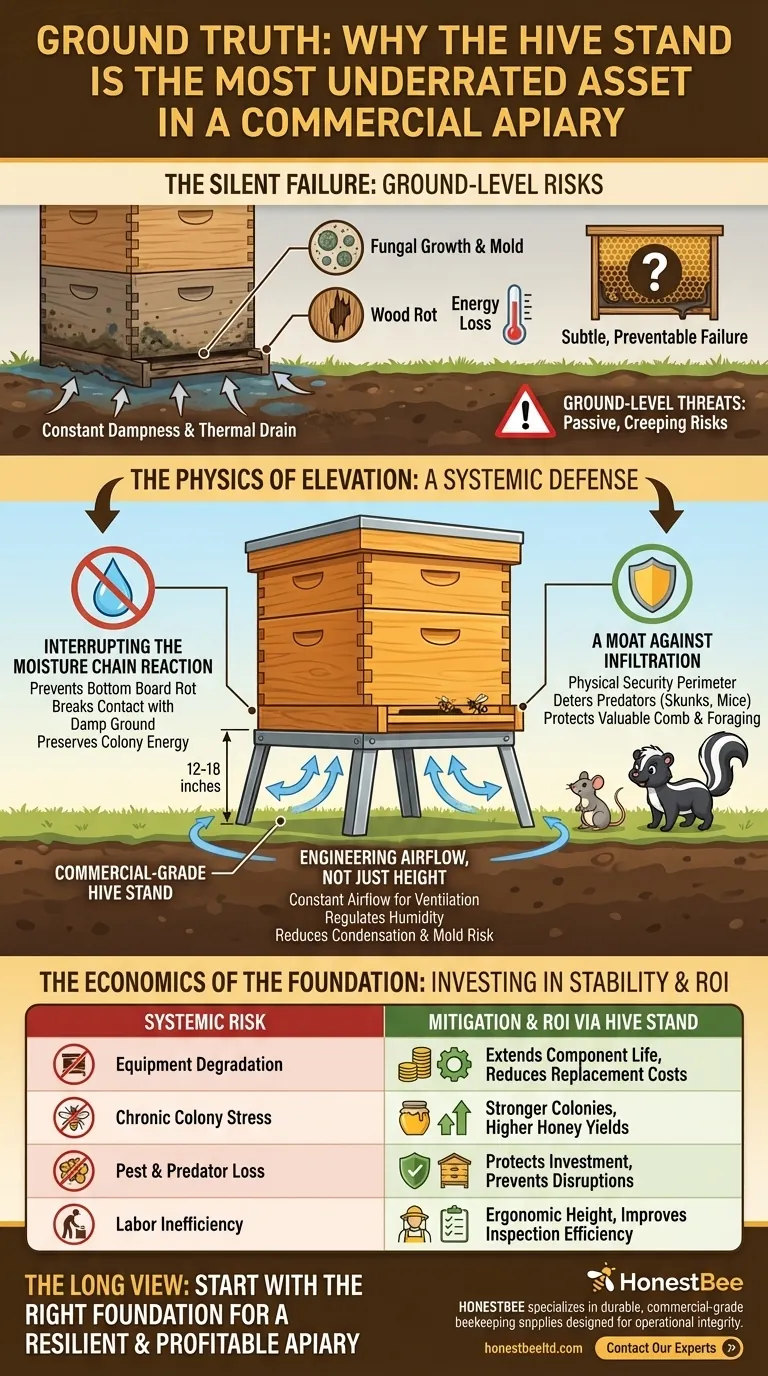
A bottom board resting on the ground acts like a sponge. This constant dampness doesn't just cause wood to rot—a straightforward equipment loss. It initiates a cascade of negative effects:
- Fungal Growth: The damp, cool wood becomes a breeding ground for mold and fungus, like chalkbrood, stressing the colony's hygiene systems.
- Thermal Drain: The hive must expend more energy—and consume more resources—to maintain the brood nest's critical temperature against the constant chill from below.
- Compromised Health: A perpetually stressed colony is more vulnerable to diseases and pests it might otherwise fight off.
By elevating the hive, you break this chain reaction at its source. You aren't just saving a piece of wood; you are preserving the colony's finite energy for growth and production.
Engineering Airflow, Not Just Height
Elevation creates a crucial air gap. This allows for constant airflow beneath the hive, which helps manage the colony's internal thermodynamics.
Proper ventilation prevents the buildup of condensation, especially during cold nights after warm days. It helps the bees regulate humidity more efficiently, which is vital for curing honey and maintaining a healthy brood environment. This isn't just about keeping the hive dry; it's about creating a stable micro-environment that reduces the colony's workload.
A Moat Against Infiltration
To a ground predator like a skunk or a mouse, a hive sitting on the ground is an easy meal or a warm winter home. The disturbance from a single skunk attack can disrupt a colony for days, reducing its foraging efficiency. A mouse nesting inside can destroy frames of valuable drawn comb, an asset that takes thousands of bee-hours to create.
A sturdy hive stand, especially one 12-18 inches high, serves as a simple but effective security perimeter. It’s a physical barrier that deters most casual threats, protecting the colony and the beekeeper's investment in equipment and livestock.
The Economics of the Foundation
For any commercial operation, decisions must be weighed in terms of cost, risk, and return. The humble hive stand is a perfect case study in this calculation.
| Systemic Risk | Mitigation & ROI via Hive Stand |
|---|---|
| Equipment Degradation | Prevents bottom board rot, extending the life of hive components and reducing replacement costs. |
| Chronic Colony Stress | Improves ventilation and thermal efficiency, leading to stronger colonies and higher honey yields. |
| Pest & Predator Loss | Creates a physical barrier, protecting valuable comb and preventing disruptions to foraging. |
| Labor Inefficiency | Elevates hives to an ergonomic height, reducing physical strain and improving inspection efficiency across the apiary. |
Stability: An Asset, Not an Expense
The temptation to save money with a makeshift, unstable stand is a false economy. A full, productive hive can weigh hundreds of pounds. A collapse is not just an equipment loss; it's a catastrophic failure that results in a lost colony, lost production, and a significant safety hazard.
Investing in a professionally built, stable hive stand transforms it from a potential liability into a reliable operational asset.
The Long View
The hive stand is the first piece of equipment you set down, and its impact is the last to be felt at the end of the season. It embodies an engineering principle: a system's success depends on the integrity of its foundation.
For operators who manage their apiaries as the valuable, productive assets they are, starting with the right foundation is non-negotiable. HONESTBEE specializes in durable, commercial-grade beekeeping supplies designed for exactly this kind of operational integrity and scale. We understand that your success is built from the ground up.
If you are ready to build a more resilient and profitable apiary, Contact Our Experts.
Visual Guide
Related Products
- Metal Hive Feet Bee Hive Stand for Ant Protection
- Plastic Bee Hive Stand for Beekeeping
- Metal Bee Hive Stand Bee Box Stand for Beekeeping
- Professional Ant-Proof Beehive Stand with Integrated Moat for Beekeeping
- Plastic Bee Frame Beekeeping Hive Frames for Wholesale
Related Articles
- How to Stabilize Beehive Stands in Wet Soil: Proven Techniques for Beekeepers
- Beyond the Box: How a Simple Stand Prevents Compounding Failures in Beekeeping
- The Unseen Foundation: Why a Beehive Stand Dictates Your Apiary's Success
- The Unseen Architecture of a Productive Apiary: Why Your Beehive Stand Height is a System Design Choice
- How to Choose and Install a Beehive Stand for Pest Control and Colony Health