Selecting the optimal honey filter is critical for balancing purity, efficiency, and cost in honey production. Whether you're a small-scale beekeeper or manage a commercial apiary, this guide breaks down filter types, key selection criteria, and real-world insights to match your needs.
Types of Honey Filters and Their Applications
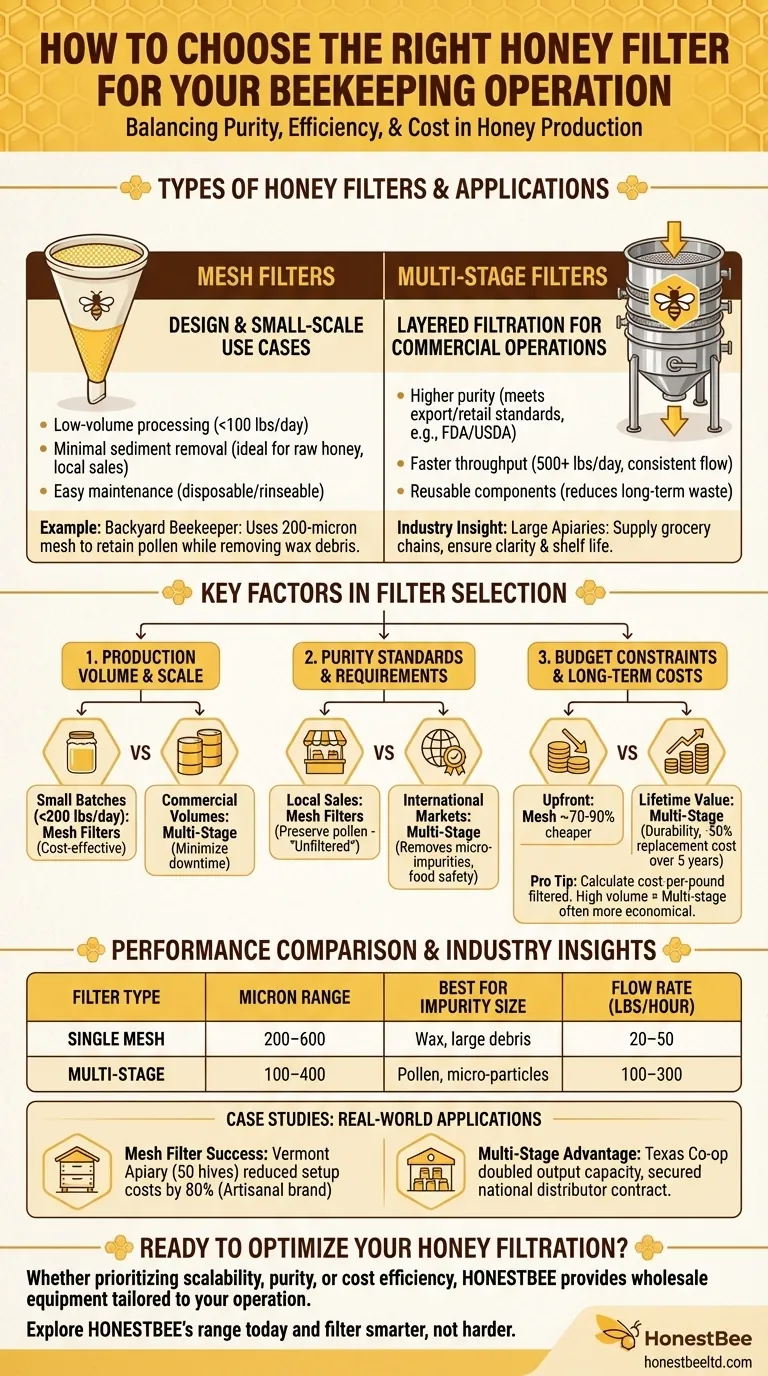
Mesh Filters: Design and Small-Scale Use Cases
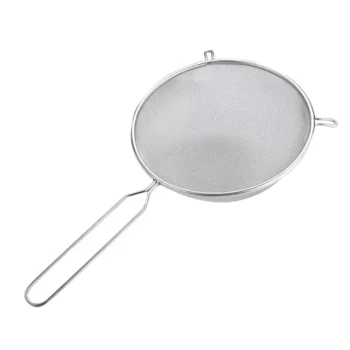
Mesh filters, constructed from fine fabric, are the go-to for hobbyists and small apiaries. Their simplicity and affordability make them ideal for:
- Low-volume processing (under 100 lbs/day)
- Minimal sediment removal, suitable for raw honey intended for local sales
- Easy maintenance, as they’re often disposable or require simple rinsing
Example: A backyard beekeeper selling at farmers’ markets might use a 200-micron mesh filter to retain pollen while removing wax debris.
Multi-Stage Filters: Layered Filtration for Commercial Operations
Designed for high-volume processing, multi-stage filters combine progressively finer layers (e.g., 400-micron down to 100-micron) to achieve:
- Higher purity, meeting export or retail standards (e.g., FDA/USDA compliance)
- Faster throughput, handling 500+ lbs/day with consistent flow rates
- Reusable stainless steel components, reducing long-term waste
Industry Insight: Large apiaries supplying grocery chains often use multi-stage systems to ensure clarity and extend shelf life.
Key Factors in Filter Selection
1. Production Volume and Operational Scale
- Small batches (<200 lbs/day): Mesh filters suffice for cost-effective, occasional use.
- Commercial volumes: Multi-stage systems minimize downtime and labor costs.
2. Purity Standards and Regulatory Requirements
- Local sales: Mesh filters preserve pollen (a selling point for "unfiltered" honey).
- International markets: Multi-stage filtration removes microscopic impurities to pass stringent food safety checks.
3. Budget Constraints and Long-Term Costs
- Upfront costs: Mesh filters are 70–90% cheaper than multi-stage setups.
- Lifetime value: Multi-stage filters’ durability can reduce replacement costs by ~50% over 5 years.
Pro Tip: Calculate cost-per-pound filtered—high-volume operations often find multi-stage filters more economical.
Performance Comparison and Industry Insights
Efficiency Metrics: Micron Ratings and Flow Rates
| Filter Type | Micron Range | Best for Impurity Size | Flow Rate (lbs/hour) |
|---|---|---|---|
| Single Mesh | 200–600 | Wax, large debris | 20–50 |
| Multi-Stage | 100–400 | Pollen, micro-particles | 100–300 |
Case Studies: Real-World Applications
- Mesh Filter Success: A 50-hive apiary in Vermont reduced setup costs by 80% using mesh filters, aligning with their artisanal brand.
- Multi-Stage Advantage: A Texas honey co-op doubled output capacity after switching to multi-stage filtration, securing a national distributor contract.
Ready to Optimize Your Honey Filtration?
Whether you prioritize scalability, purity, or cost efficiency, HONESTBEE provides beekeeping equipment tailored to your operation’s size and goals. Our wholesale-focused solutions help commercial apiaries and distributors streamline production—because every drop of honey deserves the right filter.
Explore HONESTBEE’s range today and filter smarter, not harder.
Visual Guide
Related Products
- Professional Stainless Steel Honey Filtering Machine with Water Bath Heating for Beekeeping
- Electric Double Wall Honey Filtering Machine Purifier Equipment for Honey Processing Plant
- Professional Stainless Steel Honey Filter with Support Handle
- Professional Honey Filter with Tripod Support Stand
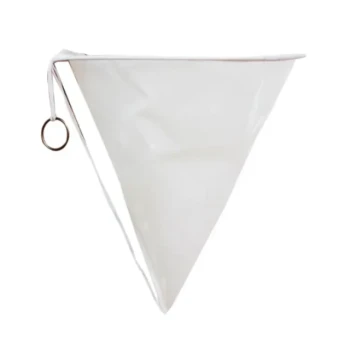
- Professional Cone-Shaped Honey Filter with Reinforced Steel Ring
Related Articles
- The Sticky Bottleneck: Why Your Honey Filtering Fails and How to Fix It for Good
- Why Your Honey Filtering Process is Failing (And It’s Not the Honey’s Fault)
- The Quality vs. Scale Dilemma: Why Your Honey Filtering Process Is Broken (And How to Fix It for Good)
- Why Your Honey Filtering is Slow and Inconsistent—And How to Fix It for Good
- Optimizing Honey Filtration: How Mesh Sizes Shape Quality and Market Appeal