When a beehive loses its queen, the clock starts ticking. For small-scale beekeepers managing just a few colonies, the stakes are even higher—limited genetic pools can lead to inbreeding, weakening your bees’ resilience and productivity. This guide delivers science-backed strategies to preserve genetic diversity, even with minimal colonies, through tactical relocation and drone population management.
Safeguarding Hive Genetics With Limited Colonies
Genetic diversity is the cornerstone of a thriving apiary. It enhances disease resistance, improves honey production, and stabilizes colony temperament. But when you’re working with only 2–5 hives, maintaining diversity requires deliberate action.
The Science of Drone Flight Ranges
Drones (male bees) from your hive will mate with queens within a 3–5 km radius, but this range shrinks if obstacles like dense forests or urban structures exist. Research shows that isolated colonies risk mating with closely related drones, escalating inbreeding.
Key Takeaway: To diversify genetics, ensure your apiary’s drones can interact with unrelated colonies. This might mean:
- Collaborating with neighboring beekeepers to coordinate hive placements.
- Positioning nucs (nucleus colonies) temporarily in zones with high bee density (e.g., community gardens).
Step-by-Step Nuc Relocation Protocol
Relocating a nuc colony is a low-cost way to introduce new genetics. Here’s how to do it safely:
- Prep the Nuc: Select a healthy, queenless nuc with ample worker bees and brood.
- Choose a New Location: Ideal spots are at least 3 km from your home apiary but within a high-drone-density area.
- Monitor for Acceptance: After 48 hours, check for signs of stress (e.g., aggressive behavior). If stable, leave the nuc for 2–3 weeks to allow mating with local drones.
- Reintegrate: Bring the nuc back home once new, genetically diverse brood is established.
Pro Tip: Use HONESTBEE’s ventilated nuc boxes to reduce stress during transport. Their lightweight design simplifies temporary placements.
Alternative Strategies for Remote Beekeepers
If relocation isn’t feasible, focus on drone population management and timely queen introduction.
Drone Population Management Techniques
- Selective Drone Rearing: Encourage colonies to produce drones during peak mating seasons by providing protein-rich pollen substitutes. More drones expand mating options.
- Culling Overrelated Drones: If you suspect inbreeding (e.g., spotty brood patterns), replace older drone comb frames to reset the gene pool.
Queen Introduction Timelines and Methods
Introducing a new queen is critical, but timing matters:
- Within 24 Hours of Queen Loss: Worker bees are most receptive to a new queen during this window.
- After 2+ Weeks: If the colony has started laying worker eggs (a sign of emergency queen rearing), introduce a mated queen via the "slow-release method" (e.g., using a queen cage with candy plug).
For Beekeeping Cooperatives:
- Pool resources with other small-scale keepers to rear queens collectively. Shared efforts reduce costs and amplify genetic diversity.
- Mark queens (using non-toxic pens) to track lineage and avoid accidental inbreeding.
Keep Your Hives Genetically Strong
Genetic diversity isn’t just a theoretical concern—it’s what keeps your bees robust against pests, pathogens, and climate stressors. Whether through strategic nuc rotations or cooperative queen rearing, small actions today prevent costly problems tomorrow.
Ready to equip your apiary for success? Explore HONESTBEE’s durable beekeeping supplies, designed for commercial-scale durability at small-farm prices. From nuc boxes to marking tools, we help you nurture healthier, more resilient bees—season after season.
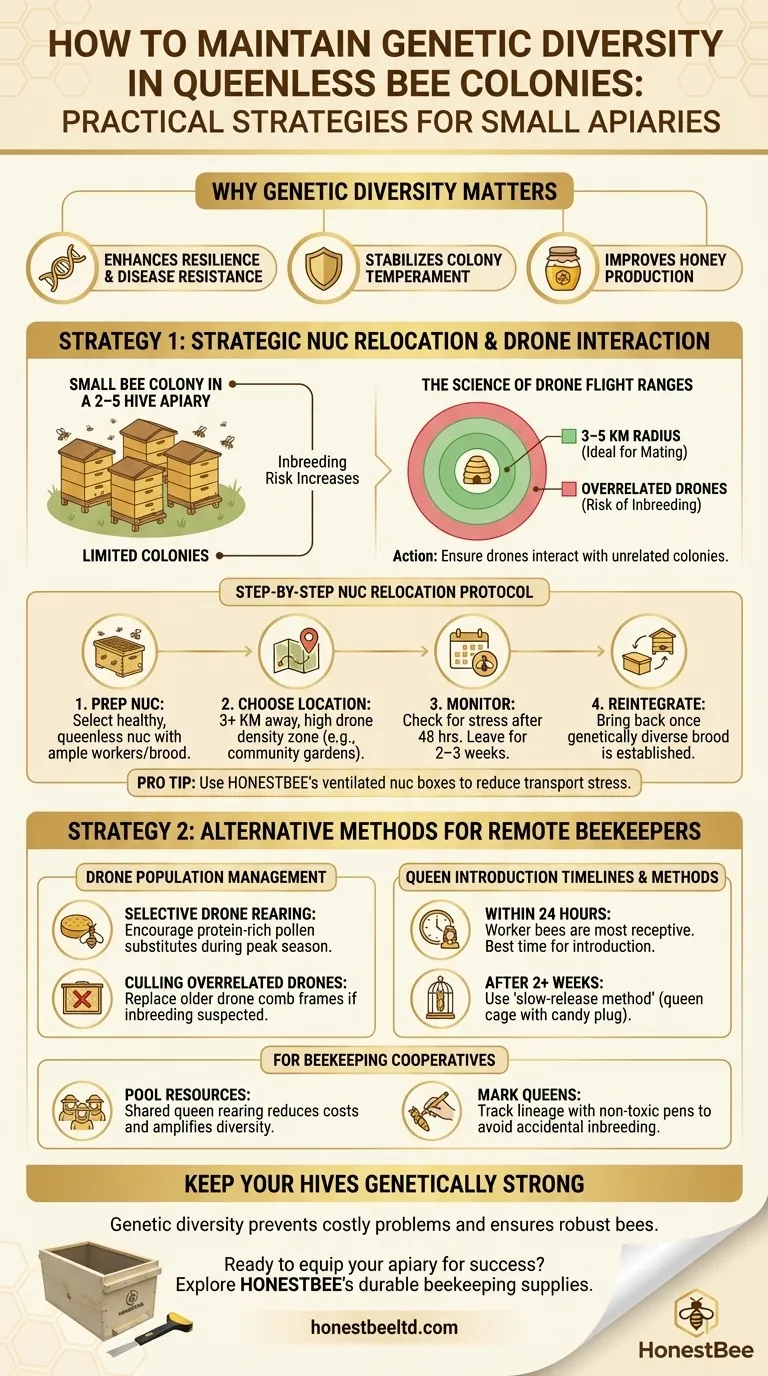
Visual Guide
Related Products
- Modern Flat-Mount Hive Number Set for Beekeeping
- Wholesales Dadant Size Wooden Bee Hives for Beekeeping
- Langstroth Honey Bee Box Hive Boxes for Different Depths
- HONESTBEE Collapsible Tiered Bee Swarm Catcher for Beekeeping
- High-Performance Langstroth Bee Hives for Global Professional Beekeeping
Related Articles
- The Silent Killer in the Hive: Why Moisture, Not Cold, Is Winter's Greatest Threat
- Beyond the Bee Box: Why Your First Apiary Investment Determines Your Success
- More Than a Number: Why the 8-Frame vs. 10-Frame Hive Debate Is About Psychology, Not Just Production
- How Bee Space Dictates Hive Success: Science-Backed Management Strategies
- Guide to Starting a Bee Hive in 7 Steps