A thriving bee colony depends on a healthy, productive queen. When queen-related problems arise, beekeepers must act swiftly to diagnose issues and implement solutions—or risk colony collapse. This guide provides actionable methods to assess queen-right status, troubleshoot failures, and adopt preventive measures that safeguard your hives.
The Critical Role of Queen-Right Status in Bee Colonies
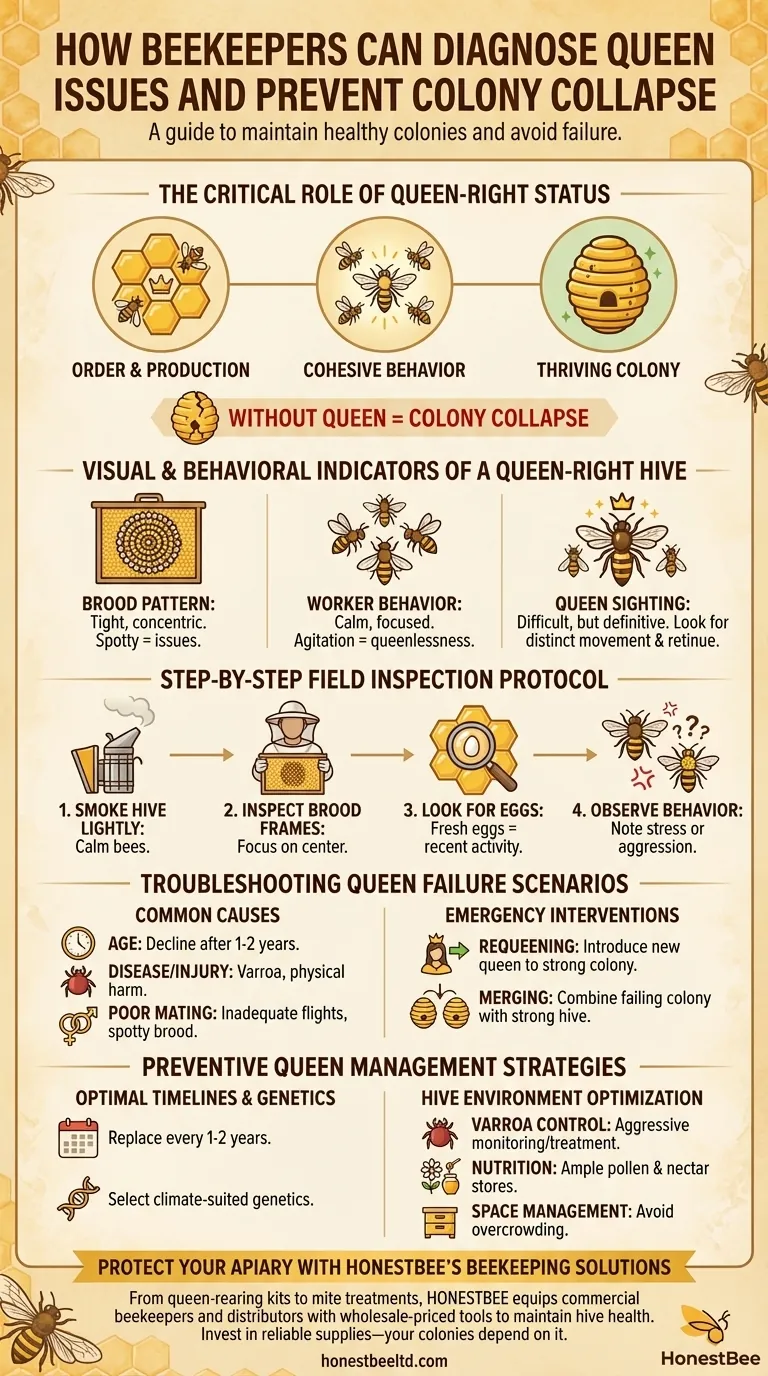
A queen-right hive exhibits order, steady brood production, and cohesive worker behavior. Without a functional queen, colonies lose their reproductive capacity, worker morale declines, and the hive eventually collapses.
Visual and Behavioral Indicators of a Queen-Right Hive
- Brood Pattern: A healthy queen lays eggs in a tight, concentric pattern. Spotty or irregular brood signals potential issues.
- Worker Behavior: Calm, focused workers suggest queen presence. Agitation or aimless wandering may indicate queenlessness.
- Queen Sighting: Though challenging, locating the queen is definitive proof. Experienced beekeepers note her distinct movement and the respectful attention worker bees give her.
Step-by-Step Field Inspection Protocol
- Smoke the Hive Lightly: Calm bees to minimize disruption.
- Inspect Brood Frames: Prioritize the center frames where the queen is most active.
- Look for Eggs: Fresh eggs confirm recent queen activity. No eggs after 3–4 days warrant deeper investigation.
- Observe Worker Behavior: Note signs of stress or aggression, which may point to queen failure.
Troubleshooting Queen Failure Scenarios
Common Causes of Queen Absence or Decline
- Age: Queens decline in productivity after 1–2 years.
- Disease or Injury: Parasites like Varroa mites or physical harm can impair queens.
- Poor Mating: Inadequate mating flights lead to spotty brood patterns.
Emergency Interventions: Requeening vs. Colony Merging
- Requeening: Introduce a new queen if the colony is strong but queenless. Use slow-release methods to ensure acceptance.
- Merging: Combine a failing colony with a queen-right hive if resources are scarce.
Preventive Queen Management Strategies
Optimal Requeening Timelines and Genetic Selection
- Replace queens every 1–2 years to maintain vigor.
- Select genetics suited to your climate (e.g., disease-resistant or prolific layers).
Hive Environment Optimization to Support Queen Health
- Varroa Control: Monitor and treat mites aggressively—they weaken queens and brood.
- Nutrition: Ensure pollen and nectar stores are ample, especially in dearth periods.
- Space Management: Avoid overcrowding, which can trigger swarming and queen loss.
Protect Your Apiary with HONESTBEE’s Beekeeping Solutions
From queen-rearing kits to mite treatments, HONESTBEE equips commercial beekeepers and distributors with wholesale-priced tools to maintain hive health. Invest in reliable supplies—your colonies depend on it.
Visual Guide
Related Products
- Durable Plastic Hive Number Set for Beekeeping
- Stainless Steel Round Beehive Air Vents for Ventilation
- Professional Large-Format Hive Number Set for Beekeeping
- Professional Engraved Round Hive Number Tags for Beekeeping
- Modern Flat-Mount Hive Number Set for Beekeeping
Related Articles
- Hive Thermodynamics: The Unseen Clock Governing Winter Survival
- The Tipping Point: Managing the Psychology of a Beehive to Prevent Swarming
- The Material Calculus: A Beekeeper's Choice Between Nature and Durability
- Rethinking the Beehive: Why Material Choice is a Bet on Your Time and Sanity
- The Physics of Survival: Managing the Unseen Threat in a Winter Beehive


















