The Moment of Truth in Beekeeping
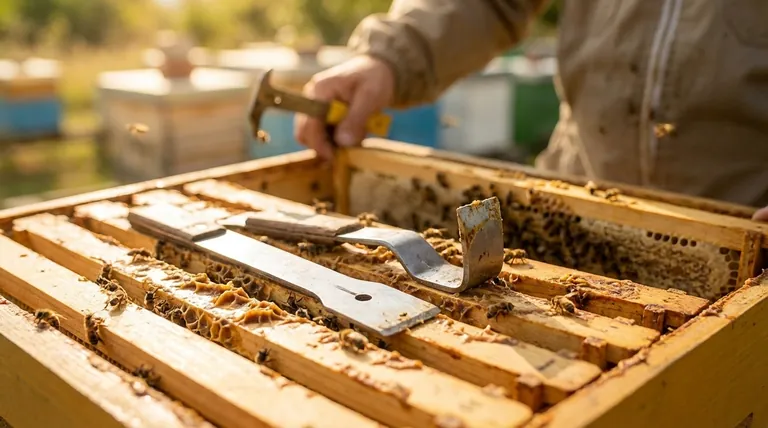
Every beekeeper faces it. That moment of resistance. The hive bodies, welded together by the colony’s industrious use of propolis, refuse to separate. The frames, heavy with honey and brood, are glued fast to their supports.
This isn't just an inconvenience; it's a critical juncture. The tool you hold in your hand determines what happens next. Will it be a moment of brute force, jarring the hive and disturbing the colony? Or will it be a quiet act of persuasion, using physics to achieve a calm, clean separation?
This choice reveals a deeper truth about beekeeping: the most effective practitioners aren't just biologists; they are applied physicists, understanding that the right application of force changes everything.
The Standard Hive Tool: The Pragmatist's Pry Bar
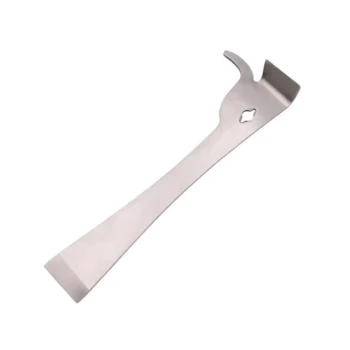
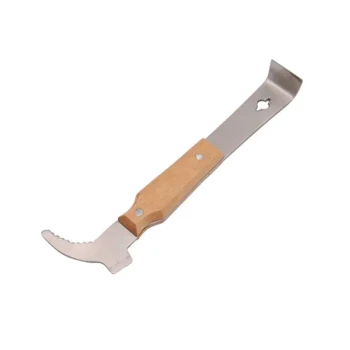
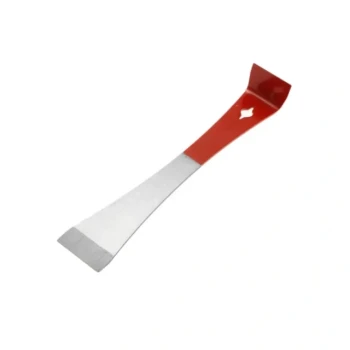
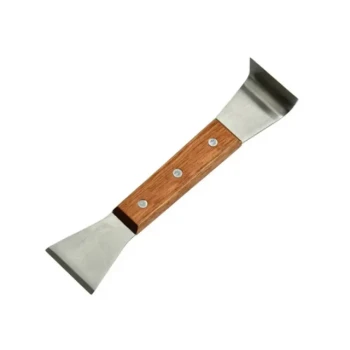
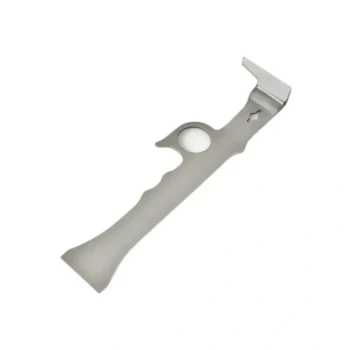
The standard hive tool is the epitome of functional design. It’s essentially a small, hardened steel crowbar. One end is a wide, beveled edge for prying. The other is a right-angle hook for scraping.
Its beauty lies in its simplicity. It’s a general-purpose instrument that does everything reasonably well.
The Psychology of a Multi-Tool
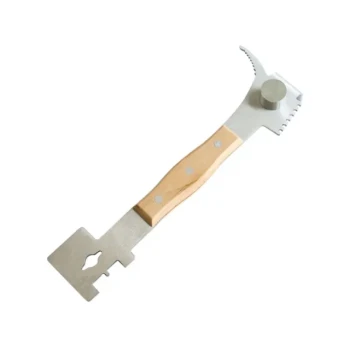
The standard tool is a workhorse. It separates boxes, scrapes away burr comb, and lifts frame corners. Its straightforward design imposes a low cognitive load—you see a problem, and its function is immediately obvious. This is why it remains the indispensable tool for most beekeepers. It’s the reliable, predictable choice for a multitude of tasks.
But its greatest strength—its versatility—is also its subtle weakness. For the one task that demands the most finesse, it relies more on the beekeeper's strength than on mechanical elegance.
The J-Hook: A Study in Mechanical Advantage
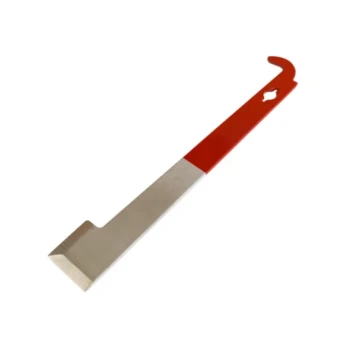
The J-hook hive tool is not just a different shape; it’s a different philosophy. It was engineered to solve one problem with near-perfect efficiency: lifting a propolis-sealed frame.
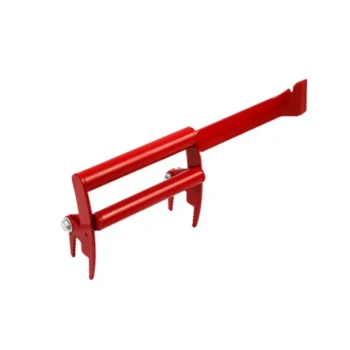
The distinctive "J" on its end is not a scraper. It is a precision lever.
From Brute Force to Finesse
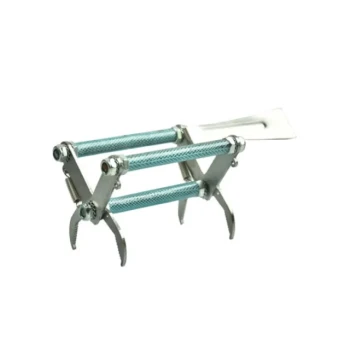
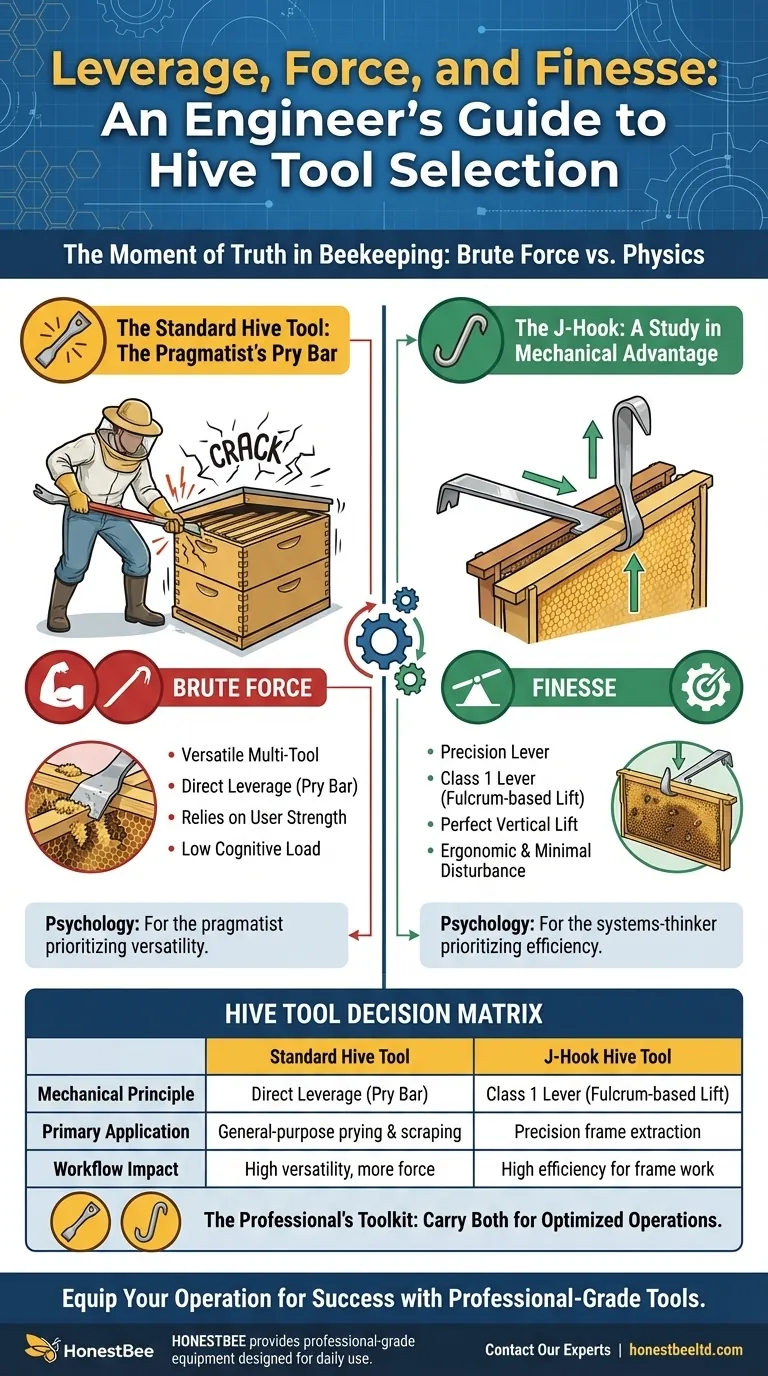
Here is how the system changes. Instead of prying and wiggling a frame from a corner, you rest the J-hook's notch on an adjacent frame—creating a stable fulcrum. The hook slips under the frame's ear.
A small amount of downward pressure on the handle translates into a powerful, clean, and perfectly vertical lift. The frame breaks its propolis seal with a gentle pop, not a jarring crack. No rolling bees, no scraped knuckles, no wasted energy. It’s a quiet revolution in leverage.
This tool appeals to the beekeeper who sees the hive as a system to be worked with, not against. It prioritizes ergonomic efficiency and minimal disturbance—a critical consideration for professionals managing hundreds of hives a day.
A Framework for Choosing Your Instrument
Neither tool is universally superior. The correct choice depends on optimizing for your specific operational goals. It's a trade-off between the all-around utility of a generalist tool and the targeted efficiency of a specialist one.
The Generalist vs. The Specialist
- The Standard Tool is your indispensable all-rounder. If you could only have one tool, this is it. It’s the most cost-effective and intuitive starting point.
- The J-Hook Tool is your optimization instrument. It excels at one task so profoundly that for commercial beekeepers, the time and energy saved during frame inspections can be monumental.
The Hidden Cost of Disruption
Every jarring movement in the hive triggers a defensive response. A clumsy lift can roll and kill bees, agitate the colony, and make the rest of the inspection more difficult. The J-hook’s clean, vertical lift is an investment in a calmer, more productive apiary.
For commercial operations, a calm apiary isn't a luxury; it's a prerequisite for efficiency and safety.
The Professional's Toolkit
Many experienced beekeepers don't choose one; they carry both. They use the J-hook for its primary purpose—frame lifting—and the standard tool for the heavy-duty prying and scraping. They understand that having the perfect instrument for each specific task is the hallmark of a true professional.
At a Glance: Hive Tool Decision Matrix
| Feature | Standard Hive Tool | J-Hook Hive Tool |
|---|---|---|
| Mechanical Principle | Direct Leverage (Pry Bar) | Class 1 Lever (Fulcrum-based Lift) |
| Primary Application | General-purpose prying & scraping | Precision frame extraction |
| Workflow Impact | High versatility, requires more force | High efficiency for frame work, less agile for scraping |
| Psychological Profile | For the pragmatist prioritizing versatility | For the systems-thinker prioritizing efficiency |
Choosing the right tool is the first step; sourcing reliable, durable equipment is the next. For commercial apiaries and distributors who understand that operational efficiency is built on a foundation of quality tools, HONESTBEE provides professional-grade equipment designed to withstand the rigors of daily use.
Let us help you equip your operation for success. Contact Our Experts
Visual Guide
Related Products
- Stainless Steel J Hook Hive Tool for Beekeeping
- Professional Stainless Steel J-Hook Hive Tool
- HONESTBEE Professional Mini J-Hook Hive Tool for Beekeeping
- HONESTBEE Premium Italian Style Hive Tool with Hardwood Handle
- Professional Multi-Function Stainless Steel Hive Tool
Related Articles
- The Human Interface: Why a Beekeeper's Calm is the Ultimate Hive Tool
- How to Master Essential Beekeeping Tools Safely and Efficiently
- How to Choose Between Red and Orange J-Hook Hive Tools for Beekeeping Efficiency
- Beyond the Pry Bar: The Physics and Psychology of the J-Hook Hive Tool
- How to Choose Beekeeping Tools: A Practical Guide for Every Budget and Climate