The Biomechanics of Fear
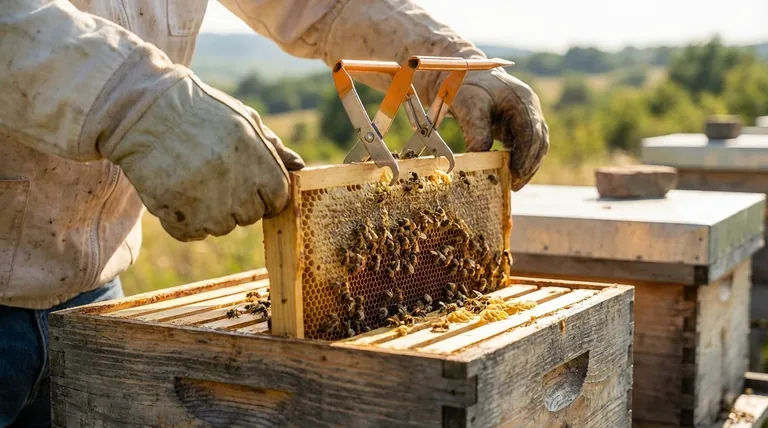
Imagine standing before a hive, a low hum emanating from within. For a beekeeper, this sound can mean a productive day or an impending battle. Your heart rate might quicken. Your breathing becomes shallow.
You might believe you can hide this anxiety. But you can't.
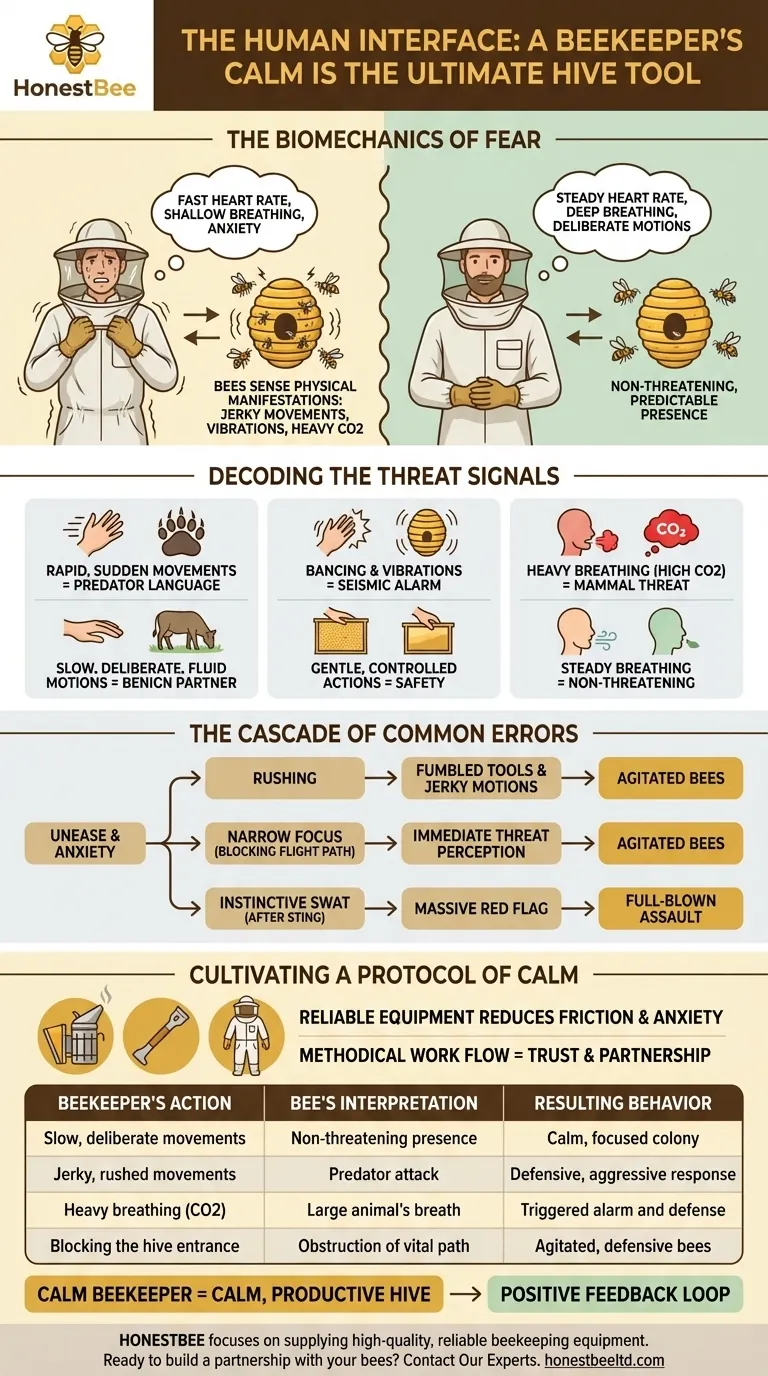
Bees don't understand human emotion. They don't sense "fear." They sense its physical manifestations—the jerky movements, the heavy breathing, the sudden vibrations. Your body becomes an unwilling transmitter of threat signals, turning your internal state into an external problem.
Decoding the Threat Signals
The core of successful beekeeping isn't about suppressing fear. It's about understanding the protocol of communication between you and the colony. Your every action is a data point the bees use to assess your intent.
The Language of Movement: Predator vs. Partner
Rapid, sudden movements are the universal language of a predator. A bear tearing at a hive, a badger digging at the entrance—these are the threats hardwired into a bee's defensive instincts.
When you move quickly, you are speaking this language.
Slow, deliberate, and fluid motions communicate something entirely different. They signal a benign presence, like a grazing animal or a swaying branch. This allows the bees to continue their work, interpreting you as a predictable, non-threatening part of their environment.
The Seismic Alarm: Vibrations and Impact
To a bee colony, the hive is their entire universe. They are masters of perceiving vibrations that travel through its structure.
An anxious beekeeper is a clumsy one. Banging a hive tool, dropping a frame, or stumbling into the hive stand sends a shockwave through this universe. It is a seismic event, an unambiguous alarm that triggers an immediate and colony-wide defensive posture.
The Chemical Trigger: Your Breath as a Betrayal
When a person is nervous, their breathing pattern changes. It becomes faster and heavier, increasing the output of carbon dioxide (CO2).
To a bee, a concentrated puff of warm, moist air rich in CO2 is a primal trigger. It mimics the breath of a large mammal attempting to raid the hive for its honey. Your own biology can betray your calm intentions, sending a chemical signal that you are a threat.
The Cascade of Common Errors
Understanding these triggers is one thing. Preventing the cascade of errors that stems from unease is the real challenge. A single moment of anxiety can initiate a chain reaction.
- The Urge to Rush: Nervousness creates a desire to get the inspection over with. This haste leads to fumbled tools and jerky movements, amplifying the bees' agitation.
- Blocking the Flight Path: Anxiety narrows your focus. You might inadvertently stand directly in front of the hive entrance, creating a traffic jam for foraging bees. This obstruction is perceived as an immediate threat to the colony's lifeline.
- The Instinctive Swat: If a sting occurs, the human instinct is to flail or swat. This rapid motion is a massive red flag to every guard bee nearby, confirming their suspicions and escalating a single sting into a full-blown assault.
Cultivating a Protocol of Calm
Your demeanor is your most important tool, but it's far easier to remain calm when your physical tools are reliable and efficient. The goal isn't to be fearless; it is to be methodical.
Professional beekeeping, especially at a commercial scale, is about removing variables. You can't control the weather, but you can control your process. This starts with having equipment you trust.
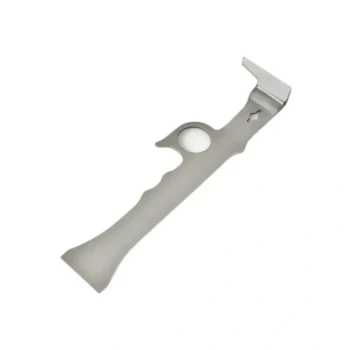
A smoker that stays lit, a hive tool with the right leverage, a protective suit that gives you confidence—these aren't luxuries. They are instruments that reduce friction and anxiety, allowing you to focus on executing your work with the calm, deliberate movements the bees understand. By minimizing equipment-related stress, you preserve the mental bandwidth needed to act as a partner, not a predator.
This is the foundation upon which trust is built. At HONESTBEE, we focus on supplying commercial apiaries and distributors with precisely this kind of high-quality, reliable beekeeping equipment. Our wholesale operations are designed to ensure professionals have the tools they need to work safely, efficiently, and calmly.
| Beekeeper's Action | Bee's Interpretation | Resulting Behavior |
|---|---|---|
| Slow, deliberate movements | Non-threatening presence | Calm, focused colony |
| Jerky, rushed movements | Predator attack | Defensive, aggressive response |
| Heavy breathing (CO2) | Large animal's breath | Triggered alarm and defense |
| Blocking the hive entrance | Obstruction of vital path | Agitated, defensive bees |
A calm beekeeper fosters a calm, productive hive. This creates a positive feedback loop: better hive responses build your confidence, which in turn reinforces your calm demeanor.
Ready to build a more predictable and productive partnership with your bees? Contact Our Experts
Visual Guide
Related Products
- HONESTBEE 15-in-1 Beekeeper Multi-Tool with Hammer and Pliers for Beekeeping
- Stainless Steel J Hook Hive Tool for Beekeeping
- HONESTBEE Advanced Ergonomic Stainless Steel Hive Tool for Beekeeping
- Stainless Steel Queen Grafting Tool for Beekeeping and Bee Queen Grafting
- Ergonomic Plastic Frame Spacer Tool for Rapid Hive Management Beekeeping
Related Articles
- Essential Beekeeping Tools: How to Choose and Use Gear for Safe, Efficient Hive Management
- Essential Beekeeping Tools: How Strategic Preparation Boosts Hive Health, Safety, and Honey Yields
- How to Choose Beekeeping Tools: A Practical Guide for Every Budget and Climate
- How to Master Essential Beekeeping Tools Safely and Efficiently
- How to Build a Smarter Beekeeping Tool kit: Strategic Tools for Every Hive Challenge