The Beekeeper's Dilemma
As winter approaches, a protective instinct takes over. We see a small wooden box facing the wind and snow, and our immediate impulse is to seal it, insulate it, and make it warm. We imagine our bees huddled inside, grateful for the cozy shelter.
This instinct, born of good intentions, is one of the most common and fatal mistakes in beekeeping.
A honeybee colony does not operate like a human household. Bees do not heat their hive; they heat themselves. The true enemy of winter is not the cold—it is the moisture their own breath creates. A cold, dry colony will survive. A damp colony, even a mild one, will perish.
The Battle is Won in Autumn
Before you hang the first winter wrap, the fate of your hive is largely decided in the fall. Winter survival depends on a specific generation of bees, born in autumn, that are physiologically distinct from their summer sisters. These "winter bees" have increased fat bodies and are built for longevity.
A strong colony entering winter is a populous one, raised by a healthy queen during a robust fall nectar flow.
The Non-Negotiable Foe
There is one threat that undermines this foundation completely: the Varroa mite. These parasites weaken bees and spread viruses, crippling the colony's ability to raise healthy winter bees. Performing a mite count and treating your hives in late summer or early fall is not an optional step; it is the prerequisite for survival. Sending a colony into winter with a high mite load is like sending a soldier into battle with a pre-existing, critical wound.
Mastering the Two Pillars of Survival
If you manage nothing else, manage food and moisture. These two factors account for the vast majority of winter losses.
Pillar 1: The Fuel Supply
Starvation is a tragically preventable cause of death. Bees generate heat by shivering their flight muscles, consuming honey as fuel to maintain the cluster's core temperature. Without fuel, the engine stops.
After the final harvest, lift your hives from the back. A hive that feels light is a hive in danger. Feed a 2:1 sugar-to-water syrup until they have stored enough to feel heavy again. It's also critical to arrange frames so the honey is consolidated, creating a contiguous path for the cluster to follow as it moves through its stores. They will not break cluster to cross empty frames in the deep cold.
Pillar 2: The Physics of Condensation
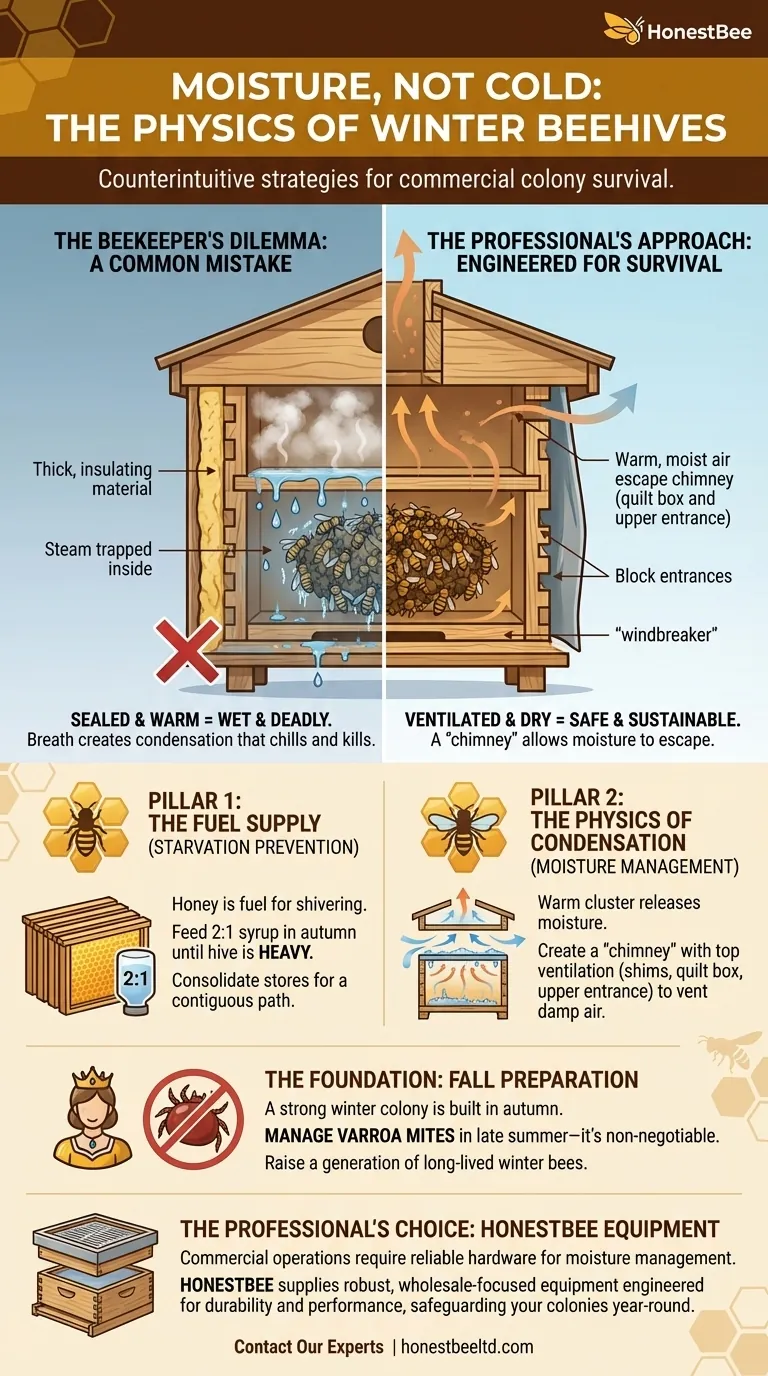
A winter cluster of bees is a living, breathing engine. Through respiration, it releases a significant amount of warm, moist air. In a poorly ventilated hive, this is a death sentence.
The warm, water-laden air rises and hits the cold inner cover. It instantly condenses into water—or frost. This icy water then drips back down onto the very bees that produced it, chilling them and creating a damp, deadly environment.
The solution is not more insulation, but better ventilation. You must give the hive a chimney.
Engineering the Solution
Your job is not to build a warm box, but to engineer a dry one that is protected from the wind.
Designing the Chimney: Top Ventilation
Never seal the top of your hive completely. The moist air must have an escape route.
- A Simple Shim: Placing a small shim, like a popsicle stick, under each corner of the inner cover creates a small, crucial gap for moisture to exit.
- The Quilt Box: A more advanced method is a shallow box filled with wood shavings placed above the inner cover. The shavings absorb moisture while still allowing air to pass through, acting like a breathable attic.
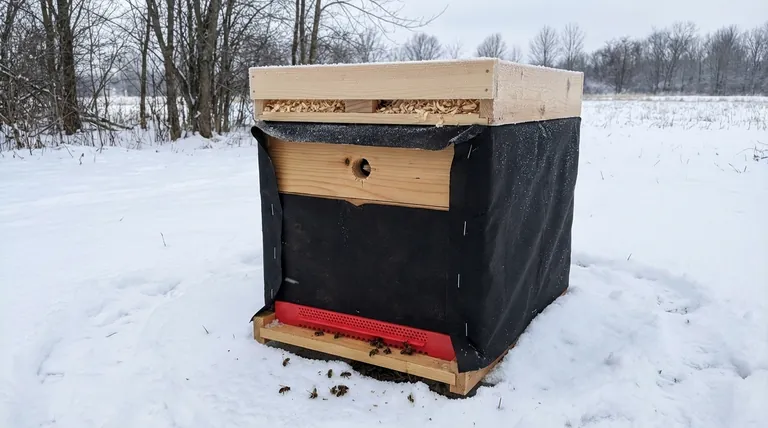
- An Upper Entrance: A small hole drilled in the upper hive body provides an essential exit path for both moisture and for bees on rare, warm days when they need to take "cleansing flights."
The Role of the Wrap: A Windbreaker, Not a Blanket
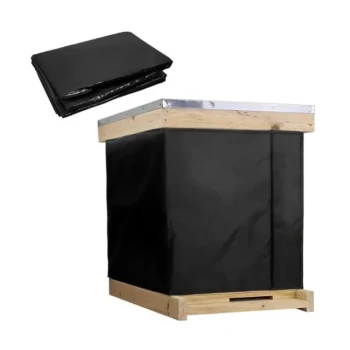
Hive wraps serve one primary purpose: to reduce wind chill. Wind strips heat from the hive's surface, forcing the bees to burn more honey to stay warm. A wrap acts as a windbreak, protecting the colony's micro-climate. The typical black color also helps absorb solar energy on sunny days.
Crucially, do not block the entrances with the wrap. The bottom entrance provides air intake, and an upper entrance is vital for ventilation. You are building a breathable system, not a sealed container.
The Professional's Approach to Winter
For commercial apiaries, losing a percentage of hives to winter is not a sad hobbyist setback; it's a significant financial loss. Professionals cannot afford to rely on guesswork. They rely on a deep understanding of hive physics and on equipment designed for durability and performance.
This is where the right tools become indispensable. Executing a proper moisture management strategy at scale requires equipment that is precisely built and can withstand harsh weather year after year. From well-fitting inner covers that accommodate ventilation shims, to specialized quilt boxes and durable hive wraps that block wind without trapping moisture, every component matters. HONESTBEE supplies the robust, wholesale-focused equipment that commercial operations trust to safeguard their colonies, ensuring that sound winterizing strategy is backed by reliable hardware.
Winter preparation is the ultimate expression of an engineer's romance with a natural system. It requires us to abandon our flawed human intuition and instead work with the fundamental physics of the hive. By focusing on a dry, well-fed, and healthy colony, you give them the best possible chance to emerge strong in the spring.
Visual Guide
Related Products
- Professional Insulated Winter Hive Wrap for Beekeeping
- Stainless Steel Round Beehive Air Vents for Ventilation
- Inner Beehive Cover for Beekeeping Bee Hive Inner Cover
- Professional Reversible Beehive Hive Entrance
- Professional Insulated Plastic Bee Hives
Related Articles
- The Cold Deception: Why Beehive Wintering is About Moisture, Not Warmth
- Beyond Warmth: The Physics of Beehive Survival in Winter
- How to Secure Beehive Covers: Weatherproof Strategies for Every Hive Type
- Beyond the Cold: The Physics of a Winter Beehive and Why Our Instincts Fail Us
- How to Time Hive Insulation for Maximum Winter Bee Survival