Beekeepers often grapple with a critical question: When is the right time to add new foundation frames to maximize colony growth without wasting resources? The answer lies in understanding colony biology, seasonal nectar flows, and risk management. This guide explores how to synchronize frame additions with natural hive rhythms for optimal productivity.
Foundations of Frame Addition
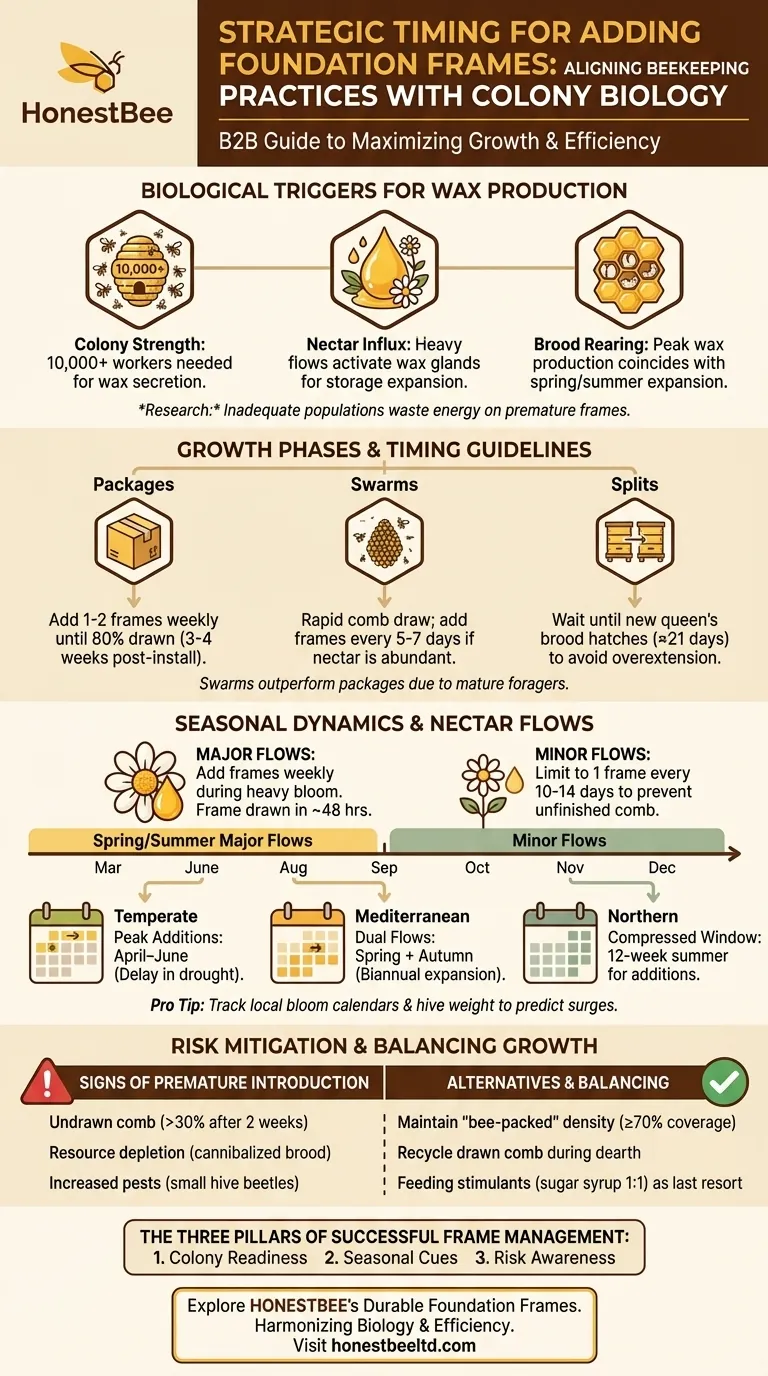
Biological Triggers for Wax Production
Bees produce wax only when specific conditions are met:
- Colony strength: Requires 10,000+ worker bees to sustain wax secretion.
- Nectar influx: Wax glands activate during heavy nectar flows when bees need to expand storage.
- Brood rearing: Peak wax production coincides with spring/summer brood expansion.
Research shows colonies with inadequate worker populations waste energy attempting to draw comb on prematurely added frames.
Growth Phases: Packages, Swarms, and Splits
- Package bees: Add 1-2 frames weekly until 80% of existing frames are drawn (typically 3-4 weeks post-installation).
- Swarms: Established foragers can draw comb rapidly; add frames every 5-7 days if nectar is abundant.
- Splits: Wait until the new queen’s brood hatches (≈21 days) before adding frames to avoid overextension.
Have you considered how the colony’s origin affects its wax-building capacity? Swarms outperform packages due to their mature forager force.
Seasonal Dynamics and Nectar Flows
Identifying Major vs. Minor Nectar Flows
- Major flows (spring/summer): Add frames weekly during heavy bloom periods (e.g., clover, blackberry). Bees may draw an entire frame in 48 hours.
- Minor flows: Limit additions to 1 frame every 10-14 days to prevent unfinished comb.
Regional Variations in Forage Availability
- Temperate climates: Frame additions peak April–June. Delay in drought years.
- Mediterranean climates: Dual flows (spring + autumn) allow biannual expansion.
- Northern latitudes: Compress frame additions into a 12-week summer window.
Pro Tip: Track local bloom calendars and hive weight changes to predict wax-building surges.
Risk Mitigation Strategies
Signs of Premature Frame Introduction
- Undrawn comb: >30% of added frames remain bare after 2 weeks.
- Resource depletion: Bees cannibalize brood or abandon outer frames.
- Increased pests: Small hive beetles exploit gaps in undrawn comb.
Alternatives to Foundation During Resource Scarcity
- Worker bee density: Maintain a "bee-packed" ratio (≥70% frame coverage) before adding space.
- Drawn comb recycling: Reuse old comb instead of introducing foundation in dearth periods.
- Feeding stimulants: Sugar syrup (1:1) can mimic nectar flows but avoid overdependence.
Did you know? Colonies with staggered frame additions show 20–30% higher honey yields than those expanded haphazardly.
Conclusion: Balancing Growth and Efficiency
Successful frame management hinges on observing three pillars:
- Colony readiness (bee population, brood patterns).
- Seasonal cues (nectar flow intensity, regional forage).
- Risk awareness (avoiding overextension during scarcity).
By aligning foundation additions with these factors, beekeepers reduce wasted effort and boost productivity.
Ready to optimize your hive’s potential? Explore HONESTBEE’s durable foundation frames—trusted by commercial apiaries for their compatibility with natural colony rhythms. Our wholesale-focused solutions help distributors equip beekeepers with tools that harmonize biology and efficiency.
Visual Guide
Related Products
- HONESTBEE Wired and Assembled Wooden Bee Frames Foundation for a Thriving Hive
- Assembled Wooden Bee Frames with Plastic Foundation for Durability and Convenience by HONESTBEE
- Assembled Wooden Bee Frames with Beeswax Foundation Ready to Use by HONESTBEE
- Plastic Bee Frame Beekeeping Hive Frames for Wholesale
- Food Grade Plastic bee Foundation for Bee Frames
Related Articles
- Wooden vs. Plastic Bee Hive Frames: Balancing Sustainability and Practicality
- Why Wooden Beehive Frames Outperform Alternatives: Science, Sustainability, and Beekeeper Experiences
- The Physics of the Hive: How a Simple Wire Prevents Catastrophic Failure
- Beyond the Scrape: A Risk Management Framework for Cleaning Beehive Frames
- How to Wire Beehive Frames for Maximum Durability and Honey Production