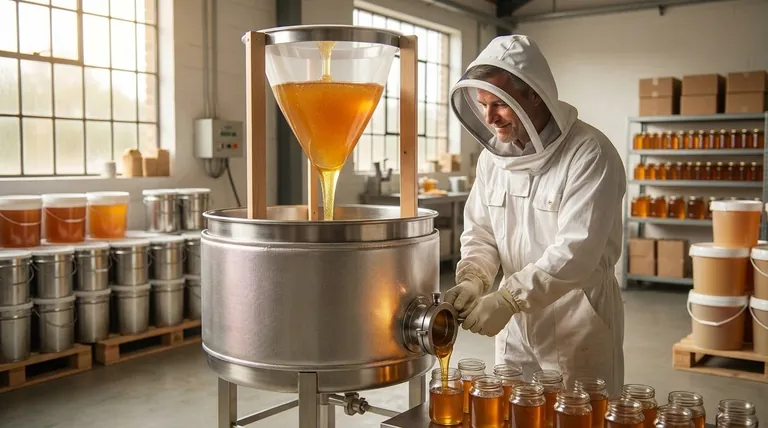
It's one of the most rewarding and frustrating moments in a beekeeper's year. The harvest is complete. Your warehouse is filled with heavy buckets of rich, raw honey—a testament to a season of hard work. But now, it’s stuck. Day after day, you watch the thick, golden liquid crawl through small-scale filters, turning what should be a swift packaging process into a logistical nightmare. Your cash flow is tied up in those buckets, and the market is waiting.
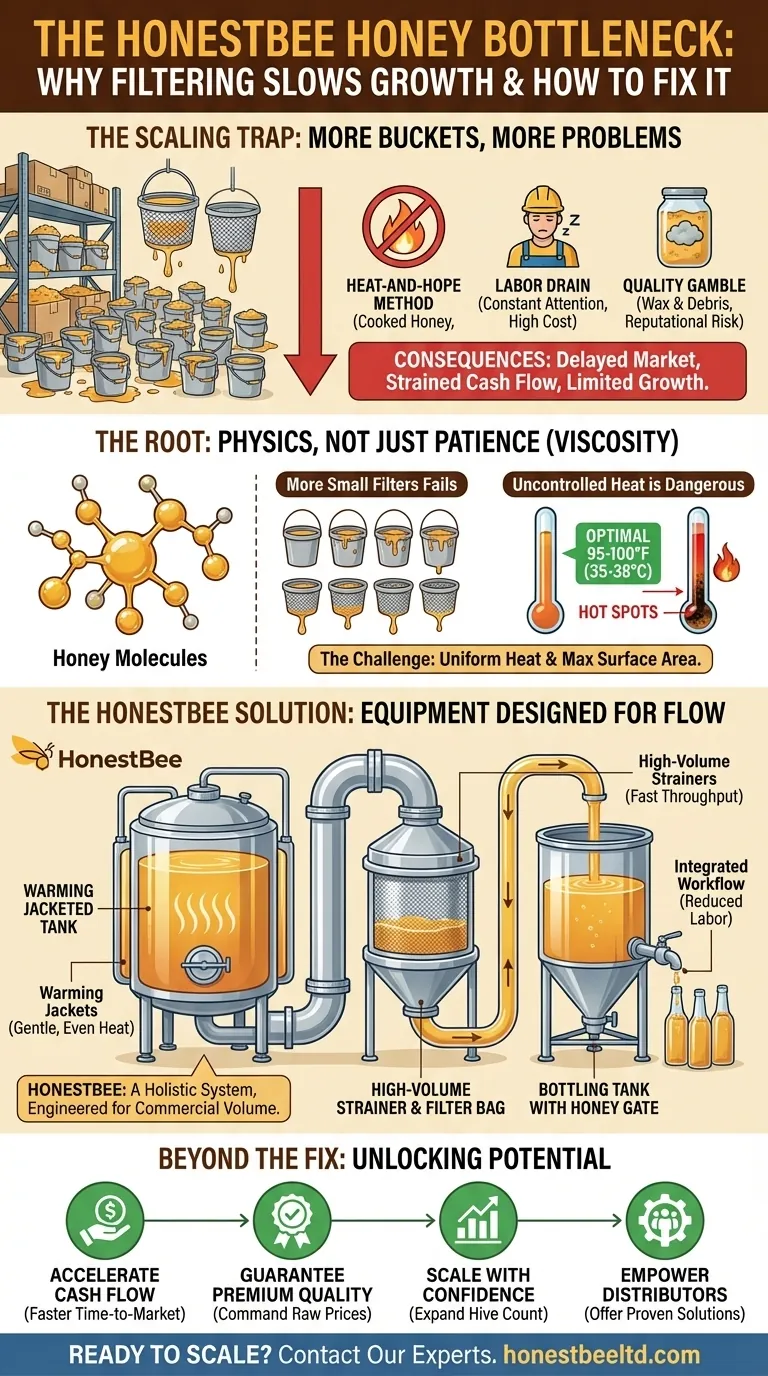
The Scaling Trap: When More Buckets Mean More Problems
For many growing apiaries, the default solution to a filtering bottleneck is simple: buy more of what you started with. More food-grade buckets, more DIY-style mesh strainers, more setups cluttering your workspace. But you quickly discover this doesn't scale. You're not getting faster; you're just getting bigger, messier, and more inefficient.
This leads to a series of costly compromises:
- The "Heat-and-Hope" Method: Frustrated by the slow pace, you might try to warm the honey. You use a water bath or a simple heating element, but the control is imprecise. One batch flows beautifully, but the next gets "hot spots." Suddenly, a tank of premium raw honey is accidentally "cooked," its valuable enzymes destroyed. You've just downgraded your highest-value product to a lower price tier.
- The Labor Drain: Managing dozens of small filtering stations requires constant attention. It’s a full-time job just to pour, scrape, clean, and consolidate. Your labor costs skyrocket, eating directly into the profit margin of your harvest.
- The Quality Gamble: In a rush, you might opt for a coarser filter to speed things up. But this can lead to a less desirable final product, with too much wax and debris, potentially harming your brand's reputation for quality.
The commercial consequences are severe. These bottlenecks delay your time-to-market, strain your cash flow, and put a hard ceiling on your operational growth. You can't add more hives if you can't efficiently process the honey you're already producing.
The Root of the Problem: It's Physics, Not Just Patience
The struggle isn't a failure of effort; it's a misunderstanding of the core scientific challenge: viscosity.
Raw honey is thick. Its resistance to flow is a natural property. The common "solutions" fail because they address the symptoms, not the underlying physics.
- Why adding more small filters fails: Your bottleneck isn't the number of filters, but the slow rate of flow through each filter. Doubling your setups only doubles your workload, not your throughput.
- Why uncontrolled heat is dangerous: The relationship between heat and honey quality is a knife's edge. Honey's viscosity drops dramatically with just a small, gentle increase in temperature—up to its natural hive temperature of around 95-100°F (35-38°C). However, temperatures just slightly above this range, especially if applied unevenly, begin to degrade the honey. DIY heating methods create "hot spots" that exceed this threshold, cooking parts of the honey while the rest remains too thick.
The true challenge is not just to warm the honey, but to do so with absolute uniformity and precise temperature control, while simultaneously maximizing the filtration surface area. Hobbyist gear is simply not engineered for this task at a commercial volume.
The Solution Embodied: Equipment Designed for the Flow
To overcome a physics problem, you need a tool built on an understanding of that physics. You don't need more buckets; you need a system designed to manage viscosity and volume simultaneously.
This is where professional-grade equipment becomes essential. Instead of a patchwork of small containers, a commercial operation needs an integrated system:
- Warming Jackets and Tanks: Purpose-built warming blankets or jacketed tanks are designed to distribute low, even heat across the entire surface of a large container. They eliminate dangerous hot spots, gently raising the entire batch to the optimal filtering temperature. This makes the honey flow freely without ever damaging its raw, premium qualities.
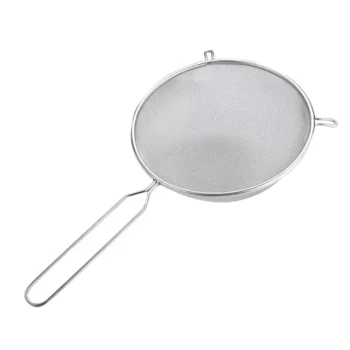
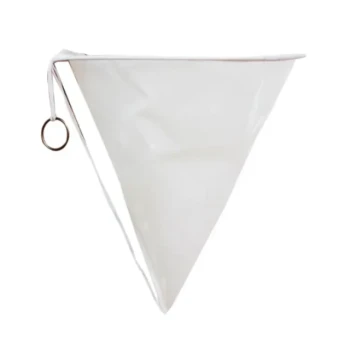
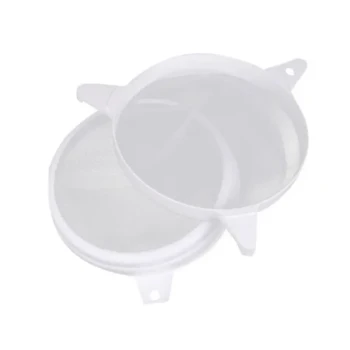
- High-Volume Strainers and Filter Bags: Commercial filters are not just larger; they are designed for high throughput. With significantly more surface area and durable construction, they can process an entire tank of warmed honey in the time it takes a DIY setup to filter a single bucket. They fit seamlessly onto bottling tanks and large collection vats, creating a streamlined, gravity-fed workflow.
- Honey Gates and Bottling Tanks: A system built around a central, large-capacity bottling tank with an integrated honey gate eliminates the need to constantly lift and pour heavy buckets. This dramatically reduces labor, minimizes spills, and creates a single, controllable point for your entire filtering and bottling process.
This isn't about a single "magic" tool. It's about a holistic system where each component—from the warming jacket to the filter to the gate—is engineered to solve the core challenges of heat, viscosity, and volume. At HONESTBEE, we don't just sell equipment; we provide the components for this exact system, built from durable, food-grade materials designed for the demands of a commercial apiary.
Beyond the Fix: Unlocking Your Apiary's True Potential
When the filtering bottleneck is gone, it changes everything.
The frustrating wait is replaced by a smooth, predictable process. You can now process your entire harvest in a matter of days, not weeks. This frees you to:
- Accelerate Cash Flow: Get your product bottled, labeled, and to your distributors or customers faster than ever before, turning inventory into revenue in record time.
- Guarantee Quality and Command a Premium: With precise temperature control, you can confidently market 100% of your harvest as premium "raw" honey, ensuring you get the best possible price for your product.
- Scale with Confidence: The fear of the processing crunch disappears. You can now confidently plan to expand your hive count, knowing your back-end operations can handle the increased volume with ease.
- For Distributors: You can empower your own customers by offering them a proven, professional solution to one of their biggest operational headaches, solidifying your role as a critical partner in their success.
Solving your filtering problem is about more than just moving honey faster. It's about removing the ceiling on your growth and unlocking the full business potential of your hard work. If you're ready to move from struggling with your harvest to scaling your business, our team can help you design a system that fits your specific operational needs.
Let's discuss how to eliminate your honey bottleneck for good. Contact Our Experts.
Visual Guide
Related Products
- Professional Stainless Steel Honey Filtering Machine with Water Bath Heating for Beekeeping
- Electric Double Wall Honey Filtering Machine Purifier Equipment for Honey Processing Plant
- Professional Stainless Steel Honey Filter with Support Handle
- Professional Honey Filter with Tripod Support Stand
- Professional Cone-Shaped Honey Filter with Reinforced Steel Ring
Related Articles
- The Sticky Bottleneck: Why Your Honey Filtering Fails and How to Fix It for Good
- Why Your Honey Filtering Process is Failing (And It’s Not the Honey’s Fault)
- The Quality vs. Scale Dilemma: Why Your Honey Filtering Process Is Broken (And How to Fix It for Good)
- Why Your Honey Filtering is Slow and Inconsistent—And How to Fix It for Good
- Optimizing Honey Filtration: How Mesh Sizes Shape Quality and Market Appeal