The Unspoken Rejection
Every beekeeper has seen it. You open a hive during a strong nectar flow, expecting to find frames bursting with new comb, only to discover the plastic foundation you just added sits perfectly untouched.
The bees are working furiously on older frames, but this new one is ignored as if it doesn't exist.
This isn't laziness or a defect in the colony. It's a communication breakdown. The bees are telling you something important about the equipment, and the message is written in their inaction. They don't perceive the plastic as a viable place to work.
The Sensory Disconnect: A World of Scent and Texture
Bees navigate their world primarily through chemical and physical signals. The dark interior of the hive is a landscape of scent and texture, and their decision to build is an instinctual response to the right cues.
The Failure of Factory Coatings
New plastic foundation comes with a factory-applied coat of beeswax. The problem is that this coating is often sprayed on as thinly as possible to minimize cost.
During shipping and storage, this micro-thin layer ages. It oxidizes, loses its volatile aromatic compounds, and sheds the familiar, inviting scent of fresh beeswax. To the bees, it no longer smells or feels like home. It's a foreign, inert surface.
A Signal They Can't Read
The embossed hexagonal pattern gives the foundation a familiar shape, but without the right scent and texture, it’s like a blueprint written in a language the bees don't understand. They won't—and can't—begin their work until they receive the correct starting signal.
Re-establishing Communication: The Art of Re-Waxing
The solution is not to simply cover the plastic. The goal is to re-apply the correct sensory signal.
By applying a fresh, thin coat of clean beeswax, you are translating your intention into their language. You are telling them, "This surface is safe, workable, and ready for you to build upon."
This simple act bridges the gap between a piece of manufactured equipment and a functional part of a living superorganism. It’s an elegant fix that aligns human technology with insect instinct.
A Practical Guide to Effective Re-Waxing
This process transforms a rejected frame into the most desirable real estate in the hive. For commercial operations, mastering this technique is a direct investment in productivity.
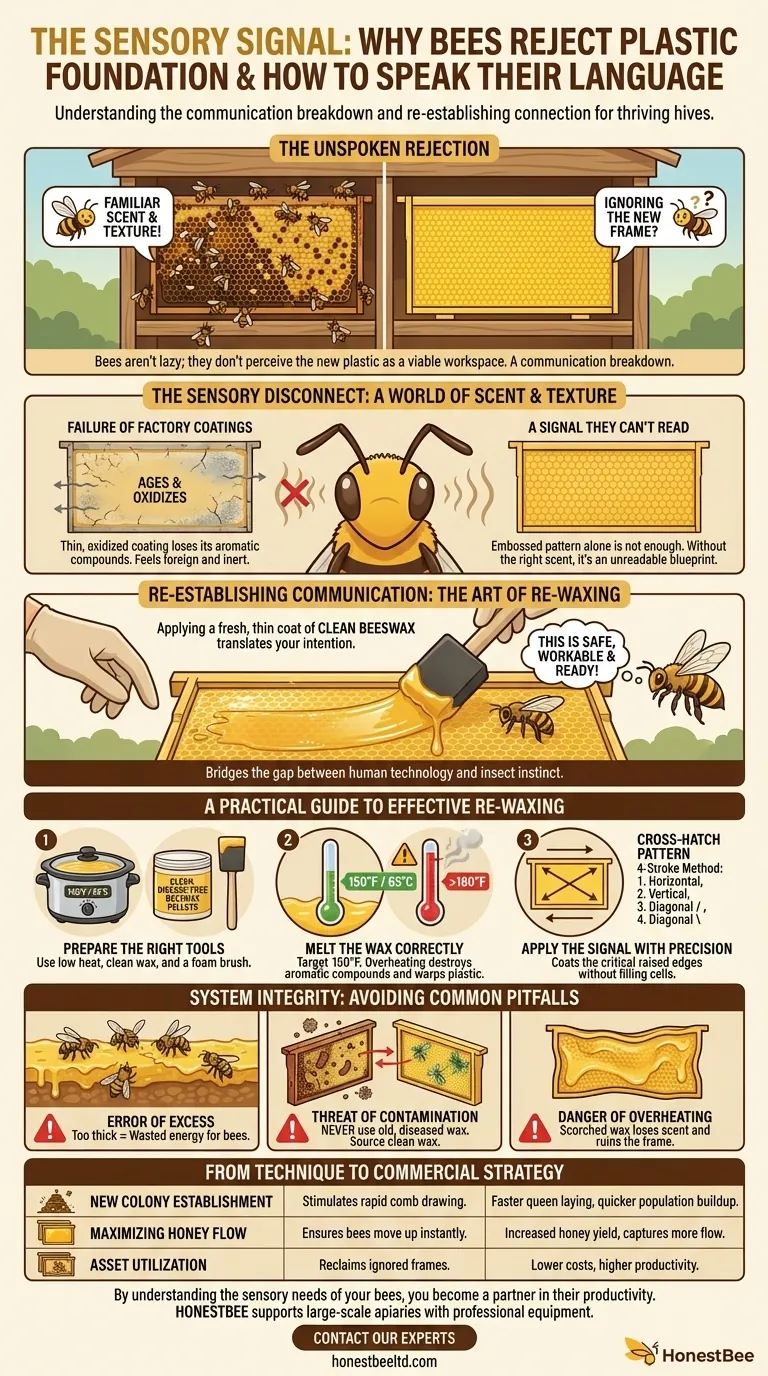
Step 1: Prepare the Right Tools
Your setup should be built for safety and efficiency.
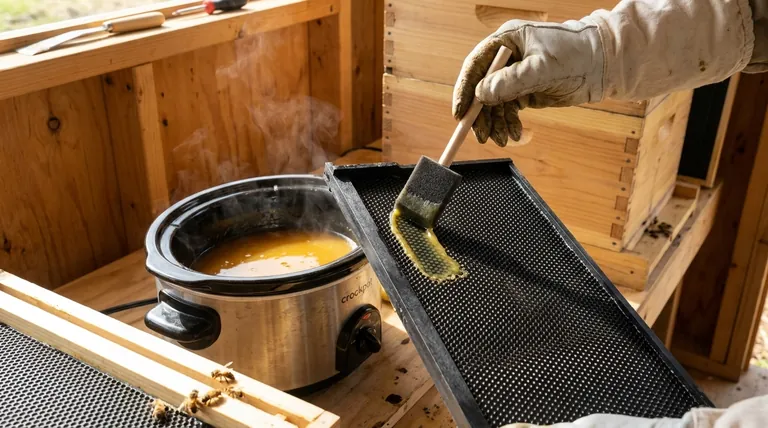
- A Low-Temperature Heater: A crockpot or a purpose-built wax melter is ideal. Never use a direct flame, which is a fire hazard and can scorch the wax.
- Clean, Disease-Free Beeswax: Use only high-quality cappings wax or fresh beeswax pellets. This is non-negotiable for hive health.
- A Disposable Foam Brush: Its structure prevents you from applying too much wax, which is the most common mistake.
Step 2: Melt the Wax Correctly
Gently melt your beeswax on the lowest setting. The target temperature is just above its melting point—around 150°F (65°C). The wax should be fully liquid but not smoking. Overheating can destroy the very aromatic compounds you're trying to add and risks melting the plastic foundation itself.
Step 3: Apply the Signal with Precision
The application technique is designed to coat the critical parts of the foundation—the raised edges of the cells.
This is where the bees begin to work, drawing out the wax to form the walls of the comb. A simple "cross-hatch" pattern is incredibly effective:
- First Pass: Paint one horizontal pass across the frame.
- Second Pass: Paint one vertical pass.
- Third & Fourth Pass: Paint two final passes on each diagonal.
This four-stroke method ensures the ridges are coated from every angle, providing a complete and irresistible signal to the bees without wasting wax by filling the cells.
System Integrity: Avoiding Common Pitfalls
Success lies in understanding what not to do. These common errors break the very system you are trying to enhance.
The Error of Excess
The most frequent mistake is applying a thick, heavy coat. This forces the bees to waste precious time and energy removing your excess wax before they can start building. The goal is a thin, fragrant coat, not a thick layer.
The Threat of Contamination
Never use old, dark comb from a dead or diseased colony. Spores for devastating diseases like American Foulbrood can survive the melting process and will be efficiently spread to your healthy colonies. For any commercial apiary, sourcing clean wax and foundation from a trusted supplier like HONESTBEE is a critical biosecurity measure.
The Danger of Overheating
If you see smoke, the wax is too hot. Scorched wax loses its attractive scent and can easily warp the plastic foundation, rendering it useless. Controlled, gentle heat is key.
From Technique to Commercial Strategy
For a commercial beekeeper, re-waxing isn't just a chore; it's a strategic lever for driving colony performance and maximizing ROI.
| Objective | Strategic Application of Re-Waxing | Business Outcome |
|---|---|---|
| New Colony Establishment | Re-waxing brood frames stimulates rapid comb drawing. | Faster queen laying, quicker population buildup, stronger colonies. |
| Maximizing Honey Flow | Re-waxing honey supers ensures bees move up and start storing nectar instantly. | Increased honey yield per hive, capturing more of the nectar flow. |
| Asset Utilization | Reclaiming previously ignored frames with a fresh coat of wax. | Lower equipment costs, higher productivity from existing assets. |
By understanding and acting on the sensory needs of your bees, you shift from being a manager of boxes to a true partner in their productivity. HONESTBEE supports large-scale apiaries and distributors by providing the high-quality frames, foundation, and professional equipment needed to implement these efficient systems at scale.
If you are ready to equip your operation for maximum productivity, Contact Our Experts.
Visual Guide
Related Products
- Assembled Wooden Bee Frames with Plastic Foundation for Durability and Convenience by HONESTBEE
- Plastic Bee Frame Beekeeping Hive Frames for Wholesale
- Food Grade Plastic bee Foundation for Bee Frames
- Professional Insulated Plastic Bee Hives
- Beeswax Foundation Sheets Beehive Foundation for Wholesale
Related Articles
- How to Clear Bees from Frames Without Compromising Honey Quality or Colony Health
- Beyond the Scrape: A Systemic Approach to Bee Frame Management
- The Pragmatic Hive: Engineering Resilience with Wood Frames and Plastic Foundation
- Why Wooden Beehive Frames Outperform Alternatives: Science, Sustainability, and Beekeeper Experiences
- Why Your Plastic Frames Are Warping—And Costing You More Than You Think