The Beekeeper's Point of Contact
Picture a frame heavy with golden honey, alive with the movement of a thousand bees. To inspect the brood pattern or to harvest that honey, the beekeeper must intervene. They must clear the canvas.
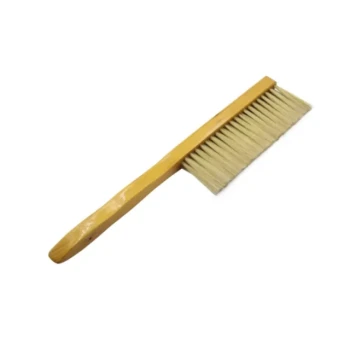
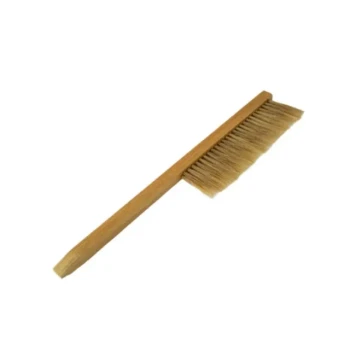
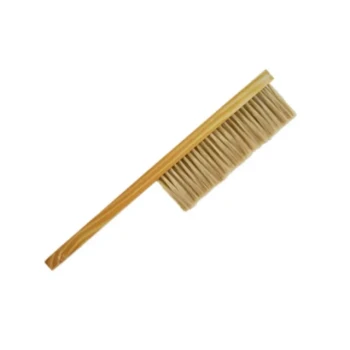
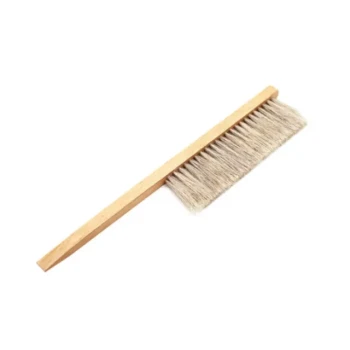
This is the moment of truth for a beekeeper, a delicate dance between intervention and observation. The tool often chosen for this task is deceptively simple: the bee brush. But to see it as just a brush is to miss the point. It is a primary tool of physical negotiation with a highly organized superorganism.
Anatomy of a Purposeful Intervention
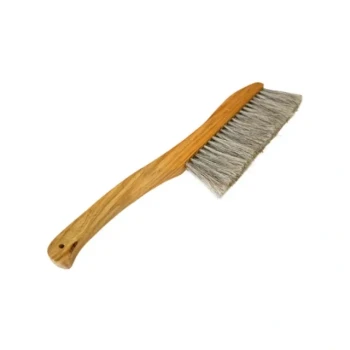
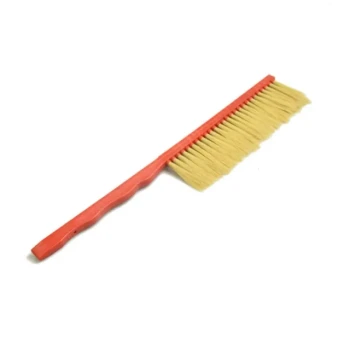
The bee brush exists for one reason: to gently move bees off a surface without harm. Its long, soft bristles are designed for precision where a cruder method, like a sharp shake, would be insufficient or inappropriate.
The Two Core Scenarios
The decision to use a brush is almost always driven by one of two critical tasks:
-
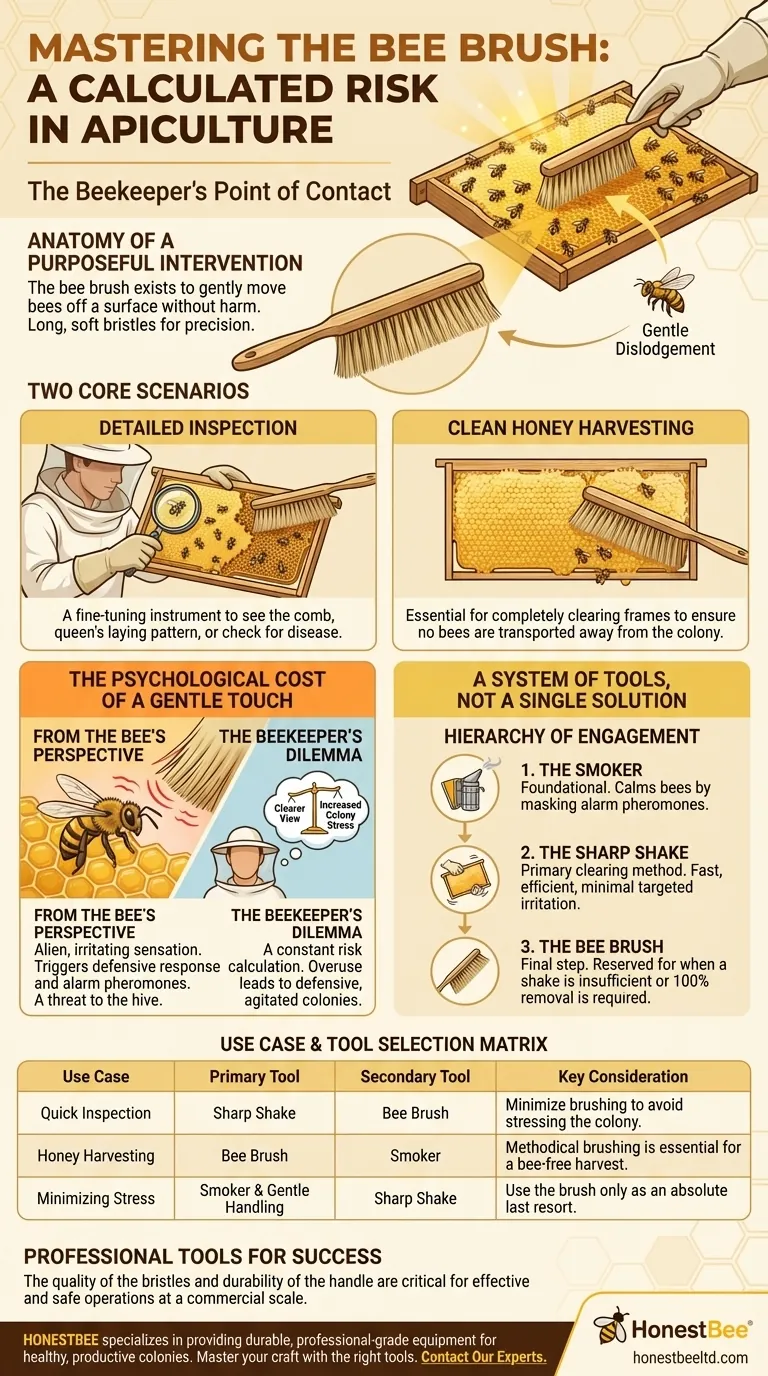
Detailed Inspection: A firm shake can dislodge 80% of the bees from a frame. But for a clear view of the queen's laying pattern or to check for signs of disease, you need to see the comb itself. The brush is the fine-tuning instrument used to sweep the last, most stubborn bees aside.
-
Clean Honey Harvesting: When moving frames of honey from the hive to the honey house, leaving bees behind is non-negotiable. Here, the brush becomes essential. Each frame must be methodically and completely cleared to ensure no bees are transported away from their colony.
In both cases, the brush performs a function that no other tool can do as cleanly. It is the specialist's choice for a specific outcome.
The Psychological Cost of a Gentle Touch
Herein lies the paradox of the bee brush: what feels gentle to us can be an act of aggression to a bee.
From the Bee's Perspective
Bees do not enjoy being brushed. The sensation is alien and irritating. It doesn't trigger a simple "move away" response; it can trigger a defensive one. Bees may turn to sting the bristles, releasing alarm pheromones and raising the agitation level of the entire colony.
To the hive, a brush is not a tool of care but an unidentified, persistent threat.
The Beekeeper's Dilemma
This forces a constant, low-level risk calculation in the mind of the beekeeper. Each sweep of the brush is a trade-off: the benefit of a clearer view versus the cost of increased colony stress.
Overuse of the brush can lead to a perpetually defensive and agitated colony, making future inspections more difficult and dangerous. It is a tool whose effectiveness diminishes with indiscriminate use.
A System of Tools, Not a Single Solution
Expert beekeeping is about using the right tool at the right time. The bee brush is not a primary tool; it is part of a system of escalating intervention.
The Hierarchy of Engagement
- The Smoker: This is the foundation. A smoker doesn't move bees, but it calms them by masking alarm pheromones. It changes the psychological environment of the hive, making all subsequent actions smoother.
- The Sharp Shake: This is the primary method for clearing a frame. It is fast, efficient, and dislodges the majority of bees at once with minimal targeted irritation.
- The Bee Brush: This is the final step. It is reserved for when a shake is not enough or when 100% bee removal is required, such as during a harvest.
Your approach should be dictated by your goal.
| Use Case | Primary Tool | Secondary Tool | Key Consideration |
|---|---|---|---|
| Quick Inspection | Sharp Shake | Bee Brush | Minimize brushing to avoid stressing the colony. |
| Honey Harvesting | Bee Brush | Smoker | Methodical brushing is essential for a bee-free harvest. |
| Minimizing Stress | Smoker & Gentle Handling | Sharp Shake | Use the brush only as an absolute last resort. |
Professional Tools for a Professional Operation
Understanding the nuance of a simple tool like a bee brush is the hallmark of a professional apiarist. This same principle applies to the equipment itself. The quality of the bristles and the durability of the handle aren't minor details; they are critical to performing the job effectively and safely at a commercial scale.
For commercial apiaries and equipment distributors, sourcing reliable, high-quality supplies is foundational to success. HONESTBEE specializes in providing the durable, professional-grade equipment needed to manage healthy, productive colonies efficiently. From brushes and smokers to complete hive setups, we support operations that understand the value of the right tool for the job.
Mastering your craft begins with mastering your tools. Let us help you equip your operation for success. Contact Our Experts
Visual Guide
Related Products
- Wooden Bee Brush with Triple Row Artificial Fiber for Beekeeping
- Classic Wooden Bee Brush with Double-Row Boar Bristles
- Double Row Artificial Fiber Bee Brush for Beekeeping
- Wooden Bee Brush with Double-Row Horsehair Bristles
- Premium Triple-Row Horsehair Bee Brush
Related Articles
- Your Bee Brush Is Slowing You Down. Here’s What Commercial Apiaries Use Instead.
- The Silent Profit Killer: Why a Simple Bee Brush Can Make or Break Your Harvest
- The Gentle Command: Why the Bee Brush is a Masterclass in Hive Psychology
- Gentleness Has a Price: The Engineering Trade-off in Bee Brushes
- A Beekeeper's Oath: The Biosecurity and Ethics Engineered into a Bee Brush