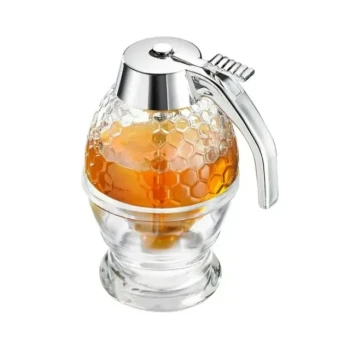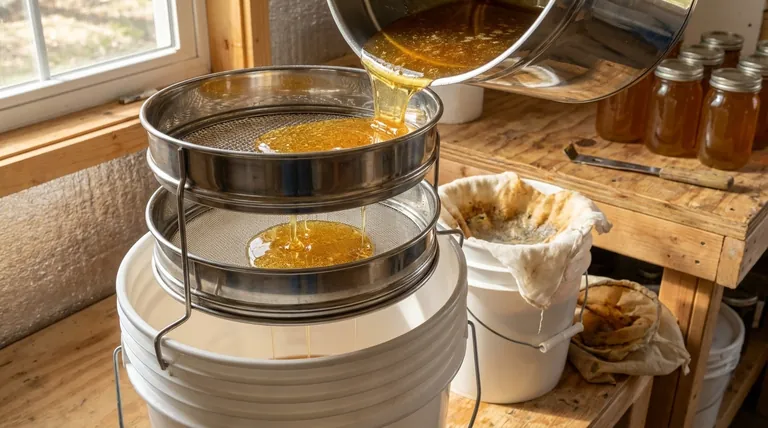
It’s one of the most frustrating moments in an otherwise rewarding harvest: a bucket of beautiful, raw honey sits waiting, but your filtration system has slowed to a crawl. The filter is clogged, the honey is backing up, and you're losing precious time and product in a sticky, frustrating battle. You might even find yourself scraping debris from a sagging nylon bag, wondering if there’s a better way.
This scene is a daily reality for countless beekeepers. If it feels familiar, you are not alone.
Why 'Good Enough' Filters Cost You More Than You Think
When facing a filtration bottleneck, the immediate impulse is to grab whatever is on hand. Commercial beekeepers and distributors often find themselves wrestling with a series of seemingly practical but ultimately flawed solutions:
- Cheesecloth or Fabric Filters: They're cheap and readily available, but they clog almost instantly with wax particles, stretch under the weight of honey, and are nearly impossible to clean thoroughly, posing a hygiene risk.
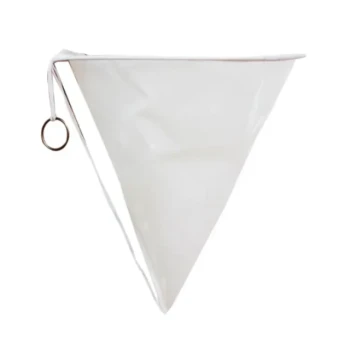
- Basic Nylon Strainers: While an upgrade from cloth, these can sag and deform, especially if the honey is gently warmed to improve flow. They are also difficult to sanitize and can degrade over time.
- Low-Grade Metal Kitchen Strainers: These seem like a durable option, but many are not made from food-grade stainless steel. They can rust when exposed to honey’s natural acidity, contaminating your product and rendering the tool useless.
These "quick fixes" create long-term headaches. They don't just slow down your workflow; they create hidden costs. Every hour spent cleaning a clogged filter is an hour not spent on other critical apiary tasks. Every bit of honey lost to inefficient draining is a direct hit to your revenue. Most importantly, these methods can compromise the purity and quality of your final product, potentially lowering its market value.
The Real Culprit: It’s Not the Honey, It’s Your Hardware
Here is the turning point: The problem isn’t that honey is difficult to filter. The problem is that most filters are not designed to handle the unique physical and chemical properties of honey.
The common solutions fail because they ignore the fundamental science of the task.
The Physics of Viscosity and Pressure
Honey is highly viscous. When you pour it, it exerts significant downward pressure. A flexible material like cloth or nylon will stretch, reducing the pore size and causing immediate clogging from wax and propolis. A proper filtration system needs a rigid, structural mesh that can withstand this pressure and maintain consistent spacing, allowing honey to flow while catching debris.
The Chemistry of Acidity and Food Safety
Honey is naturally acidic, with a pH typically between 3.5 and 5.5. This acidity will corrode metals that are not sufficiently resistant, like low-grade steel or aluminum. This corrosion—rust—doesn't just ruin the strainer; it can leach metallic tastes and particles into your honey, compromising its food-safe status.
The Challenge of Hygiene
For a product intended for consumption, hygiene is non-negotiable. Porous materials like cheesecloth are a breeding ground for bacteria because they can never be fully cleaned. They trap old honey and microscopic particles. A truly hygienic surface must be non-porous, allowing it to be washed and sanitized completely, ensuring no cross-contamination between batches.
The temporary solutions you've been using were never meant for this job. They were designed for water, thin broths, or dry flour—not for a dense, acidic, and valuable food product like honey.
The Right Tool for the Job: Engineering for Honey
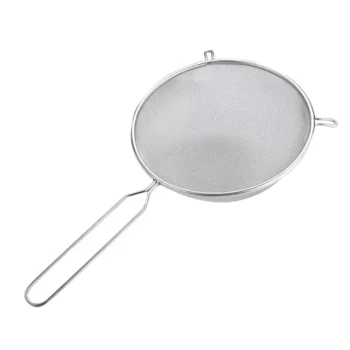
To truly solve the filtration problem, you need a tool engineered from the ground up with honey in mind. The solution is not just a strainer; it's a food-grade, stainless steel honey strainer or double-sieve system.
This isn't a happy accident. This equipment is a direct answer to the root causes we just uncovered. A professional honey strainer from HONESTBEE is designed to:
-
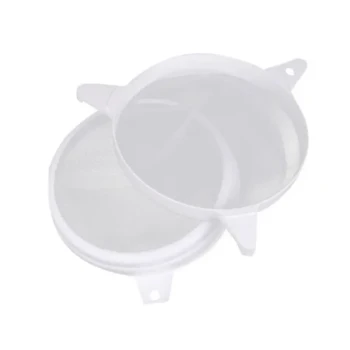
Counteract Viscosity: Our strainers are built with heavy-duty, food-grade stainless steel mesh. The rigid construction maintains its shape under the weight of honey, ensuring a consistent flow rate and preventing the clogs that plague fabric filters. Many models feature a double-sieve design—a coarse top filter to catch large wax pieces and a finer bottom filter for smaller particles—streamlining a two-stage process into one efficient step.
-
Resist Acidity: We use high-quality stainless steel that is impervious to honey’s natural acidity. It will not rust, corrode, or leach any materials into your product, guaranteeing the purity and safety of your harvest, batch after batch, year after year.
-
Ensure Perfect Hygiene: The non-porous surface of stainless steel is incredibly easy to clean. Unlike cloth or nylon, it harbors no bacteria or old residue. A simple wash leaves it perfectly sanitized and ready for the next run, protecting your product and your reputation.
This is not just another piece of metal; it’s a purpose-built solution designed for the realities of commercial honey production.
Beyond Filtering: Unlocking a More Profitable Apiary
When your filtration bottleneck is permanently removed, something powerful happens. You stop wasting energy on a frustrating problem and start unlocking new potential for your business.
With a reliable and efficient filtration system, you can:
- Increase Your Throughput: Process your harvest significantly faster, freeing up time to manage more hives or focus on sales and distribution.
- Guarantee Consistent Quality: Produce a crystal-clear, premium-grade honey that is free from impurities. This level of quality commands a higher price and builds a loyal customer base.
- Scale Your Operation with Confidence: As your apiary grows, your processing capacity can grow with it. Your filtration system becomes a dependable asset, not a limiting factor.
- Operate with Professional Peace of Mind: Know that your product is safe, pure, and processed with professional, food-grade equipment.
Your honey's quality is a direct reflection of your process. Investing in the right equipment isn't an expense; it's an investment in your brand's reputation and your operational efficiency. If you're ready to move past the temporary fixes and build a filtration system that supports your growth, our team is here to help. We understand the unique challenges of commercial apiaries and can guide you to the equipment that fits your scale and goals. Let's discuss your specific project. Contact Our Experts.
Visual Guide
Related Products
- Professional Stainless Steel Honey Filtering Machine with Water Bath Heating for Beekeeping
- Electric Double Wall Honey Filtering Machine Purifier Equipment for Honey Processing Plant
- Professional Stainless Steel Honey Filter with Support Handle
- Professional Honey Filter with Tripod Support Stand
- Professional Cone-Shaped Honey Filter with Reinforced Steel Ring
Related Articles
- The Sticky Bottleneck: Why Your Honey Filtering Fails and How to Fix It for Good
- Why Your Honey Filtering Process is Failing (And It’s Not the Honey’s Fault)
- The Quality vs. Scale Dilemma: Why Your Honey Filtering Process Is Broken (And How to Fix It for Good)
- Why Your Honey Filtering is Slow and Inconsistent—And How to Fix It for Good
- Optimizing Honey Filtration: How Mesh Sizes Shape Quality and Market Appeal