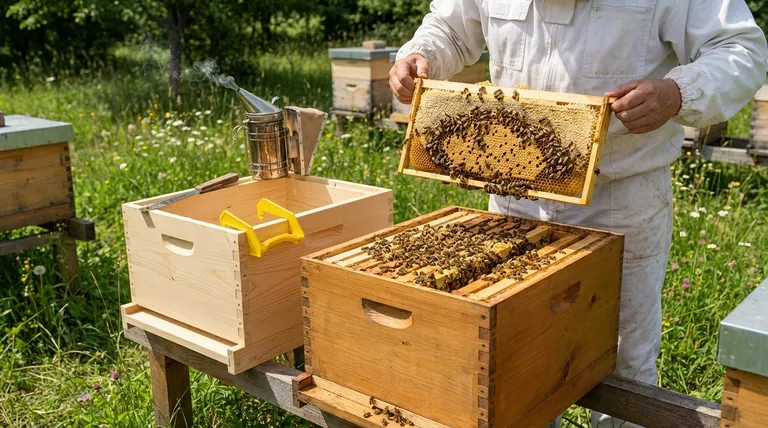
The Inevitable Urge to Expand
A thriving honeybee colony is like a rapidly growing city. At first, there is space, order, and a clear sense of purpose. Resources flow in, the population booms, and every citizen has a job to do.
But growth without expansion creates pressure. The streets become congested, housing is scarce, and the system starts to strain. In a beehive, this pressure doesn't lead to gridlock; it leads to a collective, instinctual decision to divide. This is swarming.
Swarming isn't a failure. It's the colony's natural, biological imperative to reproduce. But for the beekeeper, it represents the loss of half their workforce and a massive setback in productivity. The challenge isn't to stop this instinct, but to manage it. The key is learning to read the hive's silent signals before the decision to leave is ever made.
Decoding the Language of the Hive
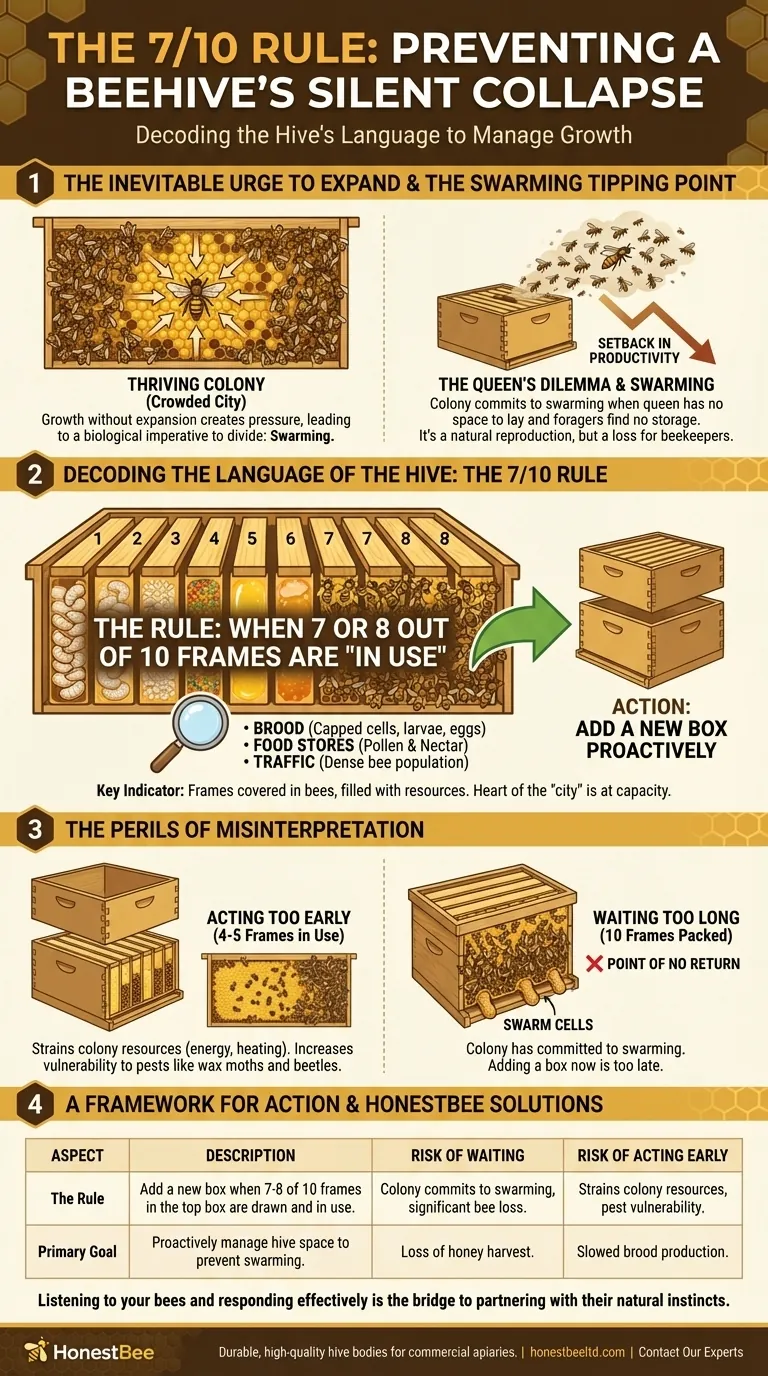
The bees have a clear way of telling you they are running out of room. It’s called the 7/10 rule, and it's the most important piece of data a beekeeper can act on.
The rule is simple: when the bees have built out comb and are actively using seven or eight of the ten frames in their top-most box, it is time to add another one.
What "In Use" Truly Means
This isn't just about the presence of wax. An "active" frame is a hub of activity. During an inspection, you should see:
- Brood: Capped cells, larvae, and new eggs.
- Food Stores: Cells packed with colorful pollen or glistening with fresh nectar.
- Traffic: A dense population of bees tending to the brood and managing resources.
The outer frames (positions 1 and 10) are the final frontiers. When you see bees beginning to build and work on frames 2 and 9, the heart of their "city" is at capacity. They are communicating a clear need for expansion.
The Psychology of a Swarm
A crowded hive triggers a series of profound behavioral shifts. It’s a psychological tipping point for the colony.
The Queen's Dilemma
When the queen runs out of empty cells to lay her eggs, a biological alarm sounds. Her primary function is stalled. Simultaneously, incoming foragers find no empty cells to store nectar and pollen.
This resource bottleneck signals to the entire colony that their home is no longer sustainable for continued growth. The collective mind shifts from expansion to reproduction. Preparations for swarming begin.
The Point of No Return
The most definitive sign of this decision is the presence of swarm cells—special, peanut-shaped queen cells usually built along the bottom of frames.
Once you see swarm cells, you are no longer managing growth; you are witnessing a departure. The colony has already committed. Adding a new box at this stage is like offering a larger house to a family that has already packed the moving truck. They are going to leave.
The Perils of Misinterpretation
The 7/10 rule is a guideline, not a dogma. Its power lies in correct timing. Acting too early or too late are both forms of miscommunication with the hive, each with its own consequences.
The Cost of Rushing
Adding a new box when only four or five frames are in use creates a vast, empty space the colony cannot effectively manage.
This forces the bees to expend precious energy heating and defending an area they don't yet need. It slows brood production and, worse, creates undefended territory for pests like wax moths and small hive beetles to establish a foothold.
The Price of Delay
Waiting too long is the more catastrophic error. By the time all ten frames are packed, the swarm impulse is likely irreversible. You have missed the window for conversation and are now merely an observer to the hive's decision. The result is a depleted colony and a lost honey harvest.
A Framework for Action
Applying the 7/10 rule requires adapting to the hive's context and your operational goals.
| Aspect | Description |
|---|---|
| The Rule | Add a new box when 7-8 of 10 frames in the top box are drawn and in use. |
| Primary Goal | Proactively manage hive space to prevent swarming. |
| Key Indicator | Frames are covered in bees and filled with brood, pollen, or nectar. |
| Risk of Waiting | The colony commits to swarming, leading to a significant loss of bees. |
| Risk of Acting Early | Strains colony resources and increases vulnerability to pests. |
For commercial operations focused on honey production, adding a super right as a nectar flow begins and the hive hits seven frames is crucial. For a newer colony, waiting for a solid eight frames ensures they have the strength to expand without being overstretched.
Listening to your bees is the art of beekeeping. Responding effectively is the science. This simple rule is the bridge between the two, allowing you to partner with the colony's natural instincts.
Managing this critical tipping point, especially at a commercial scale, depends on having reliable, perfectly-sized equipment ready to go. The conversation between beekeeper and hive can't be delayed by a supply shortage. At HONESTBEE, we ensure commercial apiaries and distributors have the durable, high-quality hive bodies and frames they need to respond to the hive's signals instantly and scale their operations effectively.
To ensure your equipment meets the demands of your growing apiary, Contact Our Experts.
Visual Guide
Related Products
- Wholesales Dadant Size Wooden Bee Hives for Beekeeping
- Stainless Steel Round Beehive Air Vents for Ventilation
- Metal Bee Hive Stand Bee Box Stand for Beekeeping
- Durable Plastic Hive Number Set for Beekeeping
- Wooden Bee Hive Frames for Beekeeping and Wholesale
Related Articles
- The Silent Killer in the Hive: Why Moisture, Not Cold, Is Winter's Greatest Threat
- Beyond the Bee Box: Why Your First Apiary Investment Determines Your Success
- How to Assemble Wooden Beehives: A Beginner's Guide to Durable Joint Systems
- Why Wooden Beehives Outperform Modern Alternatives: A Science-Backed Guide for Beekeepers
- How Wooden Beehives Naturally Regulate Temperature for Healthier Honeybee Colonies


















