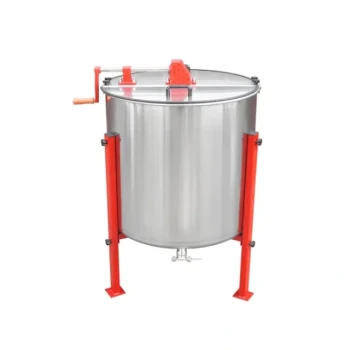
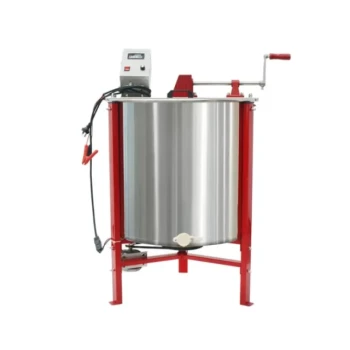
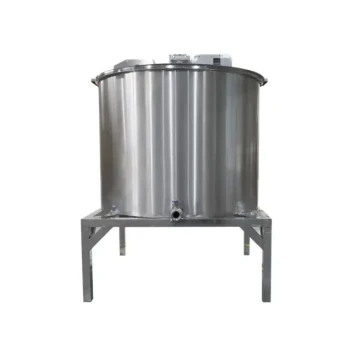
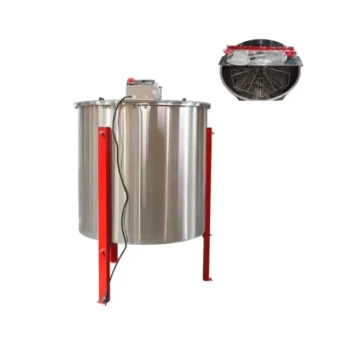
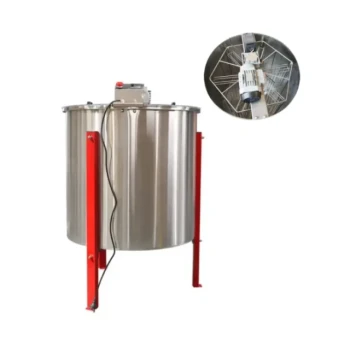
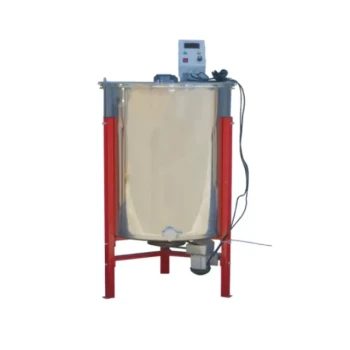
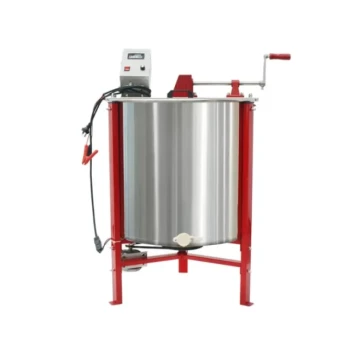
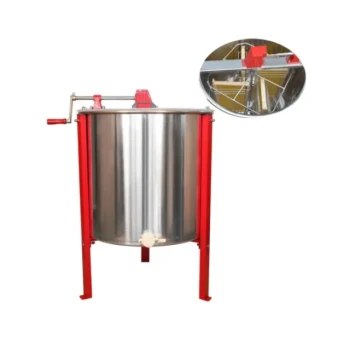
A radial extractor is the ideal choice for beekeepers managing larger-scale operations. If you need to process a high volume of honey from many frames, this equipment provides the necessary efficiency to handle the workload effectively.
The radial extractor stands out for its ability to handle volume. It is best suited for beekeepers who need to extract large amounts of honey from numerous frames, prioritizing speed and ease of use over compact size.
Scaling Up Your Honey Harvest
Handling High Volume
The defining characteristic of a radial extractor is its capacity. It is specifically recommended for beekeepers who need to extract a large amount of honey.
Unlike smaller units designed for a few frames, radial extractors are built to process many frames simultaneously. This makes them the standard for operations where volume is the primary challenge.
Maximizing Efficiency
Efficiency is critical when managing a large apiary. The radial extractor is designed to streamline the extraction process.
Its "ease of use" is a major advantage cited for larger operations. By allowing you to process more frames in a single cycle, you significantly reduce the total time spent in the honey house.
Understanding the Trade-offs
Necessity vs. Capacity
While radial extractors are superior for large harvests, they may be overkill for smaller setups. The equipment is optimized for "many frames," meaning it shines when pushed to capacity.
For a hobbyist with only a few hives, the specific benefits of a radial extractor—namely its high-volume throughput—may not be fully utilized. It is a tool designed to solve the problem of scale.
Making the Right Choice for Your Goal
To decide if a radial extractor is right for you, look at your frame count and harvest goals.
- If your primary focus is large-scale efficiency: Choose a radial extractor to process many frames at once and minimize the time spent extracting.
- If your primary focus is a small hobby harvest: Consider if your volume of honey justifies the capacity of a unit designed for larger operations.
Match your equipment to the size of your harvest to ensure your extraction process is as efficient as possible.
Summary Table:
| Feature | Radial Extractor Suitability |
|---|---|
| Ideal Scale | Commercial & Large-Scale Apiaries |
| Primary Benefit | High-volume throughput & Time efficiency |
| Frame Capacity | Handles many frames simultaneously (Both sides at once) |
| Ease of Use | High; streamlined for bulk processing |
| Best For | Beekeepers prioritizing speed over compact size |
Elevate Your Beekeeping Operation with HONESTBEE
Are you ready to scale your honey production? HONESTBEE specializes in supporting commercial apiaries and distributors with high-performance beekeeping machinery. Whether you need professional-grade radial extractors, automated honey-filling machines, or durable hive-making equipment, we provide the full spectrum of tools and consumables to fuel your growth.
Maximize your efficiency and output today. Contact our wholesale experts to discover how our comprehensive equipment portfolio can transform your apiary's productivity!
Related Products
- 24 Frame Honey Extractor Commercial Radial Honey Frame Extraction Machine
- Stainless Steel Manual 8 Frame Radial Honey Extractor Machine for Beehives
- 6 Frame Manual Stainless Steel Honey Extractor Beekeeping Equipment
- HONESTBEE 8 Frame Electric and Manual Three Use Honey Extractor
- Electric 4 Frame Tangential Honey Extractor
People Also Ask
- How does a radial honey extractor leverage the natural structure of a honeycomb? Optimize Your Apiary's Efficiency
- How do modern honey extraction machines improve harvest efficiency? Boost Your Yield with Radial Technology
- Why must the head of the honey comb be placed near the center axis? Protect Your Comb During Radial Extraction
- Why is the width of iron rings varied for radial honey extractor tilt? Optimize Your Harvest with Precise Engineering
- What are the operational differences between radial and tangential honey extractors? Maximize Your Harvest Efficiency