Swarm traps act as a strategic safety net for beekeepers, designed to recover a colony that has already decided to split and leave the hive. By positioning these traps near an apiary and enhancing them with attractants like lemongrass oil or old honeycomb, you create an inviting target for scout bees. This effectively captures the swarm, allowing you to retain the population and genetics that would otherwise be lost to the surrounding environment.
Swarm traps do not stop the biological impulse to swarm; instead, they serve as a recovery mechanism to capture bees that are already leaving. They convert a potential total loss into a retained resource.
The Mechanics of Recovery
Strategic Placement
To be effective, swarm traps must be positioned near the apiary. The goal is to intercept the scout bees that are searching for a new home shortly before or during the swarming process.
By keeping the trap in close proximity to the existing hives, you increase the probability that the departing swarm will choose your controlled container over a hollow tree or a neighbor's roof.
The Power of Attractants
A bare box is rarely enough to entice a swarm. You must make the trap smell like an established, safe hive.
Beekeepers often use old honeycomb inside the trap. The scent of wax and propolis signals to the bees that the space is habitable. Additionally, lemongrass oil mimics the Nasonov pheromone (the "come here" scent released by worker bees), making the trap highly attractive to scouts.
Recovery vs. Prevention
The Root Cause of Swarming
It is critical to understand that a swarm trap is a reactive measure, not a preventative one. Bees usually swarm due to overpopulation and congestion within the hive.
When the colony runs out of room for brood rearing or nectar storage, they instinctively split to ensure survival.
True Preventative Measures
If your goal is to stop the swarm from happening in the first place, a swarm trap will not help. Instead, you must manage the hive's internal space.
Adding new honey supers provides the necessary room for the growing population and nectar storage. This reduces congestion and lowers the likelihood of the bees feeling the need to leave.
Differentiating Defensive Tools
Swarm Traps vs. Predator Traps
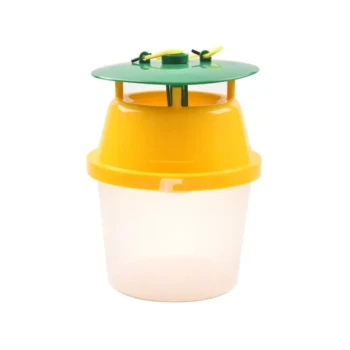
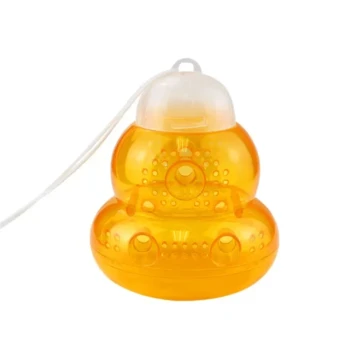
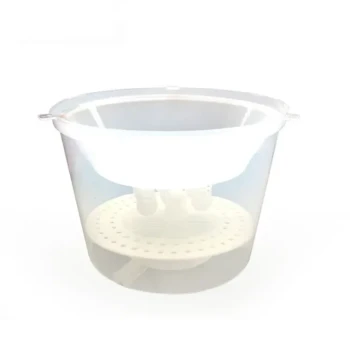
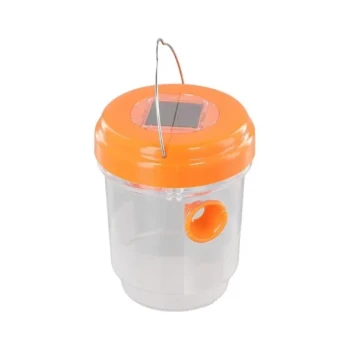
Do not confuse swarm traps with other defensive hardware, such as hornet traps.
Hornet traps are placed directly at the hive entrance, where bee activity is concentrated and predation pressure is highest. Their purpose is to physically intercept predators like Asian hornets.
In contrast, swarm traps are placed away from the immediate entrance to offer a new potential home for a departing colony.
Understanding the Limitations
Not a Substitute for Management
Relying solely on swarm traps is a risky strategy. While they may catch a swarm, the original hive has still lost a significant portion of its workforce and its queen.
This interruption impacts honey production and colony momentum. Traps should be viewed as an insurance policy, not a primary management technique.
False Security
Even with attractants, there is no guarantee a swarm will choose your trap.
Scout bees are highly selective. If they find a natural cavity that offers better protection or volume, they will bypass your trap entirely.
Making the Right Choice for Your Goal
To manage your apiary effectively, you must match the tool to the specific biological behavior you are addressing.
- If your primary focus is preventing colony loss: Use honey supers to expand hive space and reduce the congestion that triggers swarming.
- If your primary focus is asset recovery: Deploy swarm traps baited with lemongrass oil or old comb near your apiary to catch swarms that slip past your prevention measures.
- If your primary focus is predator defense: Install hornet traps directly at the hive entrances to reduce predation pressure from wasps and hornets.
A balanced apiary strategy prioritizes space management to prevent swarms, while using traps as a reliable backup plan.
Summary Table:
| Tool | Primary Function | Placement | Key Mechanism |
|---|---|---|---|
| Swarm Trap | Asset Recovery | Near the apiary | Attractants like lemongrass oil & old comb |
| Honey Super | Swarm Prevention | On top of the hive | Reduces congestion by adding internal space |
| Hornet Trap | Predator Defense | At hive entrance | Physically intercepts wasps and hornets |
| Hive Management | Population Control | Inside the hive | Monitoring brood and nectar storage levels |
Maximize Your Colony Retention with HONESTBEE
Don't let valuable genetics and labor fly away. At HONESTBEE, we empower commercial apiaries and distributors with the professional-grade tools needed to manage, protect, and grow their bee populations.
From swarm traps and specialized attractants to honey-making machinery and essential consumables, our comprehensive wholesale catalog is designed to support every aspect of your beekeeping operation. Whether you are looking to scale your honey production or supply the next generation of beekeepers, we provide the hardware and expertise to help you succeed.
Ready to secure your apiary's future? Contact HONESTBEE today to discuss our wholesale equipment solutions and how we can support your business growth.
Related Products
- HONESTBEE Collapsible Tiered Bee Swarm Catcher for Beekeeping
- HONESTBEE Professional Telescopic Pole Bee Swarm Catcher
- Reusable Clear Small Hive Beetle Traps for Beehives Beetle Trapping Tools
- Professional Bucket Style Wasp and Moth Pheromone Trap
- Removable Washable Hive Beetle Trap Attractants for Small Hive Beetles
People Also Ask
- What should be done if the swarm is situated on the bottom of a tree limb? A Guide to Methodical Bee Capture
- What role do swarm catchers play in maintaining the production scale of an apiary? Turn Colony Loss into Growth.
- What role does a Swarm Catcher play in the process of expanding apiary colony scale? Optimize Growth & Reduce Costs
- What information should be gathered before attempting to catch a swarm of bees? A Safe and Successful Guide
- What precautions can be taken to prevent a newly captured swarm from absconding? Secure Your Swarm with Proven Methods