Commercial apiary managers can estimate adult honey bee populations by measuring bee coverage on standardized Langstroth frames. Use approximately 1,100 adult worker bees for one fully covered side of a standard frame; therefore, a frame covered on both sides represents roughly 2,200 adult bees. For partially covered frames, estimate the percentage of each side covered and multiply that fraction by 1,100.
Core takeaway: Convert observed frame coverage into “full-frame-side equivalents,” then multiply by approximately 1,100 adult bees per fully covered side. This provides a fast, repeatable estimate of colony strength without individually counting bees.
How the Frame-Coverage Method Works
Use the frame side as the basic unit
A fully bee-covered side of a standard Langstroth frame is the reference unit. It represents approximately 1,100 adult worker bees under the population-estimation standard used here.
A frame covered on both sides therefore represents:
1,100 bees × 2 sides = approximately 2,200 adult bees
Estimate partial coverage proportionally
A frame does not need to be completely covered to be included in the assessment. Estimate the visible coverage of each side as a percentage.
For example:
- One side covered 100%: 1.0 frame-side equivalent
- One side covered 50%: 0.5 frame-side equivalent
- One side covered 25%: 0.25 frame-side equivalent
The calculation is:
Estimated adult bees = total frame-side equivalents × 1,100
If a colony contains the equivalent of 12 fully covered frame sides:
12 × 1,100 = approximately 13,200 adult bees
Inspect both sides of each frame
Bees may be concentrated on one face of a comb and less visible on the other. Inspecting only one side can therefore understate the colony population.
When practical, record coverage separately for both sides and add the two values before applying the 1,100-bee conversion factor.
A Practical Commercial Inspection Procedure
Standardize the equipment first
The estimate is meaningful only when the same frame standard is used consistently. Commercial teams should distinguish standard Langstroth frame sizes, such as deep and medium frames, rather than treating every frame type as identical.
The 1,100-bee reference should be applied to the specific standard frame configuration used in the apiary. Jumbo or non-standard frames require a separate calibration because their usable comb area differs.
Inspect colonies under comparable conditions
Open and assess colonies under similar weather, time-of-day, and handling conditions whenever possible. Temperature, nectar flow, and disturbance can change how tightly bees cluster on the comb.
Consistent inspection conditions make comparisons between colonies, yards, and evaluation dates more reliable.
Record coverage systematically
For each colony, record:
- The number of frames inspected.
- The estimated coverage percentage on each frame side.
- The total frame-side equivalents.
- The calculated adult bee population.
- The inspection date and environmental conditions.
A simple inspection sheet or digital form can make these records suitable for inventory planning, colony grading, and performance comparisons.
Use “seams” as a rapid field indicator
A seam is the space between adjacent frames that is filled with bees. Counting occupied seams provides a quick visual assessment of colony density during routine inspections.
Seam counts are useful for rapid screening, but frame-side coverage is generally more suitable when the objective is to create a quantified, comparable population estimate.
Converting Observations Into Colony Strength
Calculate the total population across all frames
Add the estimated coverage for every inspected frame side.
For example, suppose a colony has:
- Six frame sides at 100% coverage
- Four frame sides at 50% coverage
- Two frame sides at 25% coverage
The total is:
6.0 + 2.0 + 0.5 = 8.5 frame-side equivalents
The estimated adult population is:
8.5 × 1,100 = approximately 9,350 adult bees
This method accommodates colonies that do not fit neatly into whole-frame categories.
Compare colonies using the same measurement basis
A colony with more occupied frames is not automatically stronger if the bees are thinly distributed. Coverage percentage provides a better basis for comparing colonies than simply counting boxes or frames present.
For commercial decisions, adult bee estimates should also be considered alongside brood area, food reserves, disease status, and queen performance.
Track population change over time
Repeated measurements can reveal whether a colony is expanding, stable, or declining. The value comes less from one isolated estimate than from a consistent series of observations.
This is particularly useful when evaluating feeding programs, seasonal development, overwintering success, or subspecies performance.
Why Standardized Langstroth Equipment Matters
It creates a common spatial reference
Movable Langstroth frames provide a consistent surface area for assessing adult bees, brood, pollen, and honey. This makes observations more comparable across colonies and inspection dates.
For distributors, wholesalers, and commercial apiary operators, standardized equipment also simplifies training, replacement planning, and inspection documentation.
It supports objective colony grading
Exterior flight activity and the number of stacked boxes can be misleading. A colony may show substantial flight activity while having limited comb coverage, or occupy several boxes without a dense adult population.
Frame-based inspection provides direct evidence of the colony’s usable adult bee workforce.
It improves operational planning
Reliable population estimates help managers plan colony allocation, pollination contracts, feeding schedules, transportation, and replacement requirements. They also provide a more defensible basis for confirming that delivered colonies meet agreed strength specifications.
Understanding the Trade-offs
The estimate is approximate, not an individual count
The 1,100-bee conversion is a practical standard, not a precise census. Bee density varies with temperature, colony behavior, comb condition, and the presence of the queen or brood.
Use the result for consistent comparison and management, rather than presenting it as an exact number.
Coverage can be difficult to judge
Bees may cluster in corners, bridge between frames, or obscure portions of the comb. Visual estimates can also differ between inspectors.
Commercial operations should train evaluators with shared reference examples and, where possible, have the same team use the same scoring method across inspection rounds.
Frame type affects comparability
A deep Langstroth frame and a medium Langstroth frame do not provide the same comb area. Applying one conversion factor across different frame sizes can create systematic errors.
Label frame type clearly and avoid combining measurements from standard and non-standard equipment without an appropriate adjustment.
Do not confuse adult bees with brood
Capped brood represents developing bees, not currently active adult workers. Adult bee population estimates should be recorded separately from brood-area measurements.
A strong colony assessment should therefore include both adult coverage and active brood-nest area.
Avoid relying on exterior observations alone
Flight traffic, hive weight, and the number of boxes can provide useful supporting information, but none replaces direct frame inspection when population accuracy matters.
These external indicators should be treated as screening tools rather than the primary population measurement.
Making the Right Choice for Your Goal
Use the same frame standard, inspection procedure, and recording method across the entire operation.
- If your primary focus is rapid routine grading: Count occupied seams and visually estimate frame-side coverage, then flag colonies requiring a more detailed inspection.
- If your primary focus is accurate colony comparison: Record the percentage coverage on both sides of every frame and multiply the resulting frame-side equivalents by approximately 1,100.
- If your primary focus is pollination contracting or delivery verification: Combine adult bee estimates with brood, food reserves, and health observations before confirming colony capacity.
- If your primary focus is research or feeding-program evaluation: Use standardized Langstroth equipment and repeat measurements under comparable conditions to preserve data consistency.
- If your primary focus is equipment procurement: Specify the exact Langstroth frame size and maintain compatible frames, boxes, and inspection records throughout the apiary.
A standardized frame-coverage system turns routine hive inspections into practical, comparable data for stronger commercial decisions.
Summary Table:
| Method | Description | Example |
|---|---|---|
| Frame Coverage | Estimate percentage of each frame side covered by bees. | One side fully covered = 1,100 bees. |
| Frame-Side Equivalents | Sum coverage across all frames. | 8.5 equivalents × 1,100 = 9,350 bees. |
| Seam Count | Quick count of seams filled with bees. | Used for rapid screening. |
Optimize your apiary with standardized equipment from HONESTBEE. As a one-stop supplier for commercial beekeepers and distributors, we offer a full spectrum of beekeeping tools, machinery, and consumables. Our rapid delivery, dedicated support, and OEM/ODM services ensure your operation runs efficiently. Contact us today at #ContactForm to discuss your needs and boost your productivity.
Related Products
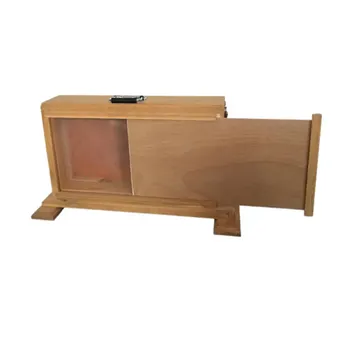
- Professional Observation Hive: The Ultimate Portable Solution for Beekeeping Education, Exhibitions, and Colony Displays
- Wooden Bee Hive Frames for Beekeeping and Wholesale
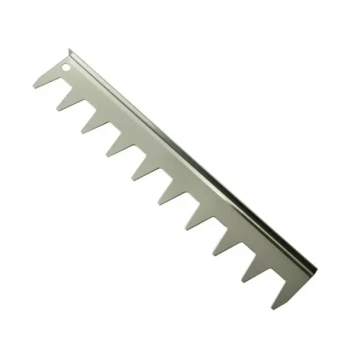
- Stainless Steel 9 Frame Hive Spacer Durable Precise for Commercial Beekeeping
- JZBZ Langstroth Queen Rearing Frame for Beekeeping
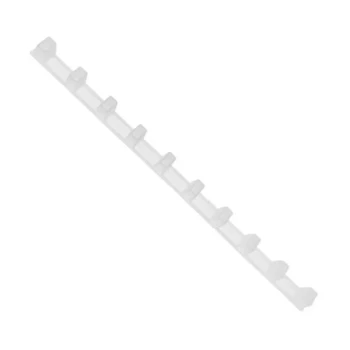
- Durable Plastic Frame Spacer
People Also Ask
- How does transitioning to modern hives boost honey yield? Increase production and product quality for your commercial apiary
- How do Langstroth and Dadant standard beehives compare regarding brood chamber management and component compatibility? Find the Perfect Fit for Your Apiary
- What are the key operational differences and structural trade-offs between Langstroth beehives and top-bar beehives for apiary management? Discover which hive system fits your operational needs.
- What are the primary differences between Langstroth, horizontal top bar, and Warré hive box designs when selecting beekeeping equipment? Choose the Right Hive for Your Apiary
- Why do commercial apiary operators transition from traditional hive structures, such as clay cylinders, to standardized Langstroth hive boxes? Discover Scalable Beekeeping Solutions