Commercial beekeepers can manage Chinese Sacbrood Virus (CSBV) primarily through rapid detection, comb and colony-strength management, sanitation, vector control, supportive feeding, and timely requeening. Antibiotics do not treat this viral disease, so operations should use inspection tools to identify affected brood, remove heavily infected material, reduce stress, and introduce healthy queens with appropriate queen-handling equipment. These actions are most effective when applied as an integrated apiary protocol rather than as isolated treatments.
The central principle is to reduce viral load and improve the colony’s ability to remove diseased brood. Requeening, right-sizing comb volume, maintaining hygienic equipment, controlling pests, and providing targeted nutritional support form the practical foundation of CSBV outbreak management.
Detect CSBV Before It Spreads
Inspect brood frames on a fixed schedule
Commercial apiaries should inspect colonies at least biweekly during periods of elevated disease risk. Managers should record symptoms and estimate the percentage of affected brood on each frame so that intervention decisions are consistent across yards and teams.
Early signs include uncapped or punctured brood cells and larvae that change from pearly white to grayish-yellow. The larval head may become raised and darkened before the larva collapses into a fluid-filled sac.
Distinguish sacbrood from bacterial diseases
As infected larvae dry, they become brittle scales that generally do not adhere tightly to cell walls. This feature helps distinguish sacbrood from American Foulbrood, whose scales are typically more firmly attached.
Field symptoms can overlap with other brood disorders. Suspect colonies should therefore be assessed carefully, and laboratory confirmation should be considered when the diagnosis is uncertain or the operational consequences are significant.
Map infection across the apiary
CSBV is highly contagious among susceptible Asian honeybee colonies, particularly Apis cerana. Apiary managers should document affected colonies, frame locations, queen status, pest pressure, and recent equipment movements.
This information supports targeted quarantine and prevents routine frame transfers from turning a localized outbreak into an apiary-wide problem.
Use Requeening to Restore Colony Resilience
Replace the queen in affected colonies
Requeening with a healthy, fertilized queen is a central CSBV management practice. It can help interrupt suspected vertical transmission routes, replace a poorly performing queen, and rebuild a stronger population capable of maintaining brood hygiene.
Requeening should be performed promptly when a colony shows persistent disease, weak brood production, or poor queen performance. The replacement queen should come from a reliable source with documented health and, where available, a history of hygienic or disease-tolerant performance.
Use the right queen-introduction equipment
A commercial requeening workflow typically requires:
- Queen-rearing supplies for producing or sourcing replacement queens
- Cell cages for protecting developing queen cells
- Queen introduction cages for controlled release and acceptance
- Inspection tools for checking queen release, egg-laying, and colony response
The equipment matters because a replacement queen is only useful if she is accepted and begins laying normally. Controlled introduction reduces handling errors and allows staff to standardize the process across multiple colonies.
Consider resistant queen lines carefully
Selective breeding for CSBV-tolerant or hygienic stock may improve long-term resilience. However, breeding programs require controlled records, consistent selection criteria, and sufficient colony-level observation; a single successful colony should not automatically be treated as a proven resistant line.
For distributors and commercial suppliers, this creates demand for a broader package than queen cages alone: queen-rearing equipment, introduction hardware, inspection tools, and recordkeeping support all contribute to a repeatable requeening program.
Balance Comb Volume With Worker Coverage
Remove excess combs
A colony with more comb and brood area than its adult workforce can cover may struggle to maintain brood temperature, hygiene, and effective removal of diseased larvae. Removing excess frames helps align the comb-to-worker ratio with the colony’s actual strength.
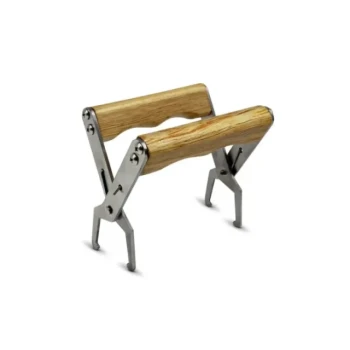
Frame management tools allow beekeepers to remove, reposition, or isolate combs efficiently during inspections. The objective is not simply to reduce hive volume, but to ensure that remaining brood is adequately covered by adult workers.
Avoid moving contaminated frames
Frames from infected colonies should not be transferred into healthy colonies. Shared comb, food stores, and hive surfaces can facilitate horizontal transmission through contact, feeding behavior, and contaminated materials.
Affected frames should be isolated, removed, or destroyed according to the severity of infection and the apiary’s biosecurity protocol. Clean replacement frames and clearly separated equipment are essential when rebuilding colonies.
Match intervention to infection severity
For a limited infection affecting a small portion of a comb, removing the affected frame can reduce the local viral burden. Supplemental feeding and close follow-up may then support recovery.
When infection is extensive, recurring, or associated with a collapsing colony, quarantine and more aggressive removal decisions may be necessary. A fixed percentage threshold should be treated as an operational guide rather than a universal rule, because colony strength, season, diagnosis, and local regulations also affect the correct response.
Support Recovery With Feeding and Pest Control
Use internal feeders for controlled support
In-hive feeders allow managers to provide sugar syrup and other approved supportive preparations without opening colonies repeatedly. Reduced disturbance is valuable when colonies are already weakened by brood disease.
Some management programs use herbal filtrates, such as Scutellaria barbata, or experimental antiviral dsRNA preparations. These products should be used only where legally permitted, correctly formulated, and supported by appropriate evidence; they should complement, not replace, sanitation and colony management.
Reduce nutritional stress
Poor nutrition can weaken a colony’s immune response and reduce its ability to rear healthy brood. Commercial operations should evaluate forage availability and provide supplemental nutrition when natural resources are inadequate.
Feeding plans should be standardized by season and colony condition. Clean feeders, controlled dosing, and reliable supply availability help prevent feeding itself from becoming a source of contamination.
Control mites and other stressors
Varroa destructor and Tropilaelaps can increase viral pressure and suppress colony health. Regular mite monitoring and timely use of appropriate control supplies reduce a major source of stress that can intensify viral disease.
Pest management should include monitoring tools, treatment records, and inspection equipment. CSBV control is less reliable when colonies are simultaneously dealing with high mite loads, poor nutrition, overcrowding, or other environmental stressors.
Build Apiary-Level Biosecurity
Sanitize hive tools and hardware
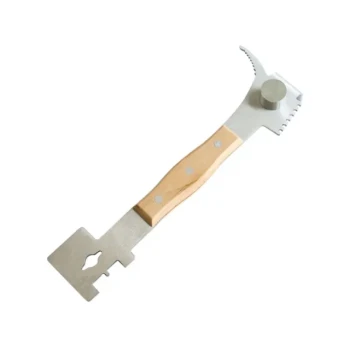
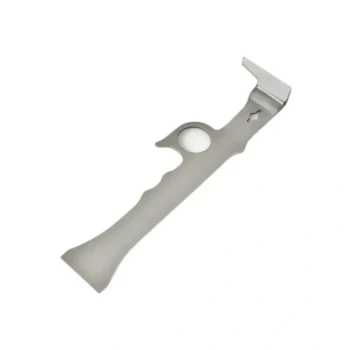
Viruses can move between colonies through contaminated tools, hive surfaces, food, and worker contact. High-grade stainless steel hive tools and other easily disinfected equipment are practical choices for commercial operations because they support frequent cleaning between colonies.
The sanitation workflow should cover frame-handling tools, gloves, feeders, hive bodies, transport equipment, and any surfaces that contact brood or stored food. Cleaning procedures should be documented so that different crews apply them consistently.
Separate infected and healthy colonies
Infected colonies should be clearly marked and managed after healthy colonies whenever practical. Dedicated tools and feeders reduce cross-contamination, while restricting frame movement prevents contaminated comb from entering healthy hives.
Quarantine zones, transport controls, and written movement records are particularly valuable for distributors, migratory operations, and multi-yard commercial apiaries.
Replace severely compromised comb
Old or heavily contaminated brood comb can retain biological material and makes disease management more difficult. Severely infected frames should be removed from circulation and destroyed or handled according to local biosecurity and waste requirements.
Routine brood-comb replacement also improves general hive hygiene, although it should be planned around colony strength, available replacement frames, labor, and seasonal production demands.
Understanding the Trade-offs
Requeening is effective but operationally demanding
Requeening requires healthy queen supply, skilled handling, suitable cages, and time for acceptance and renewed egg-laying. Poor introduction technique can leave a colony queenless or cause a second period of instability.
Operations should maintain a dependable source of replacement queens and keep introduction equipment available before disease pressure peaks.
Removing frames reduces disease pressure but also reduces capacity
Comb removal can improve worker coverage and lower contamination, but it also removes brood, food stores, and production potential. Excessive removal may weaken a colony further if managers fail to provide adequate replacement space or support.
Frame decisions should therefore consider the colony’s adult population, remaining brood, season, and ability to recover.
Supportive feeding is not a cure
Sugar syrup and herbal preparations may support colony recovery, but they do not substitute for removing infected material, correcting comb imbalance, or controlling pests. Unverified antiviral claims can lead to delayed intervention and unnecessary cost.
Suppliers should provide clear product specifications and usage guidance while distinguishing established management practices from emerging or experimental approaches.
Destruction decisions require local judgment
Severe outbreaks may justify colony quarantine or destruction, but blanket disposal rules can waste viable colonies and equipment. Decisions should reflect disease confirmation, infection extent, recurrence, colony value, local regulations, and the risk of transmission to neighboring colonies.
Making the Right Choice for Your Goal
A practical commercial program should combine inspection, requeening, comb management, feeding, sanitation, and pest control into one repeatable workflow.
- If your primary focus is rapid outbreak response: Prioritize biweekly brood inspections, infected-colony marking, frame isolation, sanitary hive tools, and queen introduction cages.
- If your primary focus is colony recovery: Requeen weak or persistently affected colonies, reduce excess comb, maintain adequate worker coverage, and use internal feeders for controlled nutritional support.
- If your primary focus is long-term prevention: Invest in hygienic or disease-tolerant queen lines, mite-monitoring supplies, brood-comb replacement, sanitation equipment, and standardized apiary records.
- If your primary focus is reliable commercial sourcing: Use a supplier capable of providing queen-rearing supplies, cell cages, feeders, frame-management tools, hive hardware, and rapid fulfillment through one coordinated order.
Commercial CSBV control depends on disciplined colony management that reduces transmission opportunities while giving healthy queens and worker populations the conditions needed to recover.
Summary Table:
| Strategy | Key Actions | Equipment Needed |
|---|---|---|
| Detection | Inspect brood frames biweekly, identify symptoms, map infection | Hive tool, inspection records |
| Requeening | Replace queen with healthy one, use controlled introduction | Queen cages, cell cages, queen-rearing supplies |
| Comb Management | Remove excess combs, avoid moving contaminated frames, match intervention | Frame grips, hive bodies |
| Feeding & Pest Control | Use internal feeders, provide sugar syrup, control mites | Feeders, mite monitoring tools |
| Biosecurity | Sanitize tools, separate infected colonies, replace severely compromised comb | Disinfectants, stainless steel tools, replacement frames |
Protect your apiary from CSBV with HONESTBEE's comprehensive range of hive management tools, queen rearing equipment, and biosecurity supplies. Our one-stop sourcing ensures fast delivery and professional support for commercial beekeepers and distributors. Contact us today to strengthen your disease management protocol and secure your colonies' health — Get in touch with our experts.
Related Products
- Ergonomic Plastic Frame Spacer Tool for Rapid Hive Management Beekeeping
- Multi-Function Plier-Style Frame Grip Hive Tool
- Multi-Function Hive Tool with Integrated Hammer for Beekeeping
- Professional Multi-Function Stainless Steel Hive Tool
- Professional Dual-End Stainless Steel Hive Tool for Beekeeping
People Also Ask
- What specific challenges do beekeeping hive tools address during hive maintenance? Essential Solutions for Apiaries
- How do specialized beehive management tools support high-purity honey production? Master Monofloral Isolation
- How do specialized beehive management tools assist in the routine maintenance of bee colonies? Boost Hive Efficiency
- What are the approximate costs of basic beekeeping tools? Start Your Apiary for Under $85
- What additional equipment might be useful for beekeeping? Boost Hive Health & Efficiency