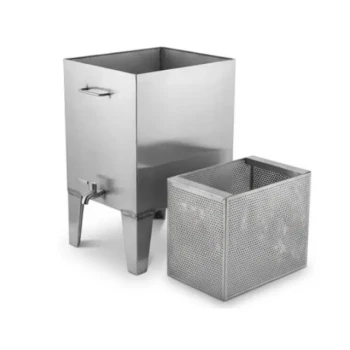
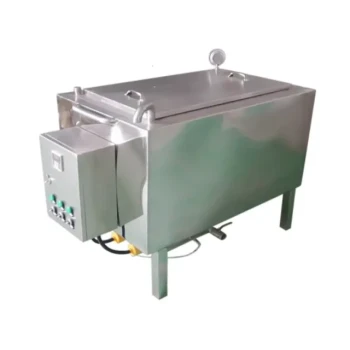
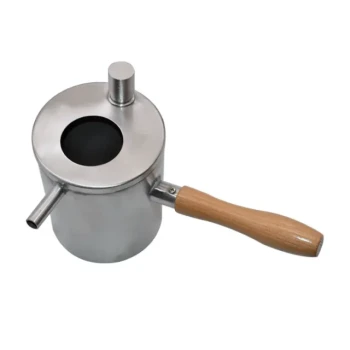
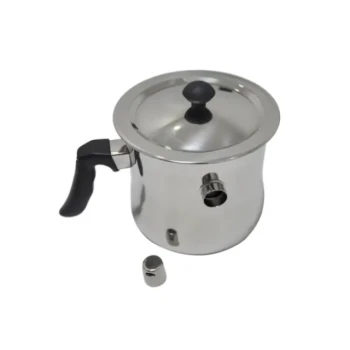
Processing the wax cake requires applying controlled heat to separate the components based on density. While mechanical pressing removes the bulk of the harvest, the remaining compressed "cake" must be melted down to release the trapped honey and segregate the beeswax from solid debris.
Core Takeaway Because pressed wax cakes hold significantly less honey than hand-mashed comb, processing them is primarily a method for cleaning and reclaiming wax. Any honey recovered during this heating process will be minimal and is best reserved for baking or feeding bees due to heat exposure.
Methods for Separation
The Oven Melting Technique
One approach is to place the wax cake in an oven to melt it down. This allows the honey and wax to separate as they liquefy.
However, you must temper your expectations regarding yield. The primary reference notes that pressed cakes hold much less honey than unpressed comb. If the cake consists of old brood comb, the honey yield may be negligible.
The Water Separation Method
A more effective method for cleaning the wax involves using water and heat, such as a double boiler setup.
By melting the wax cake in water, you create a mixture where the components separate naturally. The honey dissolves into the water, heavy debris sinks, and the pure wax floats to the top.
Solidification and Draining
Once the mixture is fully melted, it should be poured into a disposable container, such as a clean milk carton, to cool.
As the mixture cools, the wax will harden into a solid block on top of the water. Once the block is fully set, you can cut a hole in the bottom of the container to drain the water (and dissolved honey) away, leaving behind a clean block of wax.
Understanding the Trade-offs
Quantity vs. Effort
It is critical to understand the limitations of processing pressed cakes. Because the pressing process is efficient, the leftover cake is often dry.
The effort required to melt the cake may outweigh the value of the honey recovered. The primary goal here should be wax recovery, not honey harvesting.
Impact of Comb Type
The age of the comb significantly impacts your results.
Old brood comb acts like a sponge and tends to retain honey even after pressing. However, it is also full of cocoons and debris, making it difficult to get a clean separation compared to fresh honeycomb.
Making the Right Choice for Your Goal
- If your primary focus is obtaining clean wax: Use the water/double boiler method to float the wax and wash away sticky residues.
- If your primary focus is salvaging every drop of honey: Attempt the oven method first, but be aware the resulting honey will be heat-treated and likely suitable only for baking.
By using heat and gravity, you can turn a waste product into a clean block of usable beeswax.
Summary Table:
| Method | Primary Outcome | Best For | Honey Quality |
|---|---|---|---|
| Oven Melting | Gravity Separation | Small-scale recovery | Heat-treated (Baking only) |
| Water Separation | Cleaned Wax Blocks | Large-scale purification | Dissolved/Waste |
| Double Boiler | High-Purity Wax | Removing fine debris | Low yield/Heat-treated |
| Mechanical Pressing | Max Honey Yield | Initial harvest | High quality/Raw |
Scale Your Apiary Production with HONESTBEE
Transforming raw hive materials into marketable products requires the right industrial tools. At HONESTBEE, we specialize in empowering commercial apiaries and distributors with high-performance beekeeping machinery and essential consumables.
Whether you need advanced honey-filling machines to package your harvest or specialized hardware for wax processing and hive-making, we provide the comprehensive wholesale solutions your business needs to grow. From heavy-duty equipment to honey-themed cultural merchandise, we bridge the gap between hobbyist efforts and commercial excellence.
Ready to upgrade your production line? Contact us today to discuss your wholesale needs and let HONESTBEE provide the tools for your success!
Related Products
- Electric Beeswax Flat Sheet Machine with Operating Tray for Wax Processing
- Manual Beeswax Flat Sheet Machine for Beeswax Processing
- Steam Beeswax Melter Wax Warmer for Wax Processing
- Electric Flatting and Embossing Machine with Tray for Beekeeping
- Beeswax Machine Press Embosser Wax Foundation Mold Printer Bee Hive Equipment Making Sheet
People Also Ask
- What is the primary function of the double-roller extrusion system? Master Precision Beeswax Foundation Production
- How do cultural merchandise processing machines contribute to the economic value chain? Boosting Apiary Profitability
- How do specialized beeswax processing machines maximize the value of beekeeping by-products? Boost Your Apiary's ROI
- How does the machine flatten the beeswax? A Guide to Roller and Press Methods
- What are the key functions of a beeswax machine? Maximize Apiary Efficiency & Revenue with Professional Equipment