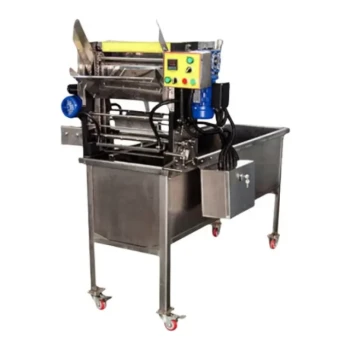
Automated honey filling and packaging machines serve as the critical final checkpoint for product integrity, ensuring that the quality achieved in the apiary reaches the consumer intact. These systems rely on precise metering control and hermetic sealing technologies to eliminate human error, preventing secondary contamination and moisture absorption that can spoil the product. By maintaining a controlled environment, high-standard automation preserves the honey's sensory characteristics—such as color and crystallinity—while significantly extending its shelf life.
Core Takeaway While manual packaging exposes honey to environmental risks and inconsistency, automated machinery standardizes the process to effectively seal in quality. The primary value of these machines lies in their ability to maintain strict hygiene standards and precise volumes, protecting the product’s biological properties and visual appeal for the commercial market.
Eliminating Environmental Threats
Preventing Secondary Contamination
Manual handling is the single largest source of bacterial introduction in food processing. Automated machines utilize sterile filling technology and enclosed systems to remove direct human contact from the equation. This creates a barrier against microbial contamination, ensuring the honey remains as pure in the bottle as it was in the hive.
Controlling Moisture Absorption
Honey is naturally hygroscopic, meaning it rapidly absorbs moisture from the air, which can lead to fermentation and spoilage. Automated fillers employ hermetic sealing technologies that minimize the honey's exposure time to the atmosphere. This rapid, airtight closure prevents moisture ingress, which is vital for maintaining shelf stability.
Reducing Oxidation Risks
Prolonged exposure to oxygen degrades honey’s nutrients and flavor profile. Advanced automation minimizes this risk by utilizing non-contact filling and high-speed capping processes. This protection against oxidation ensures the honey retains its original botanical flavor and nutritional value.
Ensuring Precision and Standardization
Exact Dosing and Weight Control
Commercial viability depends on delivering the exact amount of product promised to the consumer. Automated systems use high-precision weighing sensors and quantitative pumps to deliver consistent net weights across thousands of units. This precision eliminates product giveaway (overfilling) and regulatory disputes (underfilling).
Managing Viscosity and Drip
Honey's viscosity changes with temperature and type, making it difficult to package cleanly. Machines equipped with integrated temperature control systems and anti-drip nozzles manage flow rates perfectly. This prevents messy residues on the bottle exterior, which can harbor bacteria and ruin shelf appeal.
Preserving Sensory Quality
Protecting Visual Characteristics
The marketability of honey is heavily influenced by its appearance. High-standard machinery is calibrated to preserve the honey's natural color and crystallinity. By avoiding aggressive agitation or overheating during the filling process, the machine maintains the product's premium aesthetic.
Enhancing Shelf Appeal
Beyond the liquid inside, the quality of the package reflects the quality of the brand. Automation ensures professional, clean sealing and uniform label application. This consistency enhances the visual appeal, directly influencing consumer trust and purchasing decisions.
Understanding the Trade-offs
The Cost of Complexity
While automation guarantees consistency, it introduces mechanical complexity. Beekeepers must acknowledge that high-precision sensors require regular calibration to remain effective. A machine that is out of sync can replicate an error across an entire batch, leading to significant waste rather than savings.
Maintenance Requirements
The hygiene benefits of automation are only as good as the machine's cleaning protocol. Automated lines have complex internal pathways (pumps, tubes, nozzles) that require rigorous Clean-In-Place (CIP) procedures. Neglecting maintenance on these components can ironically become a source of the very contamination the machine is designed to prevent.
Making the Right Choice for Your Goal
To maximize the quality assurance benefits of automation, align your machinery choice with your specific production priorities:
- If your primary focus is Food Safety: Prioritize machines with sterile filling environments and non-contact nozzles to completely eliminate microbial risks.
- If your primary focus is Regulatory Compliance: Select equipment featuring high-precision weighing sensors to guarantee strict adherence to net weight standards.
- If your primary focus is Brand Image: Invest in machines with anti-drip designs and advanced sealing capabilities to ensure every unit looks pristine on the shelf.
Automated packaging is not merely a tool for speed; it is an investment in the verifiable purity and longevity of your product.
Summary Table:
| Feature | Quality Benefit | Technical Impact |
|---|---|---|
| Sterile Filling | Eliminates Contamination | Removes human contact and microbial risks |
| Hermetic Sealing | Prevents Spoilage | Minimizes moisture absorption and oxidation |
| Precision Sensors | Weight Accuracy | Ensures exact dosing and regulatory compliance |
| Anti-Drip Nozzles | Brand Integrity | Maintains clean packaging and shelf appeal |
| Temp. Control | Sensory Preservation | Protects honey color, flavor, and crystallinity |
Elevate Your Honey Production with HONESTBEE
At HONESTBEE, we understand that for commercial apiaries and distributors, quality assurance is the foundation of brand trust. As a premier provider of comprehensive beekeeping solutions, we offer a full spectrum of wholesale tools, specialized honey-filling machines, and high-efficiency packaging equipment designed to preserve the integrity of your harvest.
Whether you are scaling your operations or looking for essential consumables, our machinery ensures your honey reaches customers in its purest form. Contact us today to discover how our industry-leading equipment can streamline your workflow and maximize your market value.
References
- Angelo Canale, Giovanni Benelli. Bee and Beekeeping Research in a Rapidly Changing World: Advancements and Challenges. DOI: 10.3390/molecules26113066
This article is also based on technical information from HonestBee Knowledge Base .
Related Products
- Fully Automatic Honey Filling Packaging Machine for Processing Line
- Precision Automated Packaging Turntable Honey Spoon Filling Sealing Packing Machine
- Automatic Single-Dose Snap & Squeeze Honey Sachets Packing Machine
- Automatic Honey Filling and Filtering Machine for Beekeeping Bottle Filling
- Economy Small Honey Filling Machine Honey Bottle Filler Packaging Machine
People Also Ask
- Why are fully automatic honey filling and packaging lines essential? Boost Your Honey's Market Value and Quality
- What is a fully-automatic honey filler? Streamline Your Production with High-Precision Automation
- How do automated honey filling and packaging machines affect profitability? Boost Margins with HONESTBEE Technology
- How do automated honey filling and packaging machines contribute to the market value of honey products? Maximize Your ROI
- How do industrial-grade automated honey filling and packaging machines mitigate the risk of physical contamination?