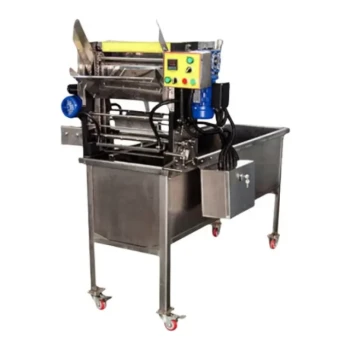
Automated honey-filling machines are not merely tools for speed; they are strategic assets that enable beekeepers to transition their business model from bulk raw material sales to high-margin retail distribution. By providing high-precision quantitative filling and professional sealing, these systems allow operations to bypass intermediate traders and capture the significant value-add found at the end of the supply chain.
The primary contribution of automated filling to profitability is the internalization of the packaging process. It transforms the apiary from a raw commodity supplier into a consumer-facing brand, securing the profit margins typically lost to third-party packers and distributors.
Capturing the Retail Value Chain
Transitioning from Bulk to Terminal Markets
The most significant impact of automated filling is the ability to produce retail-ready packaging directly on-site. Traditional bulk sales yield the lowest price per pound, as the buyer assumes the cost and profit of packaging.
By installing filling automation, beekeepers can sell directly to the terminal market (consumers and retailers). This vertical integration allows the producer to retain the markup that would otherwise go to middlemen.
Building Independent Product Lines
Profitability is closely tied to brand recognition and product differentiation. Automated machines enable the consistent production of independent retail product lines.
Instead of blending unique harvests into generic bulk lots, producers can package specific varietals under their own label. This differentiation commands higher prices and builds long-term customer loyalty.
Operational Efficiency and Cost Control
Reducing Labor and Material Waste
Manual bottling is labor-intensive and prone to inconsistency. Commercial filling machines utilize high-precision automated metering to control the exact net weight of every jar.
This precision eliminates "giveaway" (overfilling jars), which represents a direct loss of revenue over thousands of units. Furthermore, the speed of automation significantly reduces the labor hours required per batch.
Reallocating Human Capital
By optimizing the backend processing of honey, operations can redirect human resources toward high-value biological tasks.
Instead of bottling, skilled staff can focus on winter preparation, disease management, and colony health. This reallocation helps mitigate non-controllable risks, such as climate impacts, ensuring the long-term viability of the hives.
Commercial Viability and Standardization
Ensuring Hygiene and Consistency
To compete in the retail market, products must meet strict standards. Automated systems ensure hygienic sealing and high consistency in product specifications.
This "shelf-ready" quality is essential for securing contracts with grocery chains or specialty stores. It improves the commercialization rate of the honey, ensuring it is viewed as a premium product rather than a rough agricultural byproduct.
Balancing Financial Metrics
Investing in industrial-grade processing equipment can improve the Net Present Value (NPV) and Benefit-Cost Ratio (BCR) of the operation.
By maximizing the revenue from honey sales, beekeepers can better balance their overall ledger. This is particularly critical when other revenue streams, such as pollination services, face downward price pressure or insufficiency.
Understanding the Trade-offs
Capital Expenditure vs. Operational Savings
While the long-term profitability is clear, automated filling machines represent a significant upfront capital investment. Small-scale apiaries must calculate if their annual volume justifies the depreciation and initial cost of the machinery compared to manual labor.
Maintenance and Complexity
Moving from manual tools to automated systems introduces technical complexity. These machines require regular maintenance and calibration to maintain their precision.
An operation must ensure they have the technical capability to clean and service the equipment. Downtime due to mechanical failure during a peak harvest window can negate efficiency gains.
Making the Right Choice for Your Goal
To leverage automated filling for maximum profitability, align your equipment choice with your specific business objectives:
- If your primary focus is Direct-to-Consumer Sales: Prioritize machines that offer versatile changeovers for different jar sizes to support a diverse product line.
- If your primary focus is Wholesale Distribution: Prioritize high-speed, continuous-duty machines that maximize volume and ensure strict weight compliance for retail partners.
- If your primary focus is Labor Reduction: Select fully automated systems with integrated capping and labeling to minimize the need for human intervention in the packing line.
True profitability comes not just from harvesting more honey, but from retaining more of its final sale value through efficient, professional packaging.
Summary Table:
| Profit Driver | Manual Filling Impact | Automated Filling Benefit | Business Value |
|---|---|---|---|
| Market Position | Bulk commodity supplier | Brand-owner / Retailer | Captures higher terminal market margins |
| Dosing Precision | Low (Frequent overfilling) | High-precision metering | Eliminates product 'giveaway' and waste |
| Labor Efficiency | High hours per batch | Low hours; high output | Reallocates staff to colony management |
| Consistency | Variable hygiene/sealing | Standardized & hygienic | Ensures shelf-ready quality for chains |
| Revenue Stream | Single (Bulk sales) | Diverse (Varietal retail) | Higher ROI per pound of honey produced |
Scale Your Apiary’s Profitability with HONESTBEE
Transitioning from bulk sales to a high-margin retail brand requires the right industrial foundation. HONESTBEE specializes in empowering commercial apiaries and distributors with the professional machinery needed to dominate the market.
From high-precision honey-filling machines and automated hive-making equipment to essential consumables and honey-themed merchandise, we provide the full spectrum of tools to modernize your operation.
Ready to internalize your packaging and secure your margins?
Contact HONESTBEE Today to discover how our wholesale beekeeping solutions and specialized hardware can transform your honey harvest into a premium retail success.
References
- Alíz Feketéné Ferenczi, Viktória Vida. A hazai méhészeti ágazat helyzetének elemzése (termelés, kereskedelem). DOI: 10.20494/tm/8/2/2
This article is also based on technical information from HonestBee Knowledge Base .
Related Products
- Fully Automatic Honey Filling Packaging Machine for Processing Line
- Automatic Honey Filling and Filtering Machine for Beekeeping Bottle Filling
- Precision Durable Efficient HONESTBEE Rotary Honey Filling Machine
- Precision Automated Packaging Turntable Honey Spoon Filling Sealing Packing Machine
- Semi Automatic Small Honey Bottle Filling Machine Honey Filler
People Also Ask
- Why are fully automatic honey filling and packaging lines essential? Boost Your Honey's Market Value and Quality
- What is a fully-automatic honey filler? Streamline Your Production with High-Precision Automation
- How do automated honey filling and packaging machines affect profitability? Boost Margins with HONESTBEE Technology
- How do automated honey filling and packaging machines contribute to the market value of honey products? Maximize Your ROI
- How do industrial-grade automated honey filling and packaging machines mitigate the risk of physical contamination?