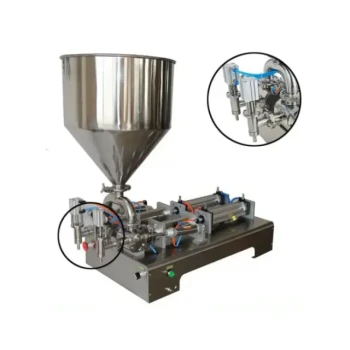
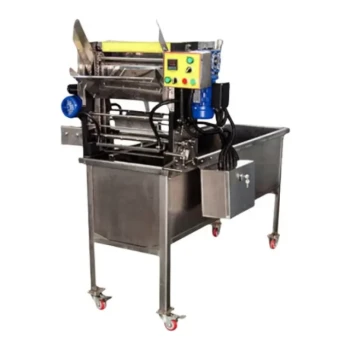
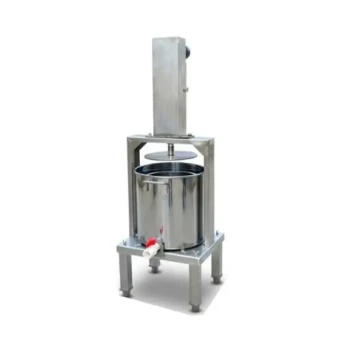
Automated honey-filling machines ensure hygiene and precision by integrating advanced piston or rotary pump systems designed specifically to manage high-viscosity fluids with minimal deviation. These systems are housed within food-grade stainless steel structures that utilize Clean-in-Place (CIP) technology, effectively creating a closed-loop environment that isolates the product from human contact and external contaminants.
The core value of this technology lies in its ability to reconcile speed with strict biological safety; it allows producers to scale operations without compromising the delicate physicochemical properties of the honey or violating international food safety standards.
The Mechanics of Precision
Mastering High Viscosity
Honey presents a unique challenge due to its thickness and resistance to flow. Automated machines overcome this by utilizing precision piston or rotary pump systems. These mechanisms apply consistent force to move the honey, ensuring flow rates remain steady regardless of the fluid's density.
Exact Volumetric Control
In industrial settings, even minor overfilling per unit accumulates into significant profit loss. Advanced quantitative technology ensures minimal weight deviation for each container. This precision effectively converts bulk honey into retail units with standardized specifications, drastically reducing material waste.
The Architecture of Hygiene
Sanitary Material Construction
The foundation of industrial hygiene is the machine's physical composition. These units are constructed from food-grade stainless steel. This material is non-porous and resistant to corrosion, preventing the harbor of bacteria and ensuring the machinery can withstand rigorous cleaning cycles.
Clean-in-Place (CIP) Systems
Manual cleaning is slow and introduces the risk of re-contamination. To address this, machines often feature Clean-in-Place (CIP) systems. This technology allows the internal pipes and pumps to be thoroughly sanitized without disassembly, ensuring a sterile environment is maintained between batches.
Closed-Loop Isolation
Biological safety relies on separating the product from the environment. By employing a closed-loop piping system, the machinery minimizes contact between the honey, operators, and ambient air. This significantly reduces the risk of secondary microbial contamination, which is critical for maintaining the shelf life of high-moisture varieties like stingless bee honey.
Preserving Honey Integrity
Temperature and Consistency Control
Heat can degrade honey, but cold honey is difficult to pump. Automated systems often utilize precise temperature control to lower viscosity just enough for filling without altering the honey's unique physicochemical properties. This ensures that flavor profiles, particularly in monofloral honeys, remain intact.
Automated Sealing
Hygiene efforts are wasted if the container is not immediately secured. Integrated sealing processes create an airtight barrier the moment filling is complete. This prevents oxidation and environmental contamination, ensuring the final product meets the traceability and safety requirements of high-end international markets.
Understanding the Trade-offs
Calibration Sensitivity
While these machines offer high precision, they require rigorous setup. Operators must strictly control parameters such as temperature and pump pressure. If the settings are not calibrated perfectly to the specific viscosity of the batch, you risk under-filling containers or overheating the honey, damaging its premium status.
Maintenance of Closed Systems
The "closed-loop" nature that protects the honey also hides internal wear. Because the system is designed to avoid disassembly for cleaning (CIP), reliance on automated sensors and strict maintenance schedules is non-negotiable to prevent undetected mechanical failures or biofilm buildup over long periods.
Making the Right Choice for Your Goal
If you are looking to deploy automated filling technology, align your equipment choice with your specific operational targets:
- If your primary focus is Scalability: Prioritize machines with high-speed rotary pumps and automated sealing to maximize throughput and standardized packaging specifications.
- If your primary focus is Premium Quality: Select equipment with advanced temperature control and closed-loop piping to preserve the specific flavor and chemical properties of the honey.
- If your primary focus is Regulatory Compliance: Ensure the machine is constructed of food-grade stainless steel and features a robust Clean-in-Place (CIP) system to meet international safety and traceability standards.
Success in industrial honey processing is not just about filling bottles faster; it is about establishing a repeatable, sanitary process that protects the value of your harvest.
Summary Table:
| Feature | Technology Used | Benefit to Producer |
|---|---|---|
| Dosing Accuracy | Precision Piston/Rotary Pumps | Minimal weight deviation and reduced product waste |
| Hygiene Standard | Food-grade Stainless Steel | Corrosion resistance and prevention of bacterial growth |
| Sanitation | Clean-in-Place (CIP) Systems | Rapid, sterile cleaning without manual disassembly |
| Contamination Control | Closed-loop Piping | Complete isolation from human contact and ambient air |
| Product Integrity | Precise Temperature Control | Maintains honey flavor and physicochemical properties |
Elevate Your Honey Production with HONESTBEE
Maximize your efficiency and maintain the highest safety standards with HONESTBEE. As a premier provider for commercial apiaries and distributors, we offer a complete wholesale range of professional equipment—from advanced honey-filling machines and hive-making hardware to essential beekeeping consumables.
Our specialized machinery is designed to help you scale while preserving the premium quality of your harvest. Partner with us to streamline your production line and grow your business globally.
Contact HONESTBEE Today for a Wholesale Quote
References
- Che Mohd Nasril Che Mohd Nassir, Muzaimi Mustapha. Neuroprotective Potentials of Honey for Cerebral Small Vessel Disease. DOI: 10.21926/obm.neurobiol.2204144
This article is also based on technical information from HonestBee Knowledge Base .
Related Products
- Fully Automatic Honey Filling Packaging Machine for Processing Line
- Automatic Honey Filling and Filtering Machine for Beekeeping Bottle Filling
- Precision Durable Efficient HONESTBEE Rotary Honey Filling Machine
- Semi Automatic Small Honey Bottle Filling Machine Honey Filler
- Precision Automated Packaging Turntable Honey Spoon Filling Sealing Packing Machine
People Also Ask
- Why are fully automatic honey filling and packaging lines essential? Boost Your Honey's Market Value and Quality
- What is a fully-automatic honey filler? Streamline Your Production with High-Precision Automation
- How do automated honey filling and packaging machines affect profitability? Boost Margins with HONESTBEE Technology
- How do automated honey filling and packaging machines contribute to the market value of honey products? Maximize Your ROI
- How do industrial-grade automated honey filling and packaging machines mitigate the risk of physical contamination?