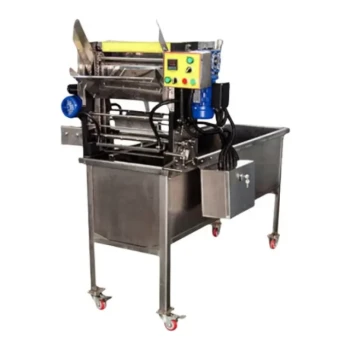
Automated honey-filling machines ensure industrial quality standards by strictly controlling volume precision and maintaining a sterile, closed-loop packaging environment. These systems mechanically eliminate human error and environmental exposure, ensuring that every batch meets rigorous regulatory benchmarks for hygiene, net weight, and purity.
By replacing manual variance with high-precision metering and sterile isolation, automated filling technology transforms variable raw honey into a standardized, export-ready product that satisfies international safety and trade protocols.
Maintaining Absolute Hygiene and Safety
Eliminating Secondary Contamination
The primary function of an industrial filling machine is to provide a closed, sterile environment. By isolating the honey during the transition from bulk storage to retail container, these machines prevent "secondary contamination"—the introduction of external pollutants after processing but before sealing.
Pathogen and Microbe Exclusion
Advanced filling systems are designed to inhibit microbial growth and exclude pathogens. By removing human contact and sealing the product immediately within a controlled zone, the machinery ensures the natural structure of the honey remains compromised by external bacteria or foreign substances.
Ensuring Precision and Physical Consistency
High-Precision Metering
To meet industrial trade standards, consistency is non-negotiable. Automated machines utilize accurate metering control systems to guarantee that the net weight and volume of every container comply with strict legal parameters. This prevents the economic and regulatory risks associated with under-filling or over-filling.
Standardization of Sensory Characteristics
Beyond simple weight, automation ensures uniformity in the product’s sensory qualities. By controlling the fill rate and environment, the machinery helps maintain consistent purity and hygiene indicators across an entire production batch, ensuring the consumer experience is identical for every unit.
Meeting Regulatory and Export Standards
Compliance with International Protocols
For large-scale commercial apiaries, automation is the gateway to global markets. These machines ensure compliance with specific international quality standards, such as the Food Codex, Turkish Food Codex, and NMX-F-036-NORMEX-2006. This level of standardization is often a prerequisite for entry into high-demand regions like the European Union and the United States.
Integrated Safety Labeling
Industrial quality extends to consumer information. Many automated filling lines integrate with labeling systems to apply critical legal warnings, such as infant botulism risks. This automation ensures that every unit leaving the facility meets international trade packaging requirements and mitigates food safety liability.
Preserving Product Integrity
Maintaining Chemical Indicators
The filling process is designed to minimize environmental exposure that could alter the honey's chemistry. Rapid, sealed filling helps maintain critical physical and chemical indicators, such as moisture content and sucrose levels, which are monitored under international non-tariff trade measures (NTMs).
Protecting Nutritional Value
Environmental changes, particularly humidity, can degrade honey quality. Automated filling technology minimizes the honey's exposure time to the open air. This preserves the honey's natural nutritional value and crystallization characteristics, ensuring the final product reflects the quality of the raw ingredients.
Understanding the Operational Trade-offs
The Requirement for Upstream Quality
While filling machines preserve quality, they cannot create it. The machine acts as a final safeguard; it relies on the processing facility to provide effective filtration and dehydration before the honey reaches the filler. If the upstream processing is flawed, the filling machine will simply package a flawed product with high precision.
Maintenance and Calibration Dependencies
The "high precision" of these machines is not permanent; it requires rigorous calibration. To maintain compliance with net weight and sealing standards, operators must adhere to strict maintenance schedules. A lack of calibration can lead to systemic errors where entire batches fail to meet regulatory weight parameters.
Making the Right Choice for Your Goal
Whether you are upgrading a local facility or targeting global export, the role of the filling machine varies based on your specific objectives.
- If your primary focus is Global Export: Prioritize machines that offer closed-loop sterile environments and certified compliance with Codex standards to satisfy EU and US market entry requirements.
- If your primary focus is Retail Brand Consistency: Focus on machines with high-precision metering systems to ensure identical net weights and uniform sensory characteristics across every shelf unit.
Ultimately, automated filling is not just about speed; it is the critical control point that locks in quality and guarantees regulatory compliance.
Summary Table:
| Feature | Quality Control Impact | Industrial Standard Benefit |
|---|---|---|
| High-Precision Metering | Guarantees consistent net weight and volume | Compliance with legal trade weights (e.g., Food Codex) |
| Closed-Loop System | Eliminates secondary contamination and pathogens | Meets international hygiene and safety protocols |
| Rapid Sealing | Minimizes exposure to humidity and air | Preserves moisture content and nutritional integrity |
| Integrated Labeling | Automates legal and safety warnings | Reduces liability and satisfies export packaging rules |
| Standardized Filling | Maintains uniform sensory characteristics | Ensures brand consistency across global retail markets |
Elevate Your Honey Production with HONESTBEE
Transitioning from manual processes to industrial automation is the key to unlocking global markets. HONESTBEE specializes in empowering commercial apiaries and distributors with high-performance beekeeping machinery and tools. Whether you need precision honey-filling machines to ensure regulatory compliance or specialized hive-making equipment to scale your operations, we provide the full spectrum of hardware and industry consumables.
Why partner with HONESTBEE?
- Precision & Reliability: Our machinery eliminates human error, ensuring every jar meets strict export standards.
- Comprehensive Wholesale Offering: From industrial-grade machines to honey-themed cultural merchandise, we cover all your honey business needs.
- Global Market Expertise: We help you satisfy EU, US, and international safety protocols with ease.
Ready to standardize your quality and grow your brand? Contact us today to explore our wholesale solutions!
References
- Ana Montero‐Castaño, Carolina L. Morales. Biological invasions and pollinator decline. DOI: 10.7818/ecos.1319
This article is also based on technical information from HonestBee Knowledge Base .
Related Products
- Fully Automatic Honey Filling Packaging Machine for Processing Line
- Automatic Honey Filling and Filtering Machine for Beekeeping Bottle Filling
- Precision Durable Efficient HONESTBEE Rotary Honey Filling Machine
- Precision Automated Packaging Turntable Honey Spoon Filling Sealing Packing Machine
- Semi Automatic Small Honey Bottle Filling Machine Honey Filler
People Also Ask
- Why are fully automatic honey filling and packaging lines essential? Boost Your Honey's Market Value and Quality
- What is a fully-automatic honey filler? Streamline Your Production with High-Precision Automation
- How do automated honey filling and packaging machines affect profitability? Boost Margins with HONESTBEE Technology
- How do automated honey filling and packaging machines contribute to the market value of honey products? Maximize Your ROI
- How do industrial-grade automated honey filling and packaging machines mitigate the risk of physical contamination?