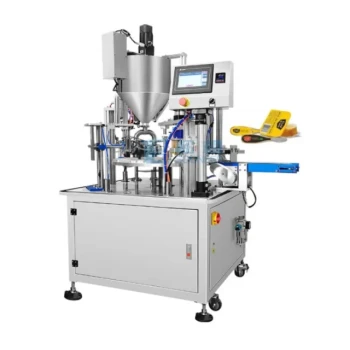
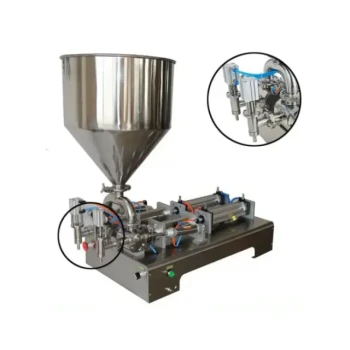
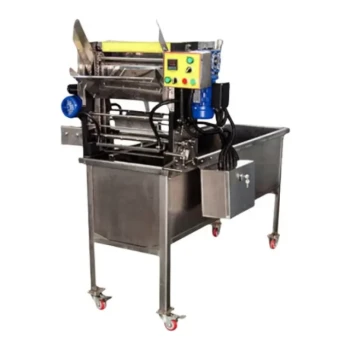
Automated honey filling machines transform downstream efficiency by integrating precise volumetric measurement with high-speed sealing, fundamentally replacing the inconsistencies of manual handling. This technology minimizes the risk of secondary contamination while ensuring airtight packaging, which directly extends shelf life and reduces per-unit production costs through high-volume processing.
By converting bulk harvests into retail-ready units with high-precision metering and sterile sealing, these machines bridge the gap between raw production and commercial viability. The result is a standardized, hygienic product that meets strict safety standards while maximizing throughput.
Eliminating Contamination and Loss
The Closed-Loop Hygiene Advantage
Manual handling is the primary source of "secondary contamination" in food processing. Automated machines mitigate this by operating within a closed or sterile environment.
By removing human contact during the critical filling stage, producers ensure the final product meets strict food safety standards. This hygienic reliability is essential for maintaining the product's biological integrity.
Precision Metering and Material Yield
Honey is a high-value raw material; overfilling leads to revenue loss, while underfilling causes compliance issues.
Automated systems utilize high-precision piston-style or weighing-based metering pumps. This ensures the net content of every jar strictly complies with label specifications, significantly reducing raw material waste.
Preventing Packaging Defects
Standardized equipment often features no-drip filling nozzles and automatic capping functions.
These features minimize the risk of sticky bottle necks or weak seals. This ensures a clean, airtight closure that prevents spoilage and maintains the professional appearance required for retail.
Standardization and Market Readiness
Achieving Consistent Presentation
For honey to succeed in commercial distribution channels, it requires a "market premium" look that only standardization can provide.
Automation guarantees that every unit is identical in fill level and seal quality. This consistency creates the professional shelf appearance necessary to compete in both domestic and export markets.
Accelerating Logistics and Distribution
The downstream chain often faces a bottleneck when converting large annual harvests into individual units.
Industrial filling machines rapidly convert bulk storage into finished goods. This speed leverages logistics advantages, allowing producers to move products into the global marketplace faster than manual processing allows.
Understanding the Trade-offs
While the efficiency gains are substantial, moving to automation introduces new operational variables.
Maintenance Complexity: The "high-precision" nature of metering pumps and no-drip nozzles requires a rigorous maintenance schedule. Neglecting this can lead to equipment drift, negating the accuracy benefits.
Flexibility vs. Throughput: These machines are optimized for standardized, high-volume runs. Switching between different jar shapes or sizes often requires retooling, which can reduce efficiency for producers with highly varied product lines.
Making the Right Choice for Your Goal
To maximize the value of automated filling technology, align your equipment choice with your specific production targets.
- If your primary focus is Scalability: Prioritize machines with high-speed sealing and piston-based metering to drive down unit costs and handle massive harvest volumes rapidly.
- If your primary focus is Brand Premium: Select equipment featuring no-drip nozzles and closed-environment filling to guarantee superior hygiene and a flawless, standardized visual presentation.
Automating the filling process is the definitive step in evolving from a raw material supplier to a competitive commercial manufacturer.
Summary Table:
| Key Efficiency Driver | Impact on Downstream Chain | Core Technical Benefit |
|---|---|---|
| Hygienic Precision | Minimizes secondary contamination | Closed-loop sterile environment |
| Material Yield | Prevents overfilling and waste | Piston-style/weighing-based metering |
| Standardization | Professional retail-ready appearance | Consistent fill levels and airtight seals |
| Throughput Speed | Rapid conversion of bulk to retail | High-speed sealing and automated capping |
Elevate Your Honey Production with HONESTBEE
At HONESTBEE, we specialize in transforming commercial apiaries into high-efficiency powerhouses. As a leading global provider for distributors and professional beekeepers, we offer a complete suite of industrial honey-filling machines, hive-making equipment, and essential beekeeping tools designed to maximize your throughput and product quality.
Whether you need to scale your operations with precision machinery or source specialized consumables, our wholesale solutions are tailored to meet the rigorous demands of the global honey market. Contact us today to optimize your production line and see how our expertise in beekeeping hardware and cultural merchandise can drive your business forward.
References
- Lidiane Nunes Lima, Wbaneide Martins de Andrade. Cadeia produtiva da apicultura no Nordeste. DOI: 10.14393/rct185270836
This article is also based on technical information from HonestBee Knowledge Base .
Related Products
- Fully Automatic Honey Filling Packaging Machine for Processing Line
- Automatic Honey Filling and Filtering Machine for Beekeeping Bottle Filling
- Precision Durable Efficient HONESTBEE Rotary Honey Filling Machine
- Semi Automatic Small Honey Bottle Filling Machine Honey Filler
- Precision Automated Packaging Turntable Honey Spoon Filling Sealing Packing Machine
People Also Ask
- Why are fully automatic honey filling and packaging lines essential? Boost Your Honey's Market Value and Quality
- What is a fully-automatic honey filler? Streamline Your Production with High-Precision Automation
- How do automated honey filling and packaging machines affect profitability? Boost Margins with HONESTBEE Technology
- How do automated honey filling and packaging machines contribute to the market value of honey products? Maximize Your ROI
- How do industrial-grade automated honey filling and packaging machines mitigate the risk of physical contamination?