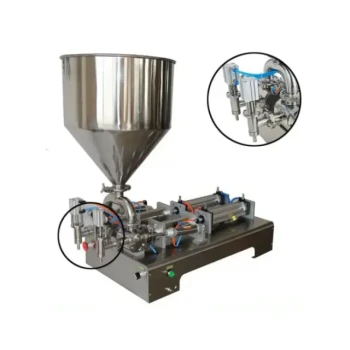
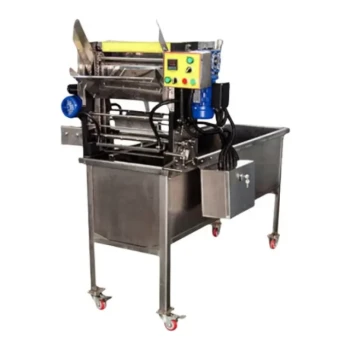
Automated honey filling machines maintain product stability by synchronizing precise volumetric controls with constant temperature regulation tailored to the specific viscosity of the honey. This mechanized process ensures that distinct varieties—from fluid blossom to thick chestnut honey—are packaged without physical degradation, while fully enclosed systems minimize air exposure to prevent oxidation and secondary contamination.
The Core Takeaway While manual packaging introduces variables that can degrade honey, automated systems standardize the environment. They act as a protective barrier, locking in the honey's chemical and physical properties by strictly controlling temperature, flow, and hygiene during the critical transition from bulk storage to retail bottle.
Calibrating for Viscosity and Temperature
Honey is not a uniform liquid; its flow characteristics change drastically based on floral source and temperature. Automated machines address this physical challenge through dynamic adaptation.
Adapting to Specific Varieties
Different honey types possess unique viscosities. A machine handles fluid monofloral blossom honey differently than dense, crystallization-prone chestnut honey.
The equipment adjusts pressure and flow rates to match these physical properties. This prevents the mechanical stress that can occur if thick honey is forced too aggressively through filling nozzles.
The Role of Constant Temperature
To maintain flow without damaging the product, these machines utilize constant temperature filling.
This feature keeps the honey at the optimal viscosity for packaging. Crucially, it prevents the overheating that often occurs in manual attempts to liquefy honey, which can destroy heat-sensitive enzymes.
Preserving Biological Integrity
Honey is a biologically active product containing enzymes, phenolic acids, and flavonoids. Automation is critical for protecting these fragile components from environmental degradation.
Minimizing Oxidation via Vacuum Technology
Exposure to oxygen is the primary enemy of honey's antioxidant activity.
High-precision machines often employ vacuum filling technology. This removes air from the container during the filling process, significantly reducing the contact between the honey and oxygen.
By limiting this interaction, the machinery preserves the honey's natural color and protects functional components like flavonoids from breaking down.
Preventing Secondary Contamination
Moving honey from a vat to a jar is a high-risk moment for introducing impurities.
Automated systems utilize fully enclosed filling circuits. This isolates the product from the surrounding factory environment, effectively preventing dust or airborne particles from entering the jar.
By removing human contact from the equation, these machines also eliminate the risk of cross-contamination, ensuring the final product meets strict organic or sanitary standards.
Ensuring Structural Consistency
Beyond chemical preservation, stability refers to the physical consistency of the final packaged unit.
Precision Dosage Control
Automated machines use high-precision quantitative control systems to dispense exact amounts.
This ensures that every bottle meets net weight requirements, regardless of minor fluctuations in the honey's density.
Anti-Drip Mechanisms
Industrial-grade machines are equipped with temperature-regulated anti-drip designs.
This prevents the sticky residue that often plagues manual filling. By keeping the seal area clean, the machine ensures a hermetic closure, which is vital for long-term shelf stability.
Understanding the Trade-offs
While automation offers superior stability, it introduces operational rigidities that producers must manage.
The Complexity of Calibration
The machine’s effectiveness relies entirely on accurate input settings. If the temperature is set even slightly too high for a specific varietal, you risk degrading the very enzymes you aim to protect.
Maintenance and Cross-Contamination
While machines prevent external contamination, they require rigorous cleaning protocols.
If the internal filtration and filling lines are not perfectly sterilized between batches, the machine itself becomes a vector for cross-contamination between different honey varietals (e.g., mixing polyfloral into a monofloral batch).
Making the Right Choice for Your Goal
The specific benefits of automation depend on your production priorities.
- If your primary focus is Organic Certification: Rely on the enclosed system capability to demonstrate the elimination of human contact and prevention of environmental contaminants.
- If your primary focus is Boutique/Raw Honey: Prioritize machines with advanced temperature regulation to ensure the product remains flowable without exceeding the thermal threshold that kills enzymes.
- If your primary focus is High-Volume Retail: Leverage the precision metering controls to guarantee weight consistency and maximize fill speeds across different honey viscosities.
Automation transforms honey packaging from a mechanical task into a preservation process, securing the product's biological value from the vat to the consumer.
Summary Table:
| Feature | Stability Benefit | Impact on Honey Quality |
|---|---|---|
| Constant Temp Control | Optimal viscosity without overheating | Preserves heat-sensitive enzymes & flavor |
| Vacuum Filling Tech | Minimizes air exposure/oxidation | Protects antioxidants, color, & flavonoids |
| Enclosed Circuit | Isolation from factory environment | Prevents dust & secondary contamination |
| Precision Metering | Uniform weight & flow management | Ensures structural consistency & net weight |
| Anti-Drip Design | Clean seal surfaces | Guarantees hermetic closure for shelf life |
Maximize Your Honey Production with HONESTBEE
At HONESTBEE, we empower commercial apiaries and honey distributors with state-of-the-art machinery designed to preserve the biological integrity of every jar. Whether you need specialized honey-filling machines, hive-making hardware, or a full range of beekeeping consumables, our wholesale solutions are tailored to your scale.
Ready to upgrade your packaging stability and scale your operation?
Contact our team today to find your custom equipment solution
References
- Ramazan Seçim, Sezai Alkan. Determination of Consumers Consciousness Levels of Consumption of Bee Products. DOI: 10.51458/bstd.2023.31
This article is also based on technical information from HonestBee Knowledge Base .
Related Products
- Fully Automatic Honey Filling Packaging Machine for Processing Line
- Automatic Honey Filling and Filtering Machine for Beekeeping Bottle Filling
- Precision Durable Efficient HONESTBEE Rotary Honey Filling Machine
- Precision Automated Packaging Turntable Honey Spoon Filling Sealing Packing Machine
- Semi Automatic Small Honey Bottle Filling Machine Honey Filler
People Also Ask
- Why are fully automatic honey filling and packaging lines essential? Boost Your Honey's Market Value and Quality
- What is a fully-automatic honey filler? Streamline Your Production with High-Precision Automation
- How do automated honey filling and packaging machines affect profitability? Boost Margins with HONESTBEE Technology
- How do automated honey filling and packaging machines contribute to the market value of honey products? Maximize Your ROI
- How do industrial-grade automated honey filling and packaging machines mitigate the risk of physical contamination?