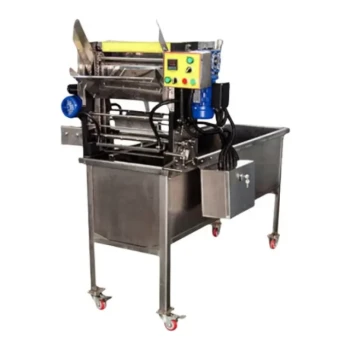
Automatic honey filling machines guarantee product quality by integrating advanced filtration systems with high-precision quantitative control mechanisms. This dual approach eliminates secondary contamination risks while ensuring absolute consistency in net weight across all packaging, regardless of the honey's viscosity.
By bridging the gap between raw extraction and commercial distribution, these systems provide the standardization necessary for brand reputation. They protect the honey's biological integrity while ensuring the uniformity required for large-scale retail.
Mechanisms of Contamination Control
To understand how quality is maintained, one must first look at how the machine isolates the product from external threats.
Eliminating Human Contact
The primary threat to honey quality during downstream processing is "secondary contamination."
By automating the filling process, these machines remove the need for manual handling. This creates a closed loop that significantly lowers the risk of introducing bacteria or foreign particles.
Integrated Filtration Systems
Before the honey enters the bottle, it passes through integrated filtration units.
This step is critical for removing impurities such as wax particles or bee debris without stripping the honey of its essential pollen. It ensures a clean, consumer-ready appearance while maintaining the product's natural definition.
Sterile Filling Environments
Advanced industrial units often operate under sterile conditions.
This protects the honey from environmental contaminants like dust and airborne microbes during the critical seconds of filling. It is a baseline requirement for meeting international hygiene standards.
Precision and Consistency
Quality is not just about purity; it is also about the reliability of the end product's physical characteristics.
High-Precision Quantitative Control
The core of these machines is their ability to dispense exact amounts of liquid.
Using quantitative control systems, the machinery ensures that the net content of every bottle is identical. This reduces product giveaway (overfilling) and prevents consumer complaints regarding underfilled units.
Adapting to Varying Viscosities
Honey is a non-Newtonian fluid; its flow rate changes based on temperature and floral source.
Automatic fillers are engineered to adapt to these fluctuations, handling everything from runny acacia honey to thick, crystallized varieties. Some systems are even specialized to handle honey containing nuts or honeycomb pieces without clogging.
Anti-Drip Technology
A common quality issue in manual filling is the sticky residue left on bottle necks.
Industrial machines utilize precision valves and anti-drip mechanisms. This ensures the sealing surface remains clean, which is vital for a secure, airtight closure.
Preservation of Biological Integrity
Honey is a "living" food, rich in enzymes and antioxidants. Processing must preserve these qualities.
Maintaining Antioxidant Activity
Rough handling or excessive heating during filling can degrade honey's nutritional profile.
Automated systems use precise dosage control to minimize agitation and exposure time. This approach preserves the natural antioxidant activity and unique flavor profiles of monofloral varieties like litchi or eucalyptus honey.
Enhancing Shelf Life via Sealing
The quality of the honey inside the jar is irrelevant if the seal fails.
These machines often integrate high-speed, airtight sealing processes immediately after filling. This locks in freshness and extends shelf life by preventing moisture absorption, which can lead to fermentation.
Understanding the Trade-offs
While automation offers superior quality control, it introduces specific operational complexities that must be managed.
Maintenance of Precision Components
To maintain "high-precision" status, the equipment requires regular calibration.
Valves, sensors, and flow meters must be kept in perfect condition; otherwise, the quantitative consistency will drift, negating the machine's primary benefit.
Viscosity Configuration
While the machines can adapt to different viscosities, this is not always instant.
Switching from a thin honey to a dense, nut-filled honey often requires mechanical adjustments or parameter changes. Operators must be skilled in configuring the machine to prevent texture damage or filling errors.
Making the Right Choice for Your Goal
The level of automation you implement should depend on which aspect of "quality" is most critical to your market position.
- If your primary focus is Food Safety: Prioritize machines with advanced sterile filling environments and integrated filtration to eliminate secondary contamination.
- If your primary focus is Brand Consistency: Look for equipment with high-precision quantitative control systems to ensure identical net weights and visual fill levels.
- If your primary focus is Product Integrity: Select machinery designed with specific valves for high-viscosity handling to preserve the enzymes and antioxidants of raw honey.
Automation is not just about speed; it is the technological foundation for transforming a natural agricultural product into a standardized, safe, and commercially viable commodity.
Summary Table:
| Feature | Quality Control Mechanism | Primary Benefit |
|---|---|---|
| Quantitative Control | High-precision flow meters and valves | Ensures uniform net weight and prevents underfilling |
| Integrated Filtration | Multi-stage wax and debris removal | Provides a clean, professional appearance while retaining pollen |
| Closed-Loop System | Automated filling without human contact | Eliminates secondary contamination and bacterial risks |
| Anti-Drip Technology | Precision-cut shut-off valves | Keeps bottle necks clean for airtight sealing and long shelf life |
| Viscosity Adaptation | Variable speed and pressure settings | Maintains flow consistency for both runny and crystallized honey |
| Biological Protection | Gentle dosage and minimal agitation | Preserves sensitive enzymes, antioxidants, and natural flavor |
Elevate Your Honey Production with HONESTBEE
Transitioning from manual extraction to commercial distribution requires the right technological partner. HONESTBEE provides professional-grade beekeeping machinery and tools designed specifically for commercial apiaries and global distributors. From high-precision honey-filling machines that guarantee brand consistency to specialized hive-making equipment and essential consumables, we offer the full spectrum of industrial solutions.
Why partner with HONESTBEE?
- Wholesale Excellence: Comprehensive inventory of beekeeping hardware and honey-themed merchandise.
- Quality Assurance: Machinery engineered to protect the biological integrity and antioxidant activity of your honey.
- Expert Support: Solutions tailored to help you scale your operations efficiently and safely.
Contact us today to optimize your honey processing line!
References
- J.P. van der Sluijs, Nora S. Vaage. Pollinators and Global Food Security: the Need for Holistic Global Stewardship. DOI: 10.1007/s41055-016-0003-z
This article is also based on technical information from HonestBee Knowledge Base .
Related Products
- Automatic Honey Filling and Filtering Machine for Beekeeping Bottle Filling
- Fully Automatic Honey Filling Packaging Machine for Processing Line
- Semi Automatic Small Honey Bottle Filling Machine Honey Filler
- Automatic Single-Dose Snap & Squeeze Honey Sachets Packing Machine
- Precision Durable Efficient HONESTBEE Rotary Honey Filling Machine
People Also Ask
- What process advantages do professional honey filtering and filling machines provide? Optimize Your Organic Honey Output
- How do honey filling and filtering machines increase product value? Turn Raw Honey into Premium Export-Grade Goods
- How do honey filtration and filling machinery contribute to industrialization? Scale Your Commercial Honey Production
- What specific issues do industrial filtration and automated filling machinery address? Ensure Honey Quality & Compliance
- How does the use of professional honey filtration and filling machinery facilitate international honey exports?