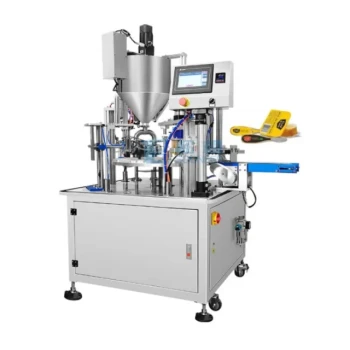
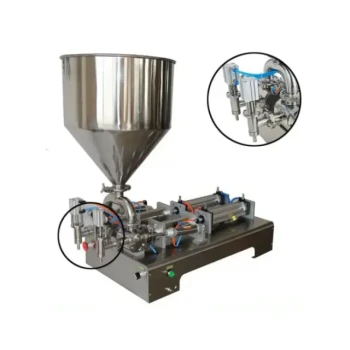
Automatic honey-filling machines secure market competitiveness by combining precise metering with advanced vacuum sealing technologies. These systems minimize the honey's contact with air to prevent oxidation and moisture absorption, ensuring the final product retains its quality while strictly adhering to the packaging and safety standards required by international distributors.
The core value of this technology lies in its ability to transform honey from a raw agricultural ingredient into a standardized, premium consumer product. By ensuring hygiene and consistency, automation allows producers to move away from low-margin bulk sales and enter high-value retail markets.
Preserving Product Integrity
Eliminating Quality Degradation
The primary competitive advantage provided by these machines is the preservation of chemical and sensory stability. Through vacuum sealing processes, the equipment removes air from the package, significantly reducing the risk of oxidation.
Controlling Moisture Content
Honey is hygroscopic, meaning it naturally absorbs moisture from the air, which can lead to fermentation and spoilage. Automatic fillers seal the product instantly in a controlled environment. This prevents moisture ingress, extending shelf life and maintaining the unique flavor and aroma that defines premium honey.
Ensuring Hygiene and Safety
Manual handling introduces a high risk of secondary contamination. Automated lines utilize sterile filling environments and no-drip nozzles to ensure the jar neck remains clean. This allows the product to meet the rigorous food safety certifications required for export and supermarket distribution.
Enhancing Commercial Viability
Achieving Measurement Precision
Manual filling often leads to "giveaway"—accidentally overfilling jars to avoid underweight penalties—or inconsistent liquid levels that look unprofessional on a shelf. High-precision piston or weighing systems ensure every unit complies strictly with label specifications. This eliminates raw material waste and ensures regulatory compliance.
Transitioning from Bulk to Brand
For beekeeping enterprises, the shift from selling raw materials in bulk to selling branded retail goods is the key to increasing unit profit margins. Automation provides the standardized appearance (consistent fill lines, clean labels, airtight caps) necessary to build a reputation as a trustworthy consumer brand.
Operational Efficiency
Beyond quality, automation drives price competitiveness by reducing labor costs. It replaces labor-intensive manual processes with high-speed, continuous production, allowing local producers to lower their unit costs and compete effectively against large-scale imported brands.
Understanding the Trade-offs
Initial Capital Expenditure
While the long-term cost per unit decreases, the upfront investment for high-quality vacuum filling lines is significant. Producers must have sufficient volume to amortize this cost effectively.
Maintenance and Technical Skill
Automated systems are complex. They require a shift in workforce skills from manual labor to machine operation and maintenance. Downtime due to mechanical failure can halt production entirely, requiring a robust maintenance schedule.
Flexibility Constraints
Highly automated lines are optimized for specific bottle shapes and sizes. Changeovers between different packaging formats can be time-consuming compared to manual operations, potentially reducing agility for producers with too many SKU variations.
Making the Strategic Choice for Your Production
To determine if an automatic filling line will enhance your specific market position, consider your immediate business goals:
- If your primary focus is Market Expansion: Automation is essential to meet the standardization and hygiene certifications required by supermarkets and international exporters.
- If your primary focus is Profit Margins: The technology increases profitability by converting low-cost bulk honey into high-value branded consumer goods.
- If your primary focus is Cost Control: High-precision filling eliminates product giveaway and significantly reduces reliance on manual labor.
Ultimately, automatic filling machinery is not just a tool for speed; it is the foundational infrastructure required to elevate honey from a commodity to a competitive, high-quality brand.
Summary Table:
| Competitive Advantage | Technical Solution | Business Impact |
|---|---|---|
| Quality Preservation | Vacuum sealing & controlled environment | Prevents oxidation, fermentation, and extends shelf life |
| Measurement Accuracy | Precision piston or weighing systems | Eliminates product giveaway and ensures regulatory compliance |
| Hygiene & Safety | Sterile filling & no-drip nozzles | Meets rigorous export and supermarket food safety standards |
| Cost Efficiency | High-speed automated production | Reduces labor costs and lowers unit production expenses |
| Brand Value | Standardized packaging appearance | Facilitates the shift from bulk sales to premium retail branding |
Transform Your Apiary into a Competitive Retail Powerhouse
At HONESTBEE, we specialize in empowering commercial apiaries and distributors with the tools needed to scale. From precision honey-filling machines and automated hive-making hardware to a complete range of professional beekeeping consumables, we provide the industrial-grade solutions required to transition from bulk commodities to high-value honey brands.
Partner with HONESTBEE to enhance your production efficiency and market reach.
References
- Maria Martynova. IMPROVING THE FORAGE FOR HONEY BEES IN THE REPUBLIC OF BASHKORTOSTAN. DOI: 10.31563/1684-7628-2020-54-2-38-44
This article is also based on technical information from HonestBee Knowledge Base .
Related Products
- Automatic Honey Filling and Filtering Machine for Beekeeping Bottle Filling
- Fully Automatic Honey Filling Packaging Machine for Processing Line
- Precision Durable Efficient HONESTBEE Rotary Honey Filling Machine
- Automatic Single-Dose Snap & Squeeze Honey Sachets Packing Machine
- Semi Automatic Small Honey Bottle Filling Machine Honey Filler
People Also Ask
- What process advantages do professional honey filtering and filling machines provide? Optimize Your Organic Honey Output
- How do honey filling and filtering machines increase product value? Turn Raw Honey into Premium Export-Grade Goods
- How do honey filtration and filling machinery contribute to industrialization? Scale Your Commercial Honey Production
- What specific issues do industrial filtration and automated filling machinery address? Ensure Honey Quality & Compliance
- How does the use of professional honey filtration and filling machinery facilitate international honey exports?