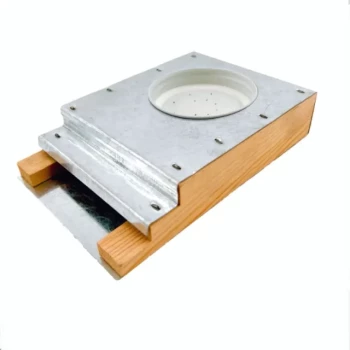
Bee feeders serve as essential asset protection mechanisms during periods of nectar dearth. They contribute to long-term value by delivering artificial nutrition that prevents colony collapse, thereby safeguarding your capital investment in the bee population and physical infrastructure so productivity can resume immediately when natural resources return.
The biological workforce is the engine of beekeeping infrastructure. Bee feeders protect this investment by preventing starvation and absconding, ensuring the colony retains the strength and population density required to capitalize on the next nectar flow immediately.
Protecting Biological Capital
Preventing Colony Absconding
The most immediate risk during a dearth is the loss of the entire colony. When food is scarce, bees may abscond, abandoning the hive entirely.
Bee feeders mitigate this risk by providing a reliable food source. This prevents the total loss of the "biological engine" of your operation.
Maintaining Population Density
A hive requires a critical mass of workers to function. Without supplemental feed, the population shrinks as bees die from starvation or stress.
Feeders utilizing sugar syrup or pollen substitutes ensure the colony does not contract below viable levels. This preserves the labor force needed for hive maintenance and defense.
Sustaining the Queen’s Vitality
The long-term value of a colony rests on the queen's ability to lay eggs. Nutritional stress can cause a queen to stop laying, creating a population gap that takes weeks to recover.
By simulating a continuous nutrient supply, feeders maintain the queen’s egg-laying activity. This ensures a steady generation of new worker bees to replace aging ones, even during dry seasons.
Safeguarding Physical Infrastructure
Protecting Honeycomb Investments
The physical assets of a hive, particularly the drawn honeycombs, represent significant energy investment by the bees and financial investment by the beekeeper.
When a colony dies out or absconds, this infrastructure is left vulnerable to pests and degradation. Feeders keep the colony present and active, ensuring the physical hive infrastructure is guarded and maintained.
Ensuring Operational Continuity
Beekeeping relies on momentum. A colony that survives a dearth in a weakened state requires significant time to rebuild before it becomes productive again.
Feeders provide operational continuity. They bridge the gap between flows, keeping the metabolic energy of the hive high so there is no downtime in colony functions.
Maximizing Future Return on Investment (ROI)
Rapid Productivity Rebound
The ultimate goal of feeding is not just survival, but future performance. A colony that scrapes by on starvation rations will miss the early part of the next nectar flow while it rebuilds.
Colonies supported by feeders maintain peak collection efficiency potential. When the next flowering season begins, these colonies can immediately switch to production mode, maximizing honey output.
Simulating Natural Flows for Breeding
For operations focused on genetics or splitting hives, feeders play a critical role in "tricking" the bees into believing resources are abundant.
This stimulation encourages nurse bees to secrete royal jelly and build queen cells. This allows breeders to continue valuable infrastructure expansion (making new splits) even when climatic conditions are non-ideal.
Understanding the Trade-offs
Operational Cost vs. Capital Loss
Using bee feeders introduces a variable cost in terms of labor and consumables (syrup, grain flours). This must be weighed against the potential for total asset loss.
While feeding increases short-term expenses, it is a defensive strategy. The cost of syrup is significantly lower than the cost of purchasing new package bees or nucs to replace a lost colony.
Management Precision
Effective feeding requires precise management. Simply placing food is not enough; the delivery must be timed to match the dearth.
Inaccurate feeding can lead to resource waste or pillaging by other insects. The value is realized only when the specialized feeding equipment is used to deliver the exact sugar or protein balance the specific colony requires.
Making the Right Choice for Your Goal
Bee feeders are not merely life-support devices; they are tools for capital preservation.
- If your primary focus is Asset Security: Feeders prevent colony absconding, ensuring you do not lose your initial financial investment in the bees and woodenware.
- If your primary focus is Production Speed: Feeders maintain the queen's laying rate, guaranteeing a full workforce is ready the moment the next nectar flow starts.
- If your primary focus is Expansion: Feeders allow you to simulate nectar flows, enabling the creation of new colonies and queens even during drought conditions.
By viewing feed as an investment rather than an expense, you ensure your apiary remains biologically viable and economically prepared for the next season.
Summary Table:
| Strategic Value | Function of Bee Feeders | Long-Term Impact |
|---|---|---|
| Biological Capital | Prevents starvation and colony absconding | Ensures a strong, ready-to-work bee population |
| Physical Infrastructure | Maintains colony presence to guard hive assets | Protects honeycomb and woodenware from pests |
| Operational Continuity | Sustains queen laying and nurse bee activity | Eliminates downtime between nectar flow seasons |
| ROI Optimization | Enables rapid rebound and hive splitting | Maximizes honey output and apiary expansion |
Secure Your Apiary’s Future with HONESTBEE
Don't let nectar dearth compromise your commercial success. HONESTBEE provides the professional-grade bee feeders and infrastructure needed to safeguard your biological capital and maximize long-term ROI. From specialized hive-making and honey-filling machinery to a complete range of wholesale beekeeping tools and consumables, we cater to the high-volume needs of commercial apiaries and global distributors.
Ready to scale your beekeeping operation?
Contact us today to explore our wholesale solutions and see how our comprehensive equipment portfolio can enhance your productivity year-round.
References
- Sumit Saini, Vadde Anoosha. Maximizing income through beekeeping (<i>Apis mellifera)</i>by following right management practices. DOI: 10.1080/00218839.2020.1864091
This article is also based on technical information from HonestBee Knowledge Base .
Related Products
- Rapid Bee Feeder White Plastic 2L Round Top Feeder for 8 or 10-Frame Bee Hives
- HONESTBEE Entrance Bee Feeder Professional Hive Nutrition Solution for Beekeeping
- White Plastic 0.5L Beekeeping Entrance Feeder for Bees
- HONESTBEE Entrance Bee Feeder Efficient Hive Front Liquid Feeding Solution for Beekeeping
- HONESTBEE Professional Entrance Bee Feeder Hive Nutrition Solution
People Also Ask
- What should be done with feeders and equipment after feeding bees? Essential Steps for Apiary Health
- What should be done if feed in a feeder is not consumed by the bees? Prevent Hive Mold with Prompt Feed Management
- What is the necessity of specialized internal or entrance feeders? Secure Your Hive with Professional Feeding Tools
- How do bee feeders work to preserve colony health during nectar shortages? Essential Guide for Beekeepers
- How quickly does a medium to strong colony usually empty a feeder? A Beekeeper's Guide to Hive Health