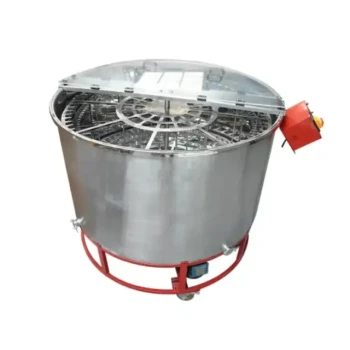
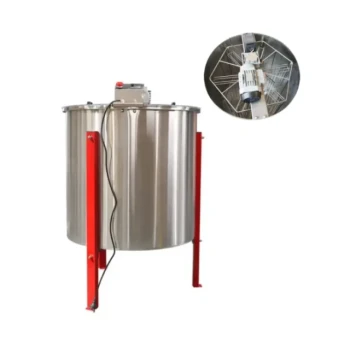
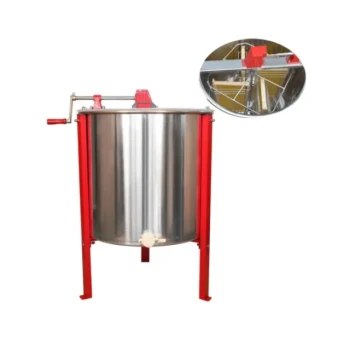
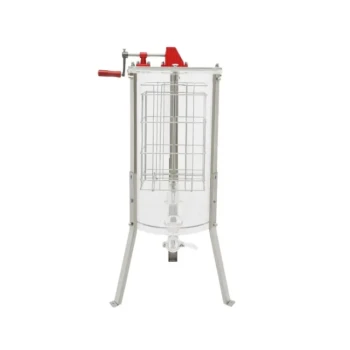
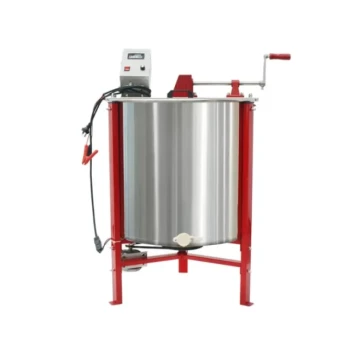
Electric honey extractors represent a significantly higher financial investment compared to manual models. While manual extractors are the budget-friendly option often utilized by hobbyists, electric extractors command a premium price due to the inclusion of motorized components, durable construction materials, and increased processing capacity.
Core Insight: The cost difference is fundamentally a trade-off between capital and labor. A manual extractor saves you money but costs you physical effort and time; an electric extractor requires a higher upfront payment but delivers value by automating labor and streamlining operations for larger apiaries.
Analyzing the Price Drivers
The Cost of Materials and Mechanisms
Manual extractors are the most cost-effective option available. They are simpler mechanical devices, often constructed from food-grade plastic or lighter-gauge stainless steel, which keeps manufacturing costs low.
Electric extractors are almost exclusively built from robust stainless steel to withstand higher speeds and vibrations. They also incorporate electric motors and speed control units, which are the primary drivers of their higher price tag.
Capacity and Scale
Entry-level manual extractors are designed for small batches, typically holding between two and eight frames at a time. This limited capacity keeps the unit smaller and less expensive.
Electric models are built for scale, with capacities ranging from two frames up to 100 frames for commercial units. The engineering required to balance and spin large loads adds significantly to the cost.
Evaluating Value and Return on Investment
Labor Efficiency
While electric extractors cost more initially, they reduce the "cost" of time. The motor automates the spinning process, allowing the beekeeper to multitask—such as uncapping the next set of frames—while the machine runs.
Manual extractors require continuous physical engagement. The operator must hand-crank the device for the duration of the extraction, making it a labor-intensive process that prevents multitasking.
Yield and Equipment Preservation
Electric extractors offer precise, consistent speed control. This minimizes damage to the honeycomb, allowing you to reuse frames multiple times and maximize your honey yield over the long term.
Manual extractors also offer very good speed control, as the user can feel the resistance. However, achieving the high speeds necessary to extract every drop of honey manually requires significant physical exertion.
Understanding the Trade-offs
The "Sweat Equity" of Manual Extraction
The lower price of a manual extractor comes with a physical tax. It is slower and requires substantial manual labor, making it physically demanding during large harvests.
Infrastructure Requirements for Electric Models
Electric extractors introduce operational constraints that manual ones do not have. They require a reliable power source, which limits where you can set up your extraction line compared to a manual unit that works anywhere.
Making the Right Choice for Your Goal
If you are deciding between these two options, look at your hive count and your long-term goals.
- If your primary focus is budget or small-scale hobbying: Choose a manual extractor if you manage eight hives or fewer, as the cost savings outweigh the labor requirements.
- If your primary focus is efficiency or expansion: Choose an electric extractor if you are a growing apiary or have physical limitations, as the time saved justifies the higher expense.
The right equipment choice is not just about the price tag, but about matching the tool to the scale of your operation.
Summary Table:
| Feature | Manual Honey Extractor | Electric Honey Extractor |
|---|---|---|
| Upfront Cost | Low (Budget-friendly) | High (Premium investment) |
| Material | Plastic or Light Stainless Steel | Heavy-duty Stainless Steel |
| Labor Requirement | High (Continuous hand-cranking) | Low (Automated operation) |
| Multitasking | Impossible | Possible (Uncap while spinning) |
| Capacity | Small (2-8 frames) | Large (2-100+ frames) |
| Power Source | Manual/Physical | Electric Outlet required |
| Best For | Hobbyists (<8 hives) | Commercial & Growing Apiaries |
Scale Your Honey Production with HONESTBEE
Choosing between manual and electric equipment is a critical decision for your apiary's profitability. At HONESTBEE, we specialize in supporting commercial apiaries and distributors with high-performance beekeeping machinery designed for durability and efficiency.
Whether you need robust stainless steel electric extractors to streamline your harvest, honey-filling machines to automate your packaging, or specialized hive-making equipment, we provide the comprehensive wholesale solutions you need to grow. From hardware to essential industry consumables and honey-themed cultural merchandise, we are your all-in-one partner.
Ready to upgrade your efficiency? Contact our experts today to discuss how our wholesale equipment can maximize your yield and reduce your labor costs!
Related Products
- HONESTBEE 72 Frame Industrial Electric Honey Extractor for Beekeeping
- Commercial Electric 12 Frame Honey Extractor Spinner Motorized Honey Extractor
- HONESTBEE 3-Frame Manual Acrylic Honey Extractor
- electric honey extractor honey centrifuge 3 frame honey extractor stainless steel honey frame extractor
- HONESTBEE 6 Frame Self Reversing Electric Honey Extractor for Beekeeping
People Also Ask
- What is the importance of balancing honeycomb frames within a honey extractor? Ensure Stability and Protect Machinery
- How is honey separated from the frames after they are uncapped? Efficient Extraction Methods for High Yields
- What are the main benefits of using a honey extractor? Maximize Yields and Protect Your Honeycomb
- What are the recommended methods for removing honey from the honeycomb? Top Extraction Techniques for Maximum Efficiency
- How do manual honey extractors compare to electric honey extractors? Choosing the Right Tool for Your Apiary Growth