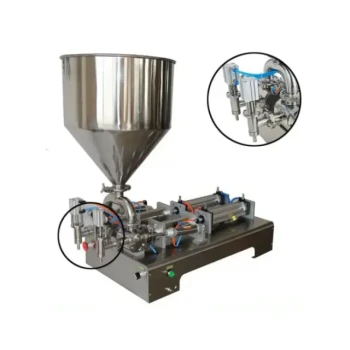
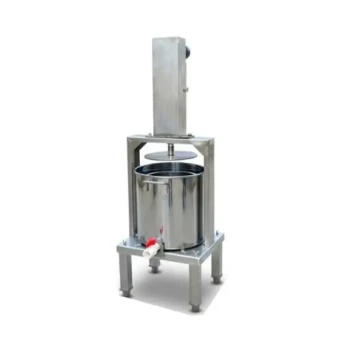
High-precision honey-filling machines are the technological backbone of export-grade honey production. They primarily drive competitiveness by enforcing exact dosage accuracy to minimize expensive material loss and establishing a sterile, automated environment that effectively prevents secondary contamination. This technical precision ensures the final product meets the rigorous food safety, net weight, and standardization protocols required to enter international markets.
Core Takeaway Success in the global honey market requires more than a high-quality raw product; it demands rigorous consistency and safety. High-precision filling technology bridges the gap between local artisanal production and international trade by guaranteeing regulatory compliance, preserving biological integrity through hygiene, and maximizing profit margins via waste reduction.
Ensuring Regulatory Compliance and Consistency
To compete internationally, producers must prove their product is safe, consistent, and legally compliant.
Meeting Strict Export Standards
International trade standards regarding food safety are non-negotiable. High-precision machines automate the filling process, removing the variability of human error.
This automation ensures that every unit meets specific net weight requirements, avoiding legal penalties associated with underfilling in strict regulatory environments.
The Power of Standardization
Global retailers and supermarkets demand a uniform product appearance on the shelf. Automated filling equipment delivers a level of professionalism and consistency that manual operations cannot match.
By standardizing the fill level and ensuring clean, drip-free packaging, producers enhance their brand image. This visual consistency is often a prerequisite for entering formal retail channels and commanding premium prices.
Preserving Product Integrity
Honey is a biological product sensitive to its environment. The filling process is a critical control point for maintaining quality.
Eliminating Secondary Contamination
The primary reference highlights that manual handling is a major source of "secondary contamination." High-precision machines operate as closed systems, significantly reducing human contact with the product.
This sanitary design is essential for passing health inspections and obtaining the health certifications necessary for export.
Protecting Flavor and Shelf Life
Beyond hygiene, these machines utilize technologies like vacuum sealing to minimize the honey's exposure to air and moisture.
By preventing oxidation and moisture absorption, the machinery preserves the natural flavor and quality of the honey. This directly contributes to an extended shelf life, which is vital for the logistics of long-distance international trade.
Maximizing Profitability
Competitiveness is not just about quality; it is about unit economics.
Reducing Material Loss
Overfilling bottles to ensure compliance is a common "hidden tax" in manual production. High-precision metering eliminates this need by dosing the exact amount required.
technologies such as anti-drip systems further prevent raw material waste. Over high-volume production runs, saving even a few grams per bottle translates to significant financial savings.
Understanding the Trade-offs
While automation is critical for scaling, it introduces new complexities that producers must manage.
Complexity of Maintenance
High-precision equipment requires a higher level of technical expertise to operate and maintain than manual lines.
Producers must account for the costs of skilled labor or training. A breakdown in a fully automated line can halt production entirely, unlike manual processes which are more flexible.
Capital Investment vs. Volume
The upfront cost of high-precision machinery is significant.
For smaller producers with low export volumes, the return on investment (ROI) may be slow. This technology is a force multiplier for volume, but a cost burden for low-throughput operations.
Making the Right Choice for Your Goal
When evaluating high-precision filling technology, align your equipment choice with your specific market strategy.
- If your primary focus is entering strict regulatory markets (EU, USA): Prioritize machines with advanced sanitary designs and closed-system environments to guarantee zero secondary contamination.
- If your primary focus is maximizing profit margins: Focus on machines with the highest rated metering accuracy and anti-drip technology to eliminate raw material give-away.
- If your primary focus is brand positioning and retail access: Select equipment that ensures aesthetic uniformity and clean packaging to meet the visual standards of high-end supermarkets.
Adopting high-precision automation is not merely an operational upgrade; it is the strategic pivot point that allows a local producer to become a reliable global exporter.
Summary Table:
| Key Feature | Impact on Competitiveness | Benefit for International Trade |
|---|---|---|
| Dosing Accuracy | Minimizes material loss and overfilling | Ensures net weight compliance with EU/US standards |
| Closed-System Design | Prevents secondary contamination | Meets rigorous food safety and health certifications |
| Automated Consistency | Uniform product appearance and levels | Facilitates entry into premium retail and supermarkets |
| Anti-Drip Technology | Reduces waste and keeps packaging clean | Enhances brand image and professional shelf presence |
| Vacuum Sealing | Protects flavor and prevents oxidation | Extends shelf life for long-distance logistics |
Scale Your Honey Business Globally with HONESTBEE
Transitioning from local production to international export requires precision, reliability, and the right technology. At HONESTBEE, we empower commercial apiaries and distributors with the tools needed to dominate the global market. Our comprehensive wholesale portfolio includes:
- High-Precision Machinery: From advanced honey-filling machines to automated hive-making equipment.
- Professional Tools: A full spectrum of beekeeping hardware and essential consumables.
- Cultural Merchandise: Honey-themed products to diversify your brand.
Whether you are looking to minimize material waste or ensure 100% regulatory compliance, HONESTBEE provides the technical expertise and industrial-grade equipment to maximize your ROI.
Ready to upgrade your production line?
Contact HONESTBEE Today to Discuss Your Wholesale Needs
References
- Bojana Bekić, Slađan Rašić. Environmental threats to beekeeping in the Western Balkan countries - beekeepers’ perceptions. DOI: 10.1088/2515-7620/acd913
This article is also based on technical information from HonestBee Knowledge Base .
Related Products
- Precision Durable Efficient HONESTBEE Rotary Honey Filling Machine
- Commercial Rotary Honey Filling Machine for Production
- Precision Automated Packaging Turntable Honey Spoon Filling Sealing Packing Machine
- Fully Automatic Honey Filling Packaging Machine for Processing Line
- Automatic Honey Filling and Filtering Machine for Beekeeping Bottle Filling
People Also Ask
- What are the common types of bottling machines used for honey? Choosing the Right Solution for Your Apiary
- How do honey filling and processing machines aid native bee product conservation? Boost Value with HONESTBEE Technology
- How do high-precision honey filling machines ensure quality? Optimize Your Commercial Production with HONESTBEE
- How do honey filling machines work? Achieve Precision & Speed for Your Apiary
- What is a key feature of the new generation of the honey filling machine? The Advanced Electronic Control Unit