Flower constancy and efficient pollen transport make honey bees valuable commercial partners for both farmers and honey producers. By repeatedly visiting one flower species during a foraging trip, bees improve pollen transfer within target crops and can gather relatively uniform nectar for mono-floral honey. Their body hairs and hind-leg pollen baskets transport pollen efficiently, while commercial success depends on correct hive placement, colony management, transport systems, and separate harvesting equipment.
Core takeaway: Honey bee behavior creates two commercial opportunities: stronger crop pollination and differentiated single-source honey. To capture both, operators must manage bee colonies, hive logistics, pollen collection, and honey processing as one integrated system.
How Honey Bee Foraging Supports Commercial Pollination
Flower constancy improves targeted pollen transfer
Flower constancy, also called floral fidelity, is the tendency of a worker bee to visit one flower species during a foraging trip when that source is abundant.
This behavior increases the likelihood that pollen collected from one plant will be transferred to another plant of the same crop species. In orchards, vegetable fields, oilseed crops, and plantations, that can support improved fruit set, seed production, and crop uniformity.
Colony placement determines pollination value
Bees cannot compensate for poor field placement or inadequate colony strength. Hives must be positioned where foragers can reach the crop efficiently and where the target bloom is sufficiently attractive compared with competing flowers.
Commercial pollination providers therefore assess bloom timing, crop density, forage competition, weather, and colony population before deployment.
Daily foraging coverage supports large fields
Honey bees generally forage during daylight, with activity beginning after sunrise and continuing toward sunset when weather conditions permit. This provides repeated daily coverage throughout the flowering period.
The practical result is not simply more bees in a field. It is sustained, well-timed foraging during the crop’s effective pollination window.
How Pollen Transport Affects Pollination and Pollen Products
Body hairs capture pollen
A honey bee’s branched body hairs allow pollen grains to adhere to the body during flower visits. Bees then groom the pollen and pack it into compact loads.
This anatomy helps move pollen between flowers, making the bee an effective biological carrier for commercial crops.
Hind-leg pollen baskets concentrate the load
The hind legs contain corbiculae, commonly called pollen baskets. Workers moisten and compress collected pollen into these structures before returning to the hive.
For pollination, this transport system helps bees carry pollen between flowers. For beekeepers, it also creates an opportunity to collect pollen with hive-mounted pollen traps.
Pollen traps require careful management
Pollen traps can produce a high-protein commercial product, particularly when a single crop dominates the available bloom. However, removing pollen also removes an important source of colony nutrition.
Operators should use traps selectively, monitor colony strength, and avoid excessive collection during periods of colony growth, poor weather, or limited forage. Pollination performance and colony health must take priority over short-term pollen yield.
How Flower Constancy Enables Mono-Floral Honey
A dominant bloom creates a uniform nectar stream
When one plant species provides the most abundant nectar, worker bees may repeatedly return to that source. This can produce honey with a recognizable aroma, flavor, color, and sugar profile.
Examples include orange blossom, buckwheat, blueberry, and other crop-specific honeys.
Constancy does not guarantee pure mono-floral honey
Flower constancy is a behavioral advantage, not a purity guarantee. Bees may visit alternative plants if the target crop is sparse, weather conditions change, or competing forage is more attractive.
To produce credible mono-floral batches, operators must also manage:
- Apiary location and forage radius
- Bloom timing and harvest timing
- Hive supers and frame identification
- Competing floral sources
- Extraction and storage separation
- Applicable product-classification or labeling requirements
Harvest timing protects product identity
Honey supers should be removed and processed promptly after the targeted bloom. Delayed harvesting increases the chance that later nectar sources will be added to the same frames.
Dedicated supers, clearly labeled frames, separate storage tanks, and controlled processing routines help prevent cross-mixing between floral batches.
Equipment Required for Commercial Operations
Hive and Colony Infrastructure
Durable hive bodies and frames
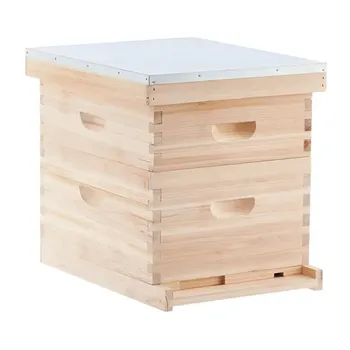
Commercial apiaries need standardized hive bodies that are strong enough for repeated stacking, handling, and transport. Wooden or composite components should maintain dimensional stability and allow efficient interchange between colonies.
Modular frames support routine inspection, brood management, honey storage, and fast preparation for seasonal bloom periods.
Additional honey supers
Targeted nectar flows can fill available storage quickly. Extra honey supers allow operators to add capacity without disrupting the colony or forcing nectar into unsuitable spaces.
For mono-floral production, supers and frames should be organized so that batches from different bloom periods can be identified and isolated.
Hive-making and inventory equipment
Large operators may use hive-making machinery to prepare standardized boxes, frames, and related components before major pollination or honey-production seasons.
For distributors and resellers, this creates demand across the full equipment chain rather than for isolated hive units alone.
Pollination Transport and Field Deployment
Secure transport hardware
Migratory beekeeping requires equipment that keeps colonies stable during movement between farms and agricultural zones.
Useful systems include:
- Hive fasteners and load restraints
- Ventilation screens
- Entrance reducers
- Transport pallets or racks
- Stackable hive bodies
- Covers and weather protection
- Loading and handling equipment
The objective is to reduce vibration, overheating, escape risk, and colony stress while allowing rapid field deployment.
Protective and inspection equipment
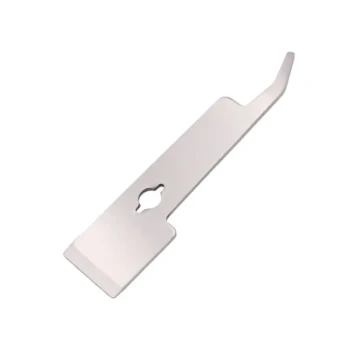
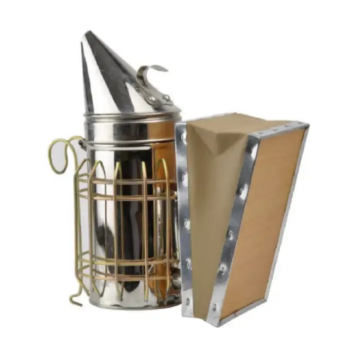
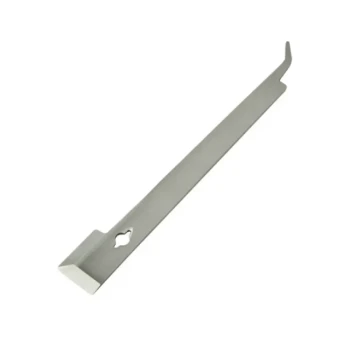
Beekeepers need protective clothing, gloves, veils, hive smokers, and hive tools for safe colony handling.
Inspection equipment is essential before deployment. Operators should confirm colony strength, food reserves, brood condition, and general health before placing hives in a commercial crop.
Practical logistics matter as much as hive design
A pollination service is a time-sensitive operation. Equipment must support rapid loading, transport, placement, inspection, removal, and redeployment.
For B2B buyers, reliable availability and fast fulfillment can be as important as product specifications because missed bloom windows cannot easily be recovered.
Pollen Collection Equipment
Hive-mounted pollen traps
Pollen traps are installed at the hive entrance to remove a portion of returning pollen loads. They should be selected for practical access, colony compatibility, durability, and ease of cleaning.
The trap design must balance collection efficiency with the need to maintain sufficient pollen entering the colony.
Collection and handling accessories
Commercial pollen operations also require clean collection trays, drying or stabilization systems where applicable, storage containers, labeling supplies, and batch-control procedures.
The equipment should support hygienic handling and clear separation between floral sources.
Product quality depends on more than collection
A pollen trap can collect material, but it cannot by itself guarantee a single-source product. Floral conditions, apiary placement, collection timing, and batch documentation determine whether the resulting pollen can be credibly marketed as mono-floral.
Honey Extraction and Processing Equipment
Commercial extractors
High-capacity honey extractors enable operators to process many frames efficiently after a seasonal bloom. Equipment selection should reflect colony count, frame format, expected harvest volume, and available labor.
Durability and ease of cleaning are especially important for businesses handling repeated seasonal batches.
Filtration and settling systems
Commercial filtration equipment removes wax particles and other coarse material after extraction. Settling tanks then allow remaining air and fine particles to separate before filling.
These systems improve processing consistency without replacing the need for clean harvesting practices.
Storage tanks and filling machinery
Dedicated storage tanks help isolate orange blossom, buckwheat, blueberry, or other floral batches. Honey-filling machinery supports consistent packaging speed and reduces handling during bottling.
For operators serving specialty or organic markets, equipment should also support documented cleaning, traceability, and cross-contamination control.
Understanding the Trade-offs
Pollination and pollen harvesting can compete
Pollen collection removes food reserves that colonies use for brood rearing and development. Excessive trapping can weaken colonies, reduce future foraging capacity, and undermine the pollination service the apiary is being paid to provide.
The correct approach is controlled, seasonal collection, not maximum extraction at all times.
Mono-floral positioning requires operational discipline
A field described as a single-crop area may still contain roadside plants, nearby orchards, weeds, or other nectar sources. Honey bees will use available alternatives when the target bloom is insufficient.
Operators should avoid overstating floral purity and should use appropriate quality-control or analytical procedures where market claims require verification.
Migratory beekeeping adds risk and cost
Moving colonies creates logistical demands and can expose bees to temperature stress, poor ventilation, vibration, unfamiliar forage, and disease-transfer risks.
Transport-ready equipment reduces these risks, but it does not eliminate the need for careful scheduling, loading practices, inspections, and recovery time.
More automation is not always better
High-capacity extraction and filling machinery improves throughput, but it may be excessive for small apiaries or short harvest windows. Buyers should match capacity to actual colony numbers and seasonal volume rather than selecting equipment based only on maximum output.
Making the Right Choice for Your Goal
The best equipment package depends on whether the operation prioritizes crop service, specialty honey, pollen products, or a combination of these activities.
- If your primary focus is commercial crop pollination: Prioritize strong standardized hives, secure transport hardware, ventilation systems, inspection tools, protective gear, and equipment that supports fast deployment and retrieval.
- If your primary focus is mono-floral honey: Prioritize dedicated supers, modular frames, batch identification, high-capacity extraction, filtration, storage tanks, and filling systems that prevent floral cross-mixing.
- If your primary focus is pollen production: Select efficient pollen traps, hygienic collection and storage equipment, and monitoring procedures that protect colony nutrition and strength.
- If your primary focus is supplying commercial apiaries: Offer a coordinated portfolio covering hive components, transport systems, protective equipment, pollen traps, extraction machinery, storage, and filling, backed by responsive service and dependable fulfillment.
- If your primary focus is migratory beekeeping: Choose durable, stackable hive systems and transport accessories designed to minimize colony stress during repeated movement between agricultural zones.
When bee behavior, field timing, colony care, and equipment planning are aligned, one apiary can deliver both dependable pollination and higher-value floral products.
Summary Table:
| Trait | Effect on Pollination | Effect on Honey Production | Recommended Equipment |
|---|---|---|---|
| Flower constancy | Improves targeted pollen transfer, enhancing crop yield | Enables collection of uniform nectar for mono-floral honey | Standardized hives, additional supers, batch tracking systems |
| Pollen transport via body hairs | Carries pollen between flowers, facilitating cross-pollination | Not directly applicable; helps in pollen collection | Pollen traps, collection trays, drying systems |
| Pollen baskets (corbiculae) | Concentrates pollen, improving transport efficiency | Provides opportunity for pollen by-products | Hive-mounted pollen traps, storage containers |
| Daily foraging activity | Sustains field coverage during bloom | Supports consistent nectar collection | Secure transport for migratory apiaries, inspection gear |
Note: Equipment needs depend on primary focus (pollination, honey, or pollen).
Ready to optimize your commercial beekeeping operation? HONESTBEE offers a comprehensive range of beekeeping equipment, from hive-making machinery to honey extraction and filling lines. Whether you're a distributor looking to expand your product portfolio or a beekeeper seeking reliable tools, our one-stop sourcing, rapid response, and efficient order fulfillment ensure your operations run smoothly. Contact us today to discuss your equipment needs and discover how we can support your success!
Related Products
- HONESTBEE Professional Multi-Functional Hive Tool with Ergonomic Wood Handle
- HONESTBEE Professional Mini J-Hook Hive Tool for Beekeeping
- Stainless Steel Honey Bee Smoker Hive and Honeycomb Smoker for Beekeeping
- Economy Galvanized Beekeeping Honey Bee Smoker for Wholesale
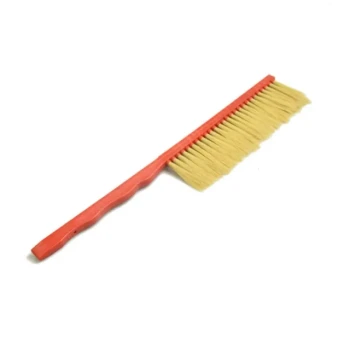
- Plastic Handle Single Row Artificial Fiber Bee Brush
People Also Ask
- What are the benefits of a multi-functional hive tool? Streamline Your Apiary Workflow with One Tool
- What advantages do multi-functional hive tools offer? Maximize Your Apiary Efficiency and Workflow
- Why are professional hive tools considered indispensable? Master Beekeeping Maintenance with Precision Leverage
- What is the role of professional hive tools in routine apiary maintenance? Expert Tips for Hive Health and Longevity
- What specific functions does a multi-functional Hive Tool perform? Essential Lever & Scraper Roles for Hive Care